A “Uniting for Peace” resolution in the UN General Assembly can counter the Security Council’s failure to act.
Truthout is a vital news source and a living history of political struggle. If you think our work is valuable, support us with a donation of any size.
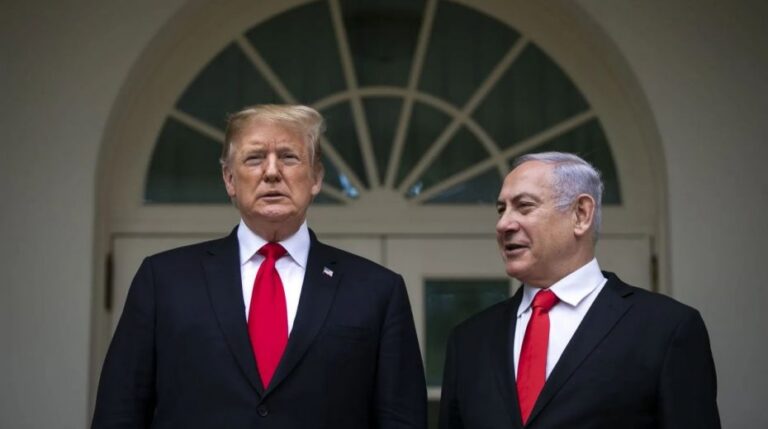
So far, 555 Iranians—among them 180 girls attending elementary school in Minab—have been reported killed since the war of aggression began on February 28, initiated by President Donald Trump and his accomplice, accused war criminal Israeli Prime Minister Benjamin Netanyahu, targeting Iran.
According to U.S. Central Command in a statement, “Operation Epic Fury involves the largest regional concentration of American military firepower in a generation.”
This hostile action has destabilized the region and provoked Iran’s rightful right to self-defense.
The U.S.-Israeli assault against Iran breaches the United Nations Charter, which obliges all nations to settle disputes peacefully and prohibits armed force except in self-defense following an armed attack under Article 51 or when authorized by the Security Council.
Prior to February 28, Iran had neither launched a military attack on any state nor posed an immediate threat to the U.S., Israel, or any UN member. Furthermore, the Security Council had not approved military action against Iran.
The timing of these attacks casts doubt on claims that the U.S. and Israel were sincerely engaged in nuclear negotiations with Iran.
Netanyahu Convinced Trump to Withdraw From the Iran Nuclear Deal in 2017
Trump justified his attack on Iran by claiming it was to block the nation’s development of nuclear arms.
Understanding the talks before February 28 requires reviewing the 2015 Iran Nuclear Deal, the Joint Comprehensive Plan of Action (JCPOA), negotiated by France, Britain, Russia, China, Germany, the U.S., and Iran under the Obama administration.
Under the JCPOA, Iran agreed to limit uranium enrichment and other nuclear activities, while the U.S. unfroze billions in Iranian assets offering sanction relief. Until Trump withdrew the U.S. from the agreement, the JCPOA effectively prevented Iran from acquiring nuclear weapons.
Jessica T. Mathews noted in a 2017 New York Review article that “Iran has gotten rid of all of its highly enriched uranium… eliminated 99 percent of its stockpile of low-enriched uranium… shut down enrichment at the fortified Fordow facility… disabled and sealed its plutonium reactor core… and provided satisfactory answers to the [International Atomic Energy Agency’s] concerns about past weapons-related activities.”
Still, in 2017, Netanyahu persuaded Trump to abandon the JCPOA. Netanyahu bragged, “I asked [Trump] to leave the JCPOA… It was me who made him depart from the deal.”
Had the JCPOA endured, the present U.S.-Israeli aggression would likely have been averted.
Negotiations Were Bearing Fruit But U.S. and Israel Attacked Anyway
Prior to the February 28 assault, Oman was mediating talks on Iran’s nuclear activities. The U.S. and Israel demanded Iran cease uranium enrichment, curb its ballistic missiles, and end backing its “proxies” Hezbollah and the Houthis.
On February 27, Oman’s foreign minister stated on CBS News that negotiations had advanced substantially, with Iran offering more concessions than those in the JCPOA. He described a nuclear deal as “within our reach,” noting.
Nonetheless, Trump insisted diplomacy was exhausted and launched the bombing campaign the following day.
In a video announcement, Trump falsely claimed the Iranian government “rejected every opportunity to renounce their nuclear ambitions.”
Without presenting evidence, Trump asserted the Iranian regime “has built nuclear weapons,” contradicting his June 2025 statement after bombings of Iran’s nuclear sites that the U.S. had “obliterated” Iran’s nuclear program.
Israel has repeatedly, but inaccurately, insisted Iran possesses nuclear arms, claiming for two decades that Iran was on the verge of acquiring them.
Trump asserted that avoiding war required Iran to say “those secret words: ‘We will never have a nuclear weapon.’” Yet, Iran has repeatedly declared this. Ayatollah Ali Khamenei issued a fatwa banning nuclear weapons as early as 2004.
The Trump administration acknowledged it lacks proof Iran is weaponizing its uranium enrichment or even resuming enrichment since last June. Iran insists its uranium enrichment is peaceful, compliant with the Nuclear Non-Proliferation Treaty.
There is also no proof Iran is developing long-range missiles capable of striking the U.S.
Netanyahu described the joint U.S.-Israeli operation’s goal as “to remove the existential threat posed by the terrorist regime in Iran.”
Jamal Abdi, president of the National Iranian American Council, told Al Jazeera: “Netanyahu’s agenda has always been to prevent a diplomatic solution, and he feared Trump was actually serious about getting a deal, so the start of this war in the middle of negotiations is a success for him, just like it was last June.”
U.S.-Israeli Aggression and Iran’s Self-Defense
The armed attack by the U.S. and Israel infringes upon Iran’s sovereignty and territorial integrity, constituting an illegal act of aggression—the “supreme international crime” as established at Nuremberg.
Article 2 (4) of the UN Charter states: “All Members shall refrain in their international relations from the threat or use of force against the territorial integrity or political independence of any state, or in any other manner inconsistent with the Purposes of the United Nations.”
Such aggression conflicts with the UN’s objectives. Defined by the Rome Statute of the International Criminal Court, an act of aggression is “the use of armed force by a State against the sovereignty, territorial integrity or political independence of another State… including invasion or attack.”
A “preemptive” attack, allegedly to stop Iran from acquiring nuclear weapons, also breaches the UN Charter and is an act of aggression.
Professor Ben Saul, UN Special Rapporteur on human rights while countering terrorism, stated on X: “I strongly condemn the Israeli & US aggression against Iran, in violation of the most fundamental rule of international law — the ban on the use of force. All responsible governments should condemn this lawlessness from two countries who excel in shredding the international order.”
Article 51 of the Charter affirms the inherent right of individual or collective self-defense “if an armed attack occurs against a Member of the United Nations, until the Security Council has taken the measures necessary to maintain international peace and security.”
Following these assaults by the U.S. and Israel, Iran was justified in exercising self-defense.
When the UN Security Council Drops the Ball, the General Assembly Can Act
The UN Security Council convened on February 28 but failed to issue a resolution addressing the U.S.-Israeli strikes on Iran.
Should the U.S. block Security Council action to maintain peace and security, the General Assembly can step in under the “Uniting for Peace” resolution, originally adopted to bypass Soviet vetoes during the Korean War.
The General Assembly may recommend that members impose arms and trade bans on the U.S. and Israel or even suspend them. Such measures require a two-thirds majority vote among the 193 member states.
An Illegal Effort to Engineer Forcible Regime Change in Iran
Both Trump and Netanyahu have openly sought regime change in Iran, with the assassination of Khamenei aligning with that objective. However, forcible regime change is prohibited by international law.
The UN Charter and the International Covenants on Civil, Political, Economic, Social, and Cultural Rights guarantee peoples’ right to self-determination. Both covenants’ Article 1 begins: “All peoples have the right of self-determination. By virtue of that right, they freely determine their political status and freely pursue their economic, social and cultural development.”
This isn’t the first time the U.S. pursued regime change in Iran.
In 1953, the CIA covertly toppled elected Prime Minister Mohammad Mosaddegh, who had nationalized Iran’s oil industry, to protect British oil interests. The U.S. installed the authoritarian Mohammad Reza Shah Pahlavi, who ruled with repression for 25 years.
However, this backfired. The Shah was deposed during the 1979 Iranian Revolution, establishing the theocratic regime under Ayatollah Ruhollah Khomeini.
Upon Khomeini’s death in 1989, Ayatollah Ali Khamenei became his successor. He was assassinated on February 28 during U.S. and Israeli strikes. This time, the effort to change Iran’s regime is overt.
The Committee of Anti-Imperialists in Solidarity with Iran (CASI) declared: “For decades, the United States has sought to destabilize Iran, a critical Asian power situated at the intersection of three major continents and multiple waterways.”
According to CASI, since 1953, Iran has endured direct and indirect U.S. imperialism, including an eight-year brutal war (1980-88), harsh sanctions limiting access to vital medicine, infrastructure, and food, along with soaring inflation. “Additionally, Iran has faced assassinations of scientists and military leaders, attacks on infrastructure, violations of sovereignty, and assaults on national development.”
Currently, the U.S. and Israel promote U.S. resident Reza Pahlavi, the son of the former Shah, as a puppet leader for Iran. Negar Mortazavi, senior fellow at the Center for International Policy, commented on Democracy Now!, “He has a base within the diaspora and a growing following inside Iran, with some chanting his name during protests. However, there is also an authoritarian and undemocratic segment around him.”
Nicholas Grossman wrote at LiberalCurrents, “[t]he Trump administration appears to have no clear long-term plan or understanding of what the U.S. ultimately wants, nor any strategy for post-attack scenarios. The president speaks of regime change while missiles hit government targets, but no ground force stands prepared to take over if the effort fails.”
Countries Can Prosecute Under Universal Jurisdiction
How can U.S. and Israeli leaders be held responsible for their actions in Iran?
Since the U.S., Israel, and Iran are not signatories to the Rome Statute for the International Criminal Court (ICC), the ICC lacks jurisdiction over their war crimes.
However, international law recognizes the principle of universal jurisdiction for crimes prosecuted by the ICC, including war crimes.
Universal jurisdiction permits any nation to prosecute foreign nationals for heinous offenses, regardless of any direct connection. Hence, countries can try U.S. and Israeli leaders for the war crime of targeting civilians.
In fact, the U.S. has prosecuted foreign individuals for anti-terrorism, drug trafficking, war crimes, and torture. For example, Charles “Chuckie” Taylor Jr. was tried, convicted, and imprisoned for torture committed in Liberia. Similarly, Israel convicted and executed Adolph Eichmann for Holocaust crimes.
The War Powers Resolution
Furthermore, the U.S. war against Iran breaches U.S. statutory law.
The U.S. War Powers Resolution authorizes the president to deploy troops only after (1) Congress declares war; (2) a national emergency arises from an attack on U.S. territory or armed forces; or (3) with specific statutory approval. None of these conditions were satisfied prior to the Iranian attack.
Trump launched a significant military campaign against Iran without congressional consent.
Congress is scheduled to vote on a War Powers Resolution sponsored by Senators Tim Kaine (D-Virginia) and Rand Paul (R-Kentucky), instructing “the President to remove the United States Armed Forces from hostilities within or against Iran, unless explicitly authorized by a declaration of war or a specific authorization for use of military force.”
However, this measure faces slim prospects given that most U.S. lawmakers, including some Democrats, support Trump’s aggressive actions.
The U.S. currently holds the largest nuclear arsenal worldwide and remains the only country to have used nuclear weapons. Israel also possesses nuclear arms despite Security Council Resolution 687 aiming for a Middle East free of weapons of mass destruction.
Former UN human rights official Craig Mokhiber described “[t]he US-Israel Axis” as “the greatest threat facing humanity today,” posting on X:
A murderous bombing campaign in Iran, continuing genocide in Palestine, serial aggression abroad, belligerent occupation of several countries, acts of transnational terrorism, repression at home, schemes to profit from murder and colonization, systematic coverup of the Mossad-Epstein operations, massive corruption of the public and private sectors across the West, sanctions against human rights defenders and international courts, attacks on international institutions, the dismantling of international law, mass surveillance of the rest of us, and a growing trail of blood and destruction around the globe.
On February 28, the International Association of Democratic Lawyers urged all states to impose an arms embargo on Israel and the U.S., recall their ambassadors, and pursue legal accountability for their military and political leaders.
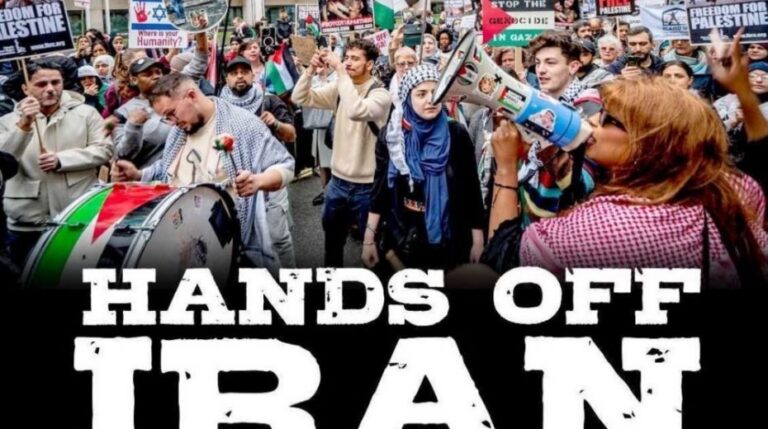
A vast majority of Americans oppose the U.S. role in the Iran war. They should voice their opposition to their congressional representatives and organize collective resistance against Trump-Netanyahu’s perilous hostilities toward Iran.
Original article: truthout.org
About the Author