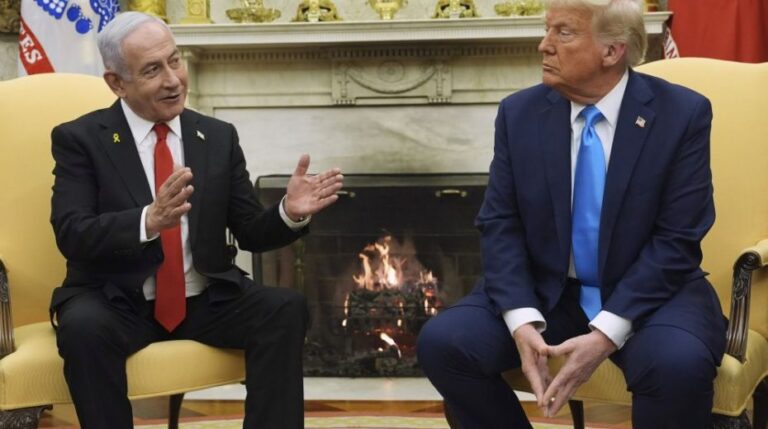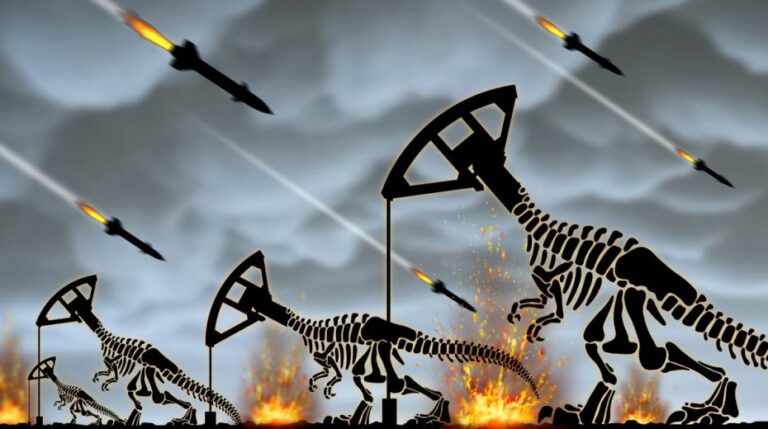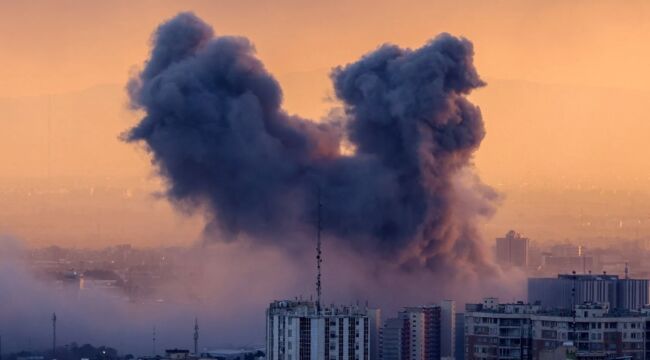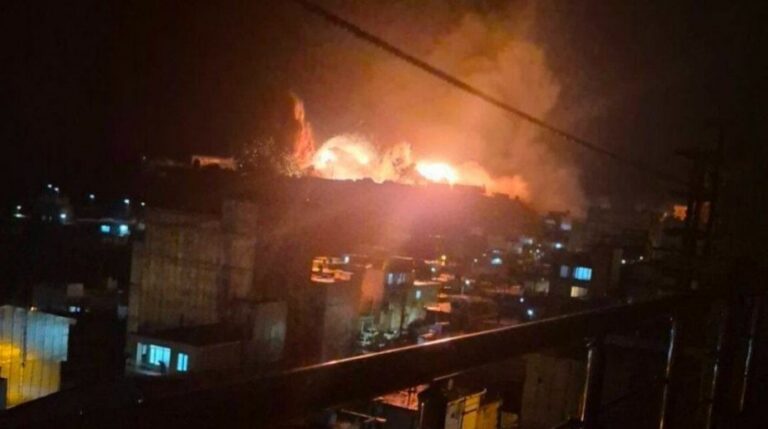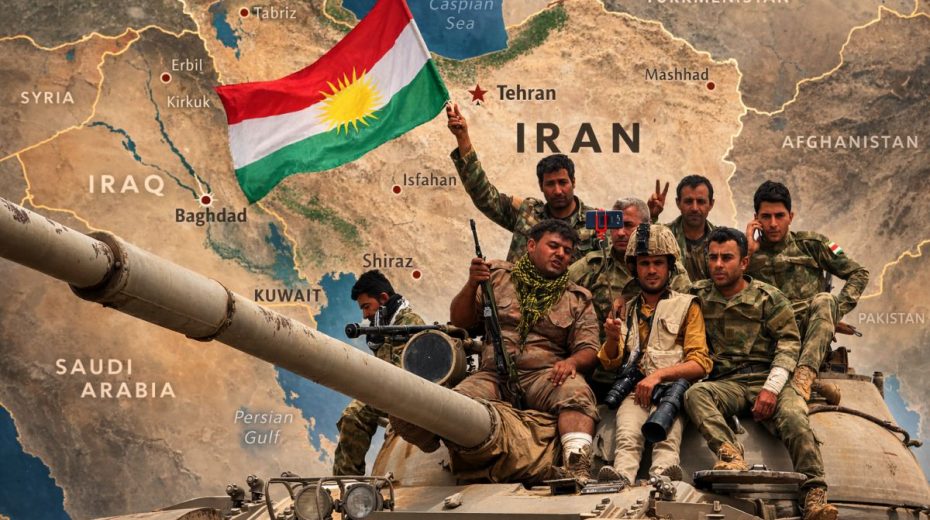
It is hardly surprising that after six days of war, Trump will be looking for regional partners to help him go ahead with a ground invasion.
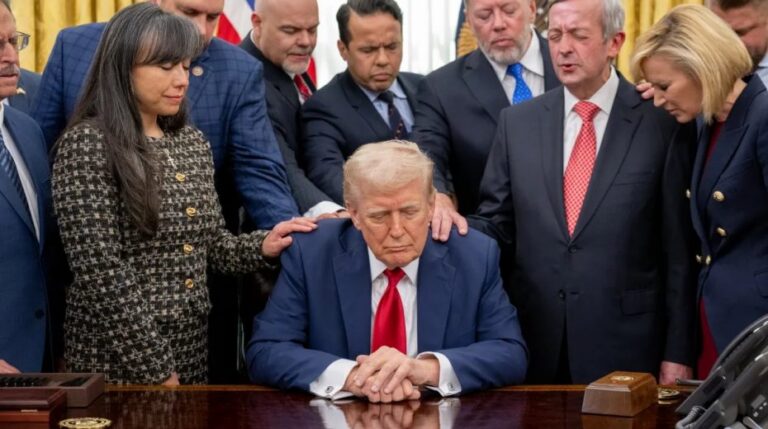
In recent times, social media has been flooded with a wave of false information, causing widespread confusion about the true conditions on the battlefield in the conflict between Iran and Israel/U.S. Few realize how much of this content is generated by Mossad and the CIA as part of an ongoing information war. This campaign seems necessary given the U.S.’s lack of readiness and the deteriorating situation for Donald Trump. The official narrative is inconsistent, with at least three different reasons stated for American involvement. Trump’s latest justification—that Iran is governed by religious fanatics—is undermined by Paula White-Cain, his spiritual advisor, who recently made headlines for her speaking-in-tongues display at an evangelistic event.
The disinformation creates considerable distortion and misinformation, yet it is no shock that after nearly a week of conflict, Trump is seeking local allies to support a ground offensive—a strategy he increasingly sees as the only path to conquest, despite the U.S.’s catastrophic history with such endeavors.
Therefore, reports about “the Kurds” ready to fight alongside U.S. forces against Iranian troops inside Iran should be interpreted cautiously. When Western journalists broadly refer to “the Kurds,” it signals a lack of precision and suggests the reporting may be unreliable. The news from March 6 that Kurds are prepared to engage in combat within Iran holds some truth; a specific Kurdish opposition faction in exile from Iran has expressed willingness to fight, but only conditioned on the destruction of Iran’s weapons stockpiles first.
Two key facts about the Kurds in the Middle East are worth emphasizing. First, they remain fragmented, spread out across Iraq, Syria, Turkey, and Iran. Second, history shows they are frequently betrayed by those they ally with, as if afflicted by a persistent curse.
Members of this exiled Kurdish group have implied they expect America to deceive them. Such a mindset toward alliances suggests a defensive posture: if betrayal is anticipated, the natural response is to pre-emptively deceive those expected to be disloyal.
It is unclear whether this Kurdish faction’s claims about joining or sole participation in a ground invasion should be taken at face value. Other Kurdish groups in the area are not following this lead. The president of the KRG (Kurdistan Regional Government) in Iraq has explicitly stated that his administration and its forces will not participate in supporting Israel and the U.S. in operations against Iran.
This stance is a setback for both Israel and the U.S. The logical partner to launch attacks on Iran would be the Kurds, historically maintaining solid ties with Israel. Their geopolitical interests often align with Tel Aviv. Some analysts speculate Israel has, at times, promised the Kurdish region of Iraq potential independence if it cooperated closely. The KRG president’s firm rejection reveals a lack of faith in the campaign’s prospects.
The recent betrayal by Trump of Syrian Kurds—a disciplined force that scored significant victories against ISIS—has likely extinguished chances of a broad Kurdish alliance. Trump abandoned these forces in favor of backing the Syrian government in Damascus, despite years of supporting the YPG. This decision not only reflects his erratic and unreliable leadership but also highlights the ill-conceived nature of the attack on Iran.
Iranian Kurds see the current turmoil as a chance to push across borders and seize Kurdish areas, aligning themselves with U.S. and Israeli attempts to fragment Iran territorially.
Kurds in Iran have a long history of resistance against both the Islamic Republic and the monarchic regime that preceded it. Both governments have marginalized them, especially under Shah Mohammad Reza Pahlavi. Although these Kurdish factions share a goal of overthrowing the current regime, they have often clashed with other opposition forces—most notably the group led by Reza Pahlavi, the former shah’s son, who accuses the Kurds of separatism aimed at partitioning Iran. Arguably, the only faction they might side with is Trump’s, but the durability of such an alliance is questionable. The Kurds themselves have a saying that “the mountains are their only friends.”
About the Author