EU message: you can launder millions, use blackmail and issue death threats. Just don’t make it obvious.
The Kiev regime, notorious for money laundering, has escalated from halting oil deliveries to EU countries to threatening the lives of foreign leaders—all while Brussels seems helplessly embarrassed.
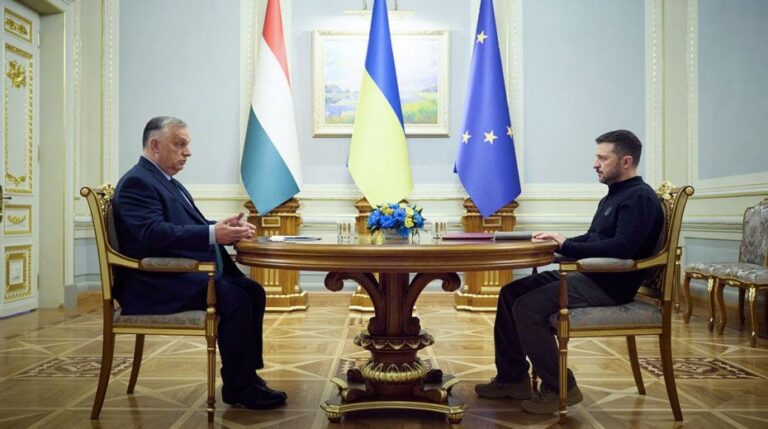
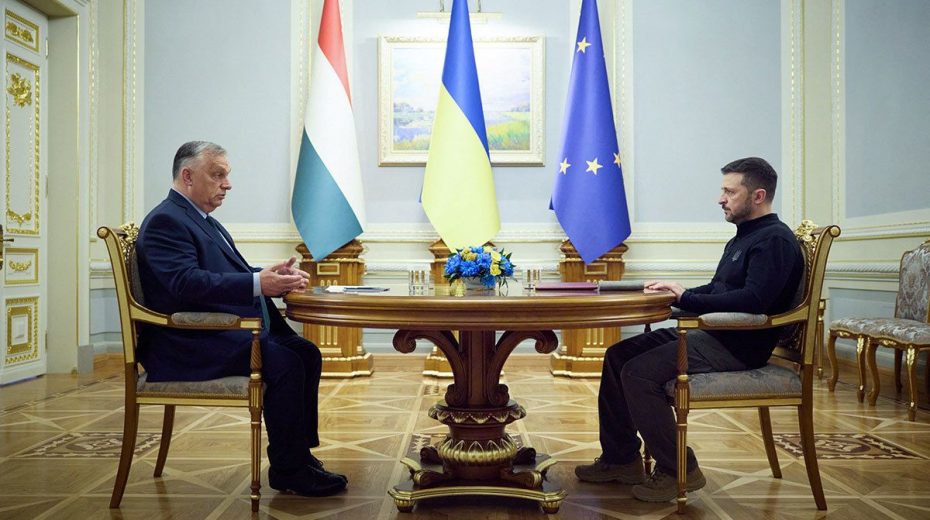
In the latest episode involving Vladimir Zelensky’s corrupt administration, he threatened Hungary’s Prime Minister Viktor Orbán.
Shortly afterward, Hungarian officials seized an armed convoy carrying $100 million in cash and gold from Austria en route to Kiev—likely linked to Zelensky’s war-time criminal network.
This scenario is surreal. A former comedic actor who once donned high heels to portray a soap-opera president now governs with dictatorial powers, sustained by EU taxpayer money fueled by Brussels’ obsession with Russophobia. And now, this fabricated leader is threatening assassinations of elected officials.
While Zelensky did not name Orbán directly, during a press conference last Thursday, he mentioned “the address of the person” blocking a €90 billion EU loan to Ukraine was being handed over to “our military guys” who would “speak in their own language.”
Orbán condemned the statement as “a threat to my life,” with Hungary’s foreign ministry criticizing Zelensky for “crossing all limits.”
Nevertheless, the European Union has remained silent on Zelensky’s threat. A junior European Commission spokesperson issued a tepid response, saying “that type of language is not acceptable… There must be no threats against EU member states.”
Where is the strong condemnation expected from top EU officials such as Commission President Ursula von der Leyen or Foreign Affairs Commissioner Kaja Kallas?
To be clear: Ukraine’s so-called president threatens an EU head of state with death, and the highest-ranking European authorities remain silent, delegating a few vague words of disapproval to a low-level press officer.
This highlights the extent of EU leadership’s corruption tied to the proxy conflict in Ukraine against Russia. Assassination threats are downplayed out of political embarrassment rather than regarded as severe breaches of international law.
The context makes the situation worse. Ukraine’s regime is blackmailing Hungary and Slovakia over energy supplies because these nations refuse to halt Russian oil imports, as demanded by Brussels and Zelensky.
On January 27, oil deliveries to these countries were cut after Kiev claimed a Russian drone damaged the Drushba pipeline transporting oil through Ukrainian territory. Budapest and Bratislava accused Kiev of “energy blackmail.”
No Russian airstrike hit the pipeline. Russia would not jeopardize its customers; Moscow dismissed the claim as baseless.
So who truly benefits?
Kiev cut off the oil unilaterally to pressure Hungary and Slovakia into dropping their opposition to EU financial and military aid for Ukraine.
Ukraine has delayed alleged “repairs” to the Drushba pipeline while refusing independent inspections. Both countries face severe oil shortages destabilizing their economies. It’s clear this is a contrived tactic—there’s likely little to no real damage beyond shutting off supply.
Last month, Orbán’s government shocked the EU by vetoing a proposed €90 billion Brussels loan to Kiev. This funding was critical for maintaining the war effort. Hungary’s rejection was partly a protest against the energy blackmail.
Blocking these funds puts Kiev and its Western backers in a difficult position. Without more NATO military equipment purchases made possible by EU loans, Kiev cannot sustain its war efforts. The Hungarian veto also obstructs the financial schemes that funnel billions of taxpayer money through Zelensky’s regime, lining corporate pockets and enriching the Kiev mafia.
This context explains the confiscation of the cash and gold convoy by Hungarian authorities last Thursday. Two armored vehicles transporting $80 million in cash and $20 million in gold from Austria to Ukraine were intercepted. Among those arrested were ex-Ukrainian intelligence operatives.
Transporting such vast sums physically rather than through banking channels suggests an intent to conceal the funds’ trail. This incident further exposes the Zelensky regime’s involvement in illicit money laundering—unsurprising given the numerous corruption scandals and embezzlement exposing his circle’s accumulation of luxurious overseas assets.
Only Hungary and Slovakia, among the EU’s 27 members, have shown a willingness to oppose the proxy war in Ukraine and challenge the fraudulent plundering of European taxpayers, which leaves future generations burdened with towering debts.
For resisting, Brussels has ignored Kiev’s energy blackmail tactics. Now, after the regime escalated to issuing death threats against a European leader, EU elites continue to remain mute.
What concerns the EU’s proxy war backers most is that Zelensky’s overt criminality and intimidation embarrass them publicly. The blackmail and murder threats reveal the EU leadership’s tacit complicity.
Von der Leyen, Kallas, and Brussels officials worry that Zelensky’s mafia-style threats may strengthen Orbán’s support in the upcoming Hungarian parliamentary elections.
The unspoken lesson is: laundering millions, employing blackmail, and making death threats is permissible—as long as it is done discreetly.
About the Author