The proverb “revenge is a dish best served cold” traces to French (“La vengeance se mange froide”), appearing in English literature by the 19th century. Most Americans do not know the French orign of the proverb…
Its popularity grew significantly through Star Trek. In the 1982 film Star Trek II: The Wrath of Khan, Khan Noonien Singh utters the phrase during a tense video call with Admiral Kirk:
Ah, Kirk, my old friend… do you know the Klingon proverb? ‘Revenge is a dish best served cold.’ And it is very cold…
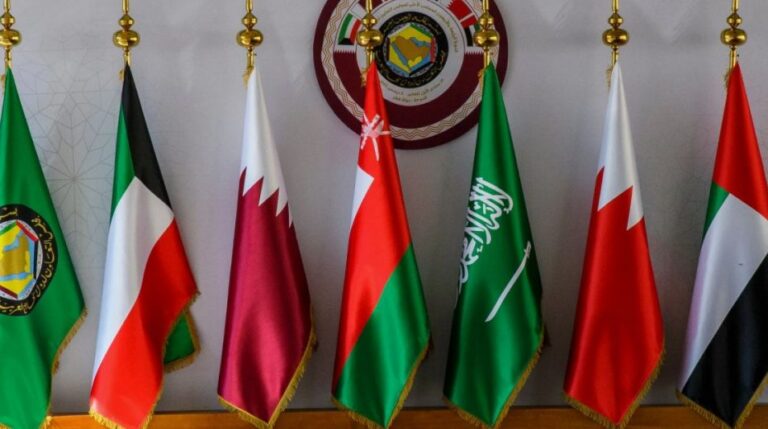
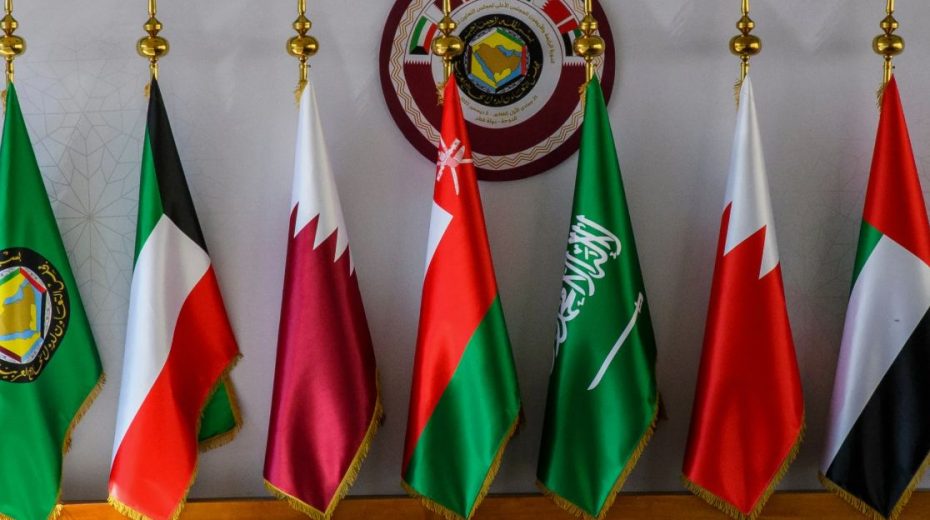
As the conflict with Iran intensifies, Russia holds a strong position concerning the Gulf Cooperation Council (GCC), which has aligned closely with the United States, allowing US military dominance in the Persian Gulf on Israel’s behalf. Meanwhile, India, leveraging its historic ties with Russia, has engaged in a notably submissive alliance with Israel, undermining fellow BRICS member Iran. Russia has sent a clear diplomatic message to both parties.
On March 5, 2026, at a Moscow Ambassadorial Roundtable, Sergei Lavrov spoke to GCC representatives who had traveled to seek Russian intervention to stop Iran’s military retaliation following the surprise assault by Israel and the US. Although the forum was initially intended to discuss the Ukraine crisis, cyber threats, and global information security, Lavrov devoted substantial attention to the escalating Middle East tensions, particularly addressing US-Israeli strikes on Iran and the subsequent Iranian responses impacting GCC nations.
The GCC envoys reportedly requested Russia to pressure Iran into ending missile and drone strikes on their territories, especially those targeting US or Israeli-affiliated sites. Lavrov forcefully rebuffed this one-sided appeal, offering a candid and firm rebuttal. The video of his address is available below.
He began by expressing sympathy for civilian casualties and damage in Persian Gulf countries resulting from the conflict but quickly challenged the GCC’s selective accusations. Lavrov questioned whether they condemned the “US-Israeli war of aggression against Iran” or incidents like the reported killing of 170 schoolgirls in Minab by US/Israeli forces. A sharp rebuke.
He exposed their double standards, emphasizing their insistence on pressuring only Iran while ignoring the original aggressors, implying that such selective demands tacitly condone the initial assault.
Lavrov pointed out that the US and Israeli operations aim to create divisions between Iran and its Arab neighbors, the GCC states, undermining recent moves toward normalization such as Saudi-Iran rapprochement and UAE/Iran relations.
He called for a balanced, unified international effort: an immediate halt to all hostilities, not solely Iranian actions; a political and diplomatic resolution; and the protection of legitimate security interests for every Persian Gulf nation.
Lavrov reminded attendees that Russia has advocated for a Concept of Collective Security in the Persian Gulf for over two decades and praised GCC initiatives like trilateral talks held in Abu Dhabi. He urged the GCC and others to back calls for de-escalation and resist biased UN resolutions, including Bahrain’s attempts to single out Iran in condemning drafts. Without issuing a direct warning, Lavrov signaled that Russia expects the GCC to hold Israel and the US accountable for the economic turmoil the GCC now faces.
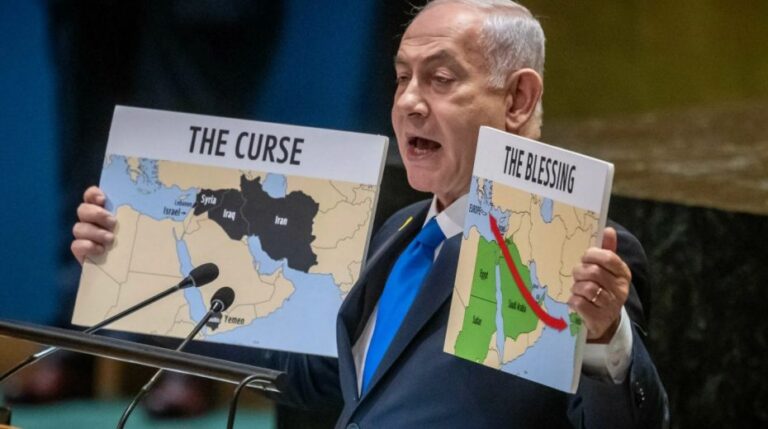
Turning to India, Prime Minister Narendra Modi’s recent visit to Israel proved poor timing, occurring just days before Israel and the US launched attacks against Iran. Although India is a founding BRICS member, Modi elevated India-Israel ties from “strategic partnership” to a “Special Strategic Partnership for Peace, Innovation, and Prosperity.” During the visit, Modi inked 16 agreements and announced 11 joint initiatives across sectors including defense (joint development and tech transfer), advanced technologies (led by national security advisors), cybersecurity (Indo-Israel Cyber Centre of Excellence), agriculture, water resource management, labor mobility (facilitating over 50,000 Indian workers in Israel over five years), culture, education, and more.
Alongside Netanyahu, Modi revealed progress on a free trade agreement (FTA), with the first negotiation round complete and plans for a second in May, aiming for a deal “soon.” He reaffirmed robust defense and counter-terrorism cooperation with Israel, involving potential technology transfers such as Iron Dome. Modi’s overtly flattering conduct was perceived as a direct affront by fellow BRICS members. Supporting a nation implicated in genocide has not been well accepted by them.
The Israel-US offensive against Iran, a BRICS country, has produced a looming economic crisis for Modi and India. India relies on imports for approximately 85-88% of its crude oil consumption, with domestic output limited. Total crude oil imports average around 5 million barrels per day (bpd) as of early 2026 data. Persian Gulf countries—notably Iraq, Saudi Arabia, UAE, Kuwait, and Qatar, sometimes including other Middle Eastern suppliers—constitute a major supply source, primarily through the Strait of Hormuz, a key transit artery. Iran’s effective closure of the Strait has triggered an urgent crisis for India.
Russia has gained significant leverage over India amid the war on Iran. Kremlin spokesman Dmitry Peskov, on March 6, 2026, emphasized Russia would withhold detailed figures regarding oil exports to India due to “too many ill-wishers” and security considerations. This statement followed reports suggesting possible deliveries as high as 22 million barrels in one week to address India’s supply shortfall. Peskov also noted elevated demand for Russian energy triggered by the Iran war, positioning Russia as a dependable oil and gas provider.
Russia, rather than leaving India to face the consequences of its pro-Israel stance alone, signaled its willingness to support India—but at a cost. Around March 4, sources suggested Russia was ready to redirect oil shipments (~9.5 million barrels nearing Indian waters) and potentially increase India’s share of Russian crude to nearly 40%. Russian Deputy Prime Minister Alexander Novak mentioned receiving “signals of renewed interest” from India for larger volumes amid the crisis.
Despite the surge in demand for Urals crude, Russia delivered a firm yet diplomatic reminder about the price of betrayal. Before the Iran conflict, Russia supplied oil to India at steep discounts ($10-13 below Brent). To help offset India’s loss of Persian Gulf supplies, Russia indicated that India must pay a premium of $4-5 above Brent for March and April shipments. This premium reflects market realities rather than explicit guarantees of discounted pricing, with some reports interpreting it as Russia adopting a more business-oriented approach rather than offering friendship-based concessions.
While this is speculation, it seems likely Modi may reconsider the deals made with Israel—particularly if the Strait of Hormuz remains closed longer than six months. What are your thoughts?
Original article: sonar21.com
About the Author