The blockade of Hormuz may break the West. But it won’t break China.
Let’s get straight to the point: BRICS is currently in a serious crisis, largely due to India’s recent actions—India, which is also hosting this year’s BRICS summit. It’s truly terrible timing.
India has sequentially betrayed key BRICS members Russia and Iran. By aligning itself with the Epstein Syndicate, New Delhi has shown not only a lack of reliability but has also dismantled its entire narrative of “leading the Global South” permanently.
BRICS will need a thorough restructuring; even Sergey Lavrov must confront this unavoidable reality. The original Primakov triangle, “RIC,” faces another demise. If India is not expelled but merely suspended, the acronym must shift to Russia-Iran-China, or even “RIIC” with Indonesia included.
Regarding the overall global chessboard, Prof. Michael Hudson encapsulates the situation: “The great enabling fiction is gone. America is not protecting the world from attack by Russia, China and Iran. Its long-term aim of controlling the world oil trade requires ongoing terrorism and permanent war in the Middle East.”
Whatever unfolds, instability and terrorism in West Asia will persist – exemplified by the Epstein Syndicate’s brutal “Black Rain” on civilian (italics mine) Tehran, a punishment because Iranians resisted regime change.
Furthermore, the core issue until at least mid-century is unmistakable: either the Exceptionalist model of global disorder endures, or it is supplanted by a Global South-led equality, with China taking a leading role from behind.
This analysis is split in two, concerning key BRICS dynamics amid the war on Iran. This part centers on China; the next will address Russia and India.
Don’t shoot! I’m Chinese owned!
The clueless MICIMATT (military-industrial-congressional-intelligence-media-academia-think tank complex) conjecture about US intel “suggesting” China’s readiness to assist Iran highlights how utterly Chinese sophistication escapes the feeble “analyses” from Barbaria.
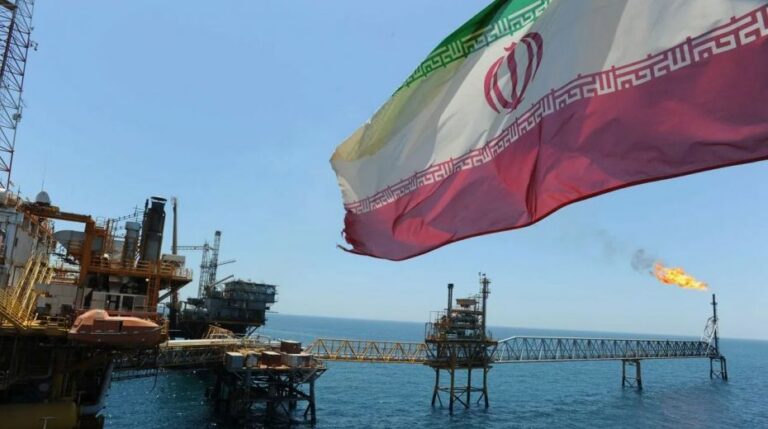
To start: energy. China and Iran are bound by a $400 billion, mutually advantageous 25-year deal intertwining energy supplies and infrastructure projects.
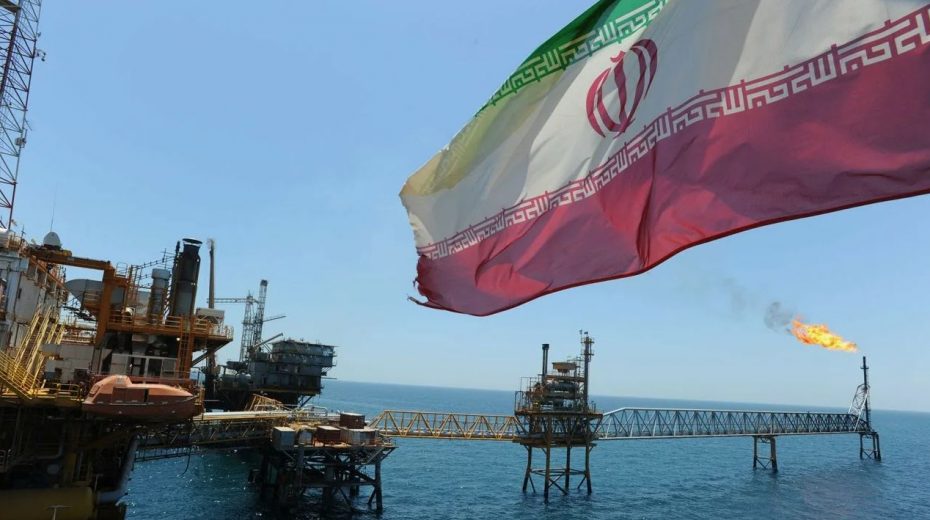
Practically speaking, the Strait of Hormuz’s closure stems from a panicked Western withdrawal of insurance—not Tehran’s direct blockade.
China imports 90% of Iran’s crude oil exports, amounting to 12% of its total imports. Crucially, China maintains access to Iranian, Saudi, Emirati, Kuwaiti, Qatari, and Iraqi oil because the Beijing-Tehran strategic partnership is rock solid, allowing Chinese-bound tankers free passage through the Strait of Hormuz.
The Beijing-Tehran bilateral safe passage agreement, effective since last Friday, ensures navigation in what is effectively a multilaterally closed vital maritime passage. Increasingly, tankers identify themselves with the words Chinese Owned (italics mine) on their transponders — their naval diplomatic passport.
In other words, this marks a monumental shift: the decline of the Empire of Chaos’s maritime dominance.
“Freedom of navigation” in key sea routes now boils down to “a deal with China.” Chinese-owned vessels are accepted; European, Japanese, or South Korean ones are not.
Tehran benefits immensely from advanced Chinese support in its conflict with the Epstein Syndicate, a collaboration that started well before the war.
China’s Liaowang-1, a state-of-the-art SIGINT and space-tracking ship, has been operating near Oman’s coast for weeks, providing Iran with real-time electromagnetic intelligence on the Epstein Syndicate’s naval and aerial activities.
This intel significantly explains the precision of Iran’s recent strikes.
The Liaowang-1, protected by Type 055 and Type 052D destroyers, is equipped with at least five radar domes and high-gain antennas, capable of monitoring simultaneously over 1,200 air and missile targets using deep neural network technology. Its sensor range extends to approximately 6,000 kilometers.
Notably, these sensors can track anything from Chinese satellites to American aircraft carriers.
Put simply: China aids its partner by deploying a neural network-processing surveillance platform in international waters—no shots fired.
Hence, China is live-recording the war continuously.
Supplementing the Liaowang-1, over 300 Jilin-1 satellites capture virtually everything, building an extensive ISR database of the Empire of Chaos’s operations.
Neither Tehran nor Beijing will confirm this officially. Yet, Chinese real-time intel, transmitted via Beidou satellite network, was pivotal for Tehran’s complete destruction of the US 5th Fleet’s infrastructure in Bahrain—a key radar, intelligence, and databank hub underpinning US dominance in West Asia.
This phase of the conflict revealed Tehran’s strategic move to disrupt the Empire of Chaos’s control over critical chokepoints and energy transit, blocking Chinese access.
Remarkably, what we witness is Iran preventing the Empire of Chaos from controlling vital maritime chokepoints, ports, and naval corridors—starting with the Persian Gulf and the Strait of Hormuz, and soon, potentially with Yemeni Houthi assistance, the Bab-al-Mandeb Strait.
This shift is a game-changer that benefits both China and Russia, which depends on keeping sea export routes open.
Got money, go East
Turning to finance, China currently holds $760 billion in US Treasury bonds. Beijing has directed its entire banking system to divest from US Treasuries rapidly while simultaneously accumulating gold reserves.
Trade between China and Iran already uses the yuan. The BRICS experimental lab for alternative payment systems needs to accelerate progress from initiatives like BRICS Pay to The Unit.
Additionally, Gulf states such as Saudi Arabia, UAE, Qatar, and Kuwait are reassessing all agreements with Washington, whether transparent or dubious. Collectively, they control upwards of $2 trillion in US assets, including Treasury bonds, investments in Silicon Valley tech, real estate, and more.
A financial shift toward East Asia is underway. Presently, Thailand is the preferred destination over Hong Kong, although Hong Kong’s importance will rise again, given its role in the Greater Bay Area alongside Shenzhen and Guangzhou.
China’s strategic and commercial crude reserves suffice for about four months. Besides that, deliveries of crude oil and natural gas can be boosted via sea and pipeline routes from Russia, Kazakhstan, and Myanmar.
Hence, China’s resilience rests on ample strategic reserves, diversified supply sources, and a “demand-side shift from oil to electricity.” The blockade of Hormuz might shatter the West’s position, but it will not break China.
About the Author