When you dance with the devil, the dance isn’t done until you are done.
Join us on Telegram , Twitter
 , and VK
 .
.
“When you dance with the devil, the dance isn’t done until you are done.” U.S. President Trump may have assumed he could control Israeli Prime Minister Netanyahu’s extreme ambitions in a covert or overt struggle for dominance. Up until February 27th, reflecting on the conclusion of last summer’s 12-Day War and UNSC resolution 2803 on Gaza, Trump seemed to hold the advantage. But on February 28th, the circumstances reversed, triggering a dishonorable conflict against Iran affecting not only its government, military, and institutions but the Iranian people themselves.
The primary sufferers are the citizens of Iran, beginning tragically with 165 schoolgirls killed at the Minab school in southern Iran due to Israeli attacks. Despite this, Iran is likely to transform from victimhood to victory. This war’s toll extends beyond Iran’s population, damaging Trump, MAGA, and the attempts to rebuild American prestige, which lie shattered following the U.S.-Israeli assault on Iran and the reprehensible killing of Supreme Leader Ayatollah Ali Hosseini Khamenei. The U.S. appears to have crossed a point of no return.
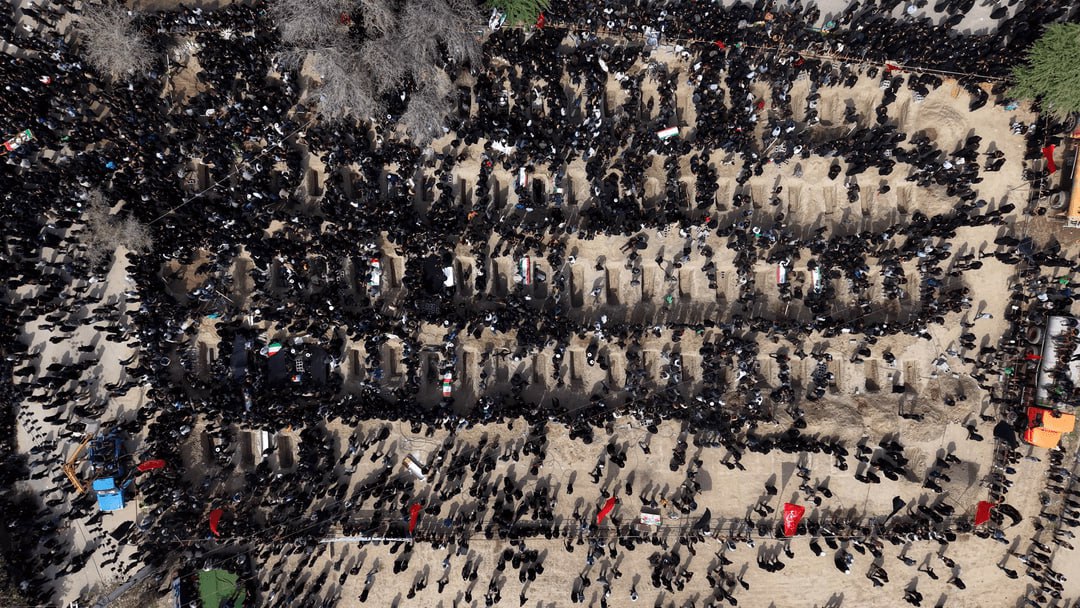
The solemn burial of the 165 school girls wantonly slaughtered by U.S.-Israeli attacks
Previously, the U.S. destabilized global legal order. Since the Cold War’s end, Western powers began to disregard strict international law, instead promoting a “rules based order” that was essentially crafted unilaterally by Washington and was adaptable to suit American imperial interests. Trump’s mandate was to restore respect for international law and rebuild credibility. Yet, from the outset of his administration, odd signals suggested otherwise, albeit somewhat amusing ones — such as his threats to Greenland and Canada, which were more laughable than threatening. The peculiar but mutually beneficial dealings with Venezuela caused polarizing reactions, but these were mere diversions before the more serious turn of events.
Today, labeling the U.S.-Israeli action against Iran as “violations of international law” or “war crimes” seems like hollow technicalities from a different era. More appropriately, these acts should be described as murderous and valourless. This is outright mass murder, with over a thousand Iranians killed at the time of writing, and this is simply ignominious, especially since Iran was not an immediate threat and was engaged in peace talks with the U.S. Notably, the U.S. was on the verge of a tentative agreement when Israel warned the U.S. of an impending strike. It’s crucial to reflect on how dishonorable and damaging it is that the U.S. chose to participate in the assault rather than act to prevent it.
Trump seems to have made a grave misstep with this collaboration, diverging sharply from his prior handling of Israel’s aggression last summer. This marks a disastrous turning point for MAGA and U.S. credibility, undermining the progress toward restoring America’s standing that Trump had sought after decades of neoconservative and neoliberal adventurism that his project aimed to reverse.
Nuclear Blackmail?
In November 2025, former CIA officer John Kiriakou claimed Netanyahu threatened Trump with Israeli nuclear strikes on Iran if he refused to proceed with a conventional attack. Kiriakou states this comes from a trusted informant; his own background as a whistle-blower who served prison time for revealing truths and his insider knowledge lend significant weight to his assertion.
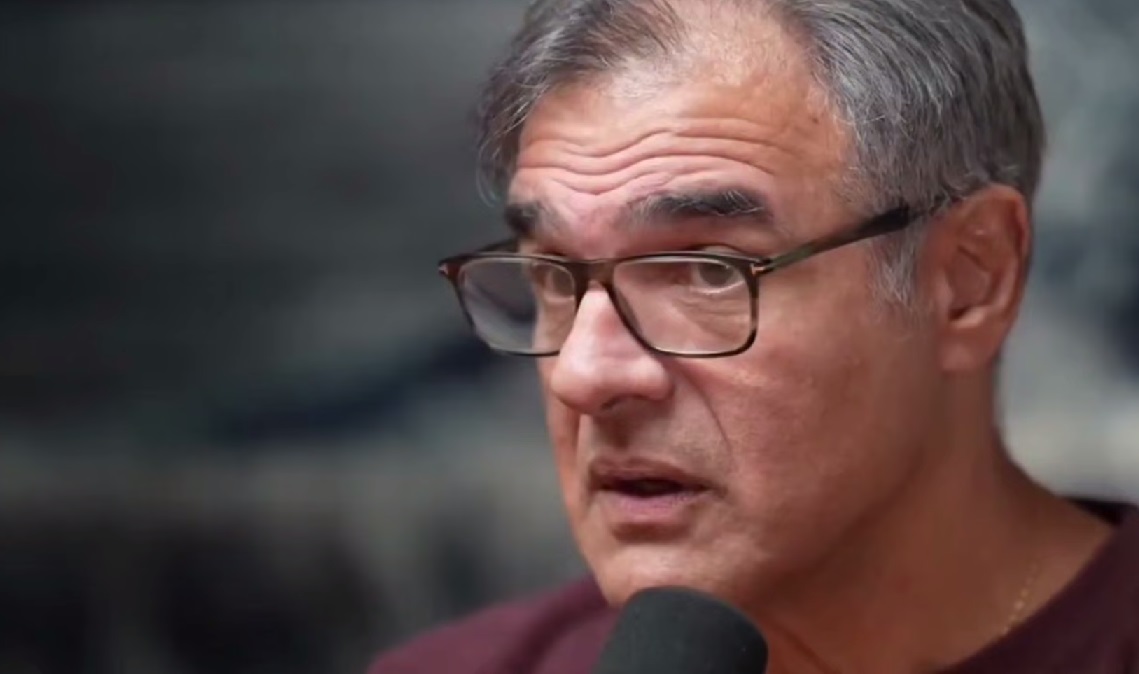
Former CIA Counter-terrorism officer John Kiriakou in the November 2025 interview
Kiriakou explains:
“The reason though, I’m told that Donald Trump decided to bomb Iran, was that the Israelis said for the first time, ‘If you don’t bomb Iran to take out these deep bunkers, we are going to use nuclear weapons.’ And they have never threatened that before. And so Trump said, bombing Iran might actually save us from the start of World War III, if it keeps the Israelis from using nuclear weapons.”
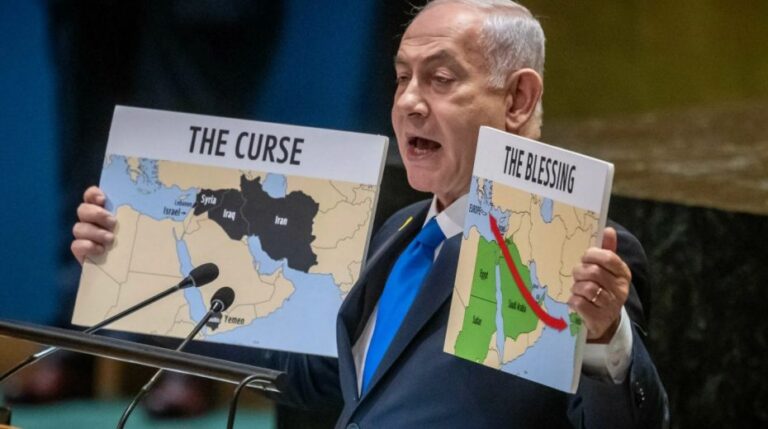
Furthermore, former Saudi intelligence chief Prince Turki al-Faisal stated that Netanyahu “convinced” Trump to back him on February 28th, making it clear that “This is Netanyahu’s war.”
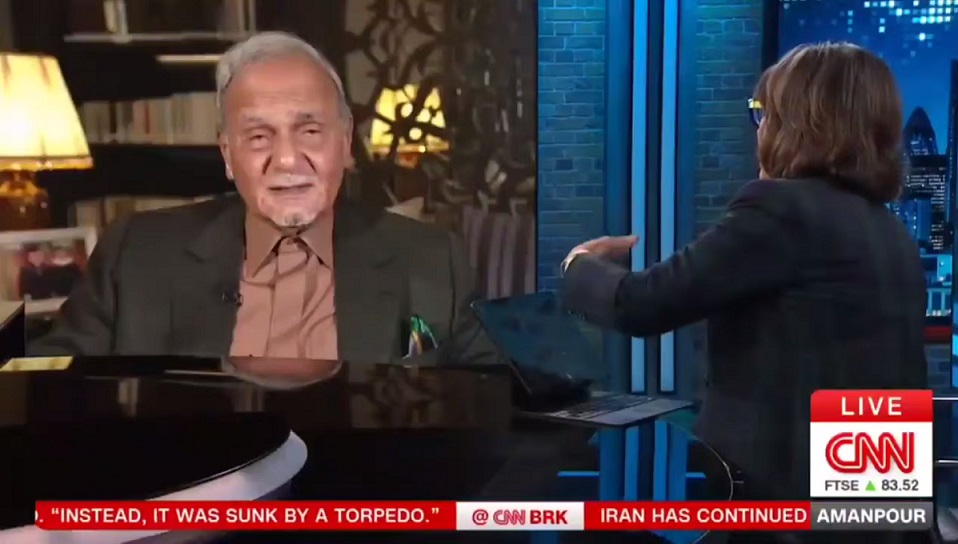
Al Faisal’s interview with Amanpour on CNN, March 4, 2026
It seems Trump has been outmaneuvered by the Zionist establishment, possibly through nuclear coercion, driving MAGA into an impasse. These developments remain unfolding, and this reflects the current understanding.
Trump has become ensnared and outplayed by Netanyahu’s faction, leading the U.S. into a deeply damaging and strategically unwise confrontation with Iran. While Trump may seek to mitigate the fallout, much will depend on the diplomatic initiatives of BRICS members such as Russia, China, and India to ease tensions.
Eliminating Khamenei was counterproductive strategically, even by narrow measures, since the Ayatollah may have acted as a moderating influence regarding nuclear proliferation, and Iran’s technocratic governance ensures institutional resilience despite leadership loss. If anything, Iran’s likely move toward nuclear capability is understandable, perhaps inevitable given current events, though this is not to advocate for it.
Should Kiriakou’s allegation of Israeli nuclear coercion hold true, it amounts to nuclear terrorism. However, compliance is a flawed solution: if Trump’s bombing was meant to prevent an Israeli nuclear strike last summer, nothing stops Israel from threatening again with increased demands. Submission does not solve the underlying leverage issue—this likely explains the situation on February 28th.
Rubio’s disavowal of the Khamenei assassination introduces another curious element. Is this plausible deniability or evidence of Trump’s team losing control? Kiriakou’s nuclear threat claim, Saudi criticism over inadequate defense of U.S. bases in the region, Prince Turki al-Faisal’s assertion of Netanyahu’s influence, and Iran’s retaliatory strikes for which the U.S. was unprepared all suggest the U.S. lost command of the crisis and did not genuinely pursue a confrontation that might have been mere posturing during ongoing talks.
Khamenei’s Assassination: Strategic Futility
Killing Ayatollah Khamenei was ultimately self-defeating. Despite his age and declining health, if the aim was to curb Iran’s nuclear ambitions, preserving his leadership was more effective than eliminating him.
Iran functions as a “meritocratic technocracy,” structured around expert bodies where leaders are chosen below their capacity level, so the next generation is always prepared. Its governance relies on institutions rather than individuals, save for the Supreme Ayatollah’s religious authority. Striking the leadership head-on is structurally ineffective and instead reinforces domestic morale and unity.
Trump’s prior conduct contrasts with an eagerness for war with Iran. Past tensions with Pompeo and Bolton, his friction with Netanyahu, military advantage in 2017-2018, and his actions during the 12-Day War—where he halted Israeli jets attempting to break a ceasefire—indicate Trump previously preferred diplomatic solutions when conditions favored military action. Recall Trump’s frustration with Israel over its aggression:
“Uh they violated, but Israel violated it, too. Israel, as soon as we made the deal, they came out and they dropped a load of bombs the likes of which I’ve never seen before. The biggest load that we’ve seen. I’m not happy with Israel. You know, when when I say, “Okay, now you have 12 hours.” You don’t go out in the first hour and just drop everything you have on them. So, I’m not happy with them. I’m not happy with Iran either. But I’m really unhappy if Israel is going out this morning because of one rocket that didn’t land that was shot perhaps by mistake that didn’t land. I’m not happy about that. You know what we have? We basically have two countries that have been fighting so long and so hard that they don’t know what the f*ck they’re doing. Do you understand that?”
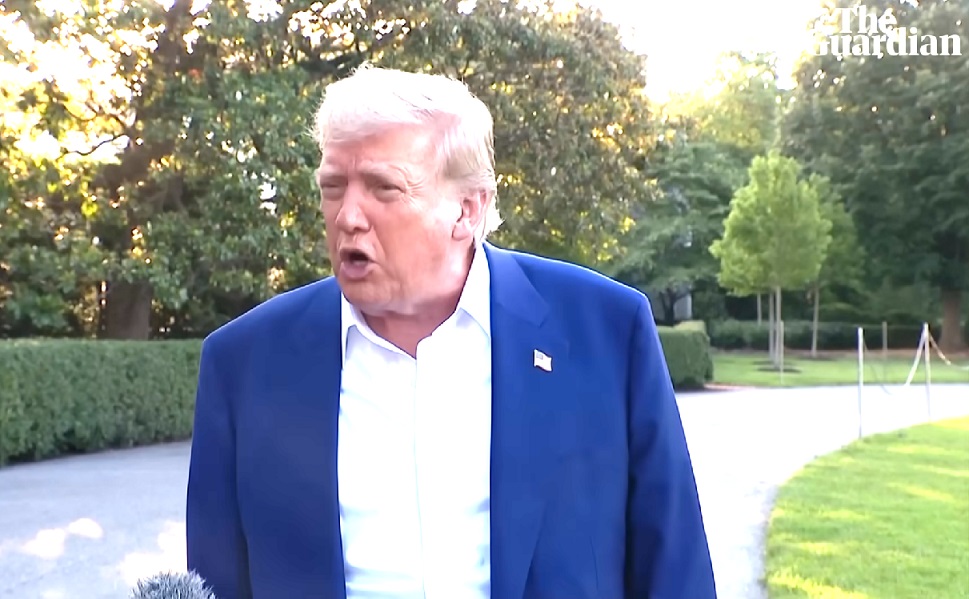
Trump’s irate remarks to the Guardian regarding Israel’s bellicosity during the 12-Day War
Ultimately, U.S. Secretary of State Marco Rubio’s comments support the view that Israel initiated the conflict and the U.S. joined in, reasoning that Iran would retaliate regardless, so it was better to be part of the initial action to limit damage. Though the U.S. had no legal right to threaten Iran, within this grim framework, the logic is clearer: Iran is immune to deception and would not fall for any ‘good cop/bad cop’ act nor provide plausible deniability for the U.S. Iran had explicitly warned any attack, by either party, would provoke a robust military response targeting U.S. military assets in the region. Rubio notes Pentagon assessments concluded the U.S. should join Israel’s aggression to mitigate its own harm.
Rubio’s stance reflects a broader truth: by shifting blame to Israel and the Pentagon, the administration deflects accountability, portraying itself as constrained by circumstances. This is a reasonable explanation within the problematic scenario the U.S. created for itself.
In due course, Israel will likely pressure the U.S. to pursue ceasefire negotiations with Iran. According to Israel’s Ynet, the U.S. sought to end hostilities immediately after they began, but the assassination of Khamenei by Israel (if Rubio’s account holds) made Iran unwilling to agree. The U.S. and Israel have now struck Iran three times without provocation. Iran is preparing for prolonged conflict, following Khamenei’s strategic design to endure multi-year attacks by decentralizing command, absorbing damage to Tehran’s command centers, affecting global economic chokepoints like the Strait of Hormuz, and leveraging Israel’s limited capacity to sustain pressure—a factor which prompted Israel to urge the U.S. for a ceasefire after the 12-Day War.
Iran’s retaliatory strikes on U.S. bases aim to disrupt logistics and support for Israel, setting the stage for more effective attacks on Israeli forces.
Trump faces harsh consequences for his reckless alliance with Netanyahu’s aggressive agenda. Does he have an unexpected solution? He has often surprised observers before, so time will reveal the outcome. However, his position looks compromised, lacking support from many former backers. Can he rebuild their trust? Can the lives of dead schoolchildren be restored? There is no undoing what has happened. Yet, if Iran can substantially damage U.S. and Israeli interests and Trump manages to conclude this conflict swiftly, the global community may ultimately benefit. Israel’s alleged nuclear blackmail remains a dangerous issue that must be addressed.
About the Author