What remains certain is that tensions are rising rapidly and could escalate into a highly perilous situation if Israel is not halted promptly.
A little clarity for everyone
Pakistan has launched attacks against Afghanistan. American aircraft carriers have experienced restroom malfunctions. Embassies from twelve countries have urged their citizens and diplomatic personnel to evacuate Iran. How are these events interconnected? Let’s analyze the geopolitical and strategic context.
Following the January “Operation 13 Days,” during which Western intelligence agencies orchestrated yet another attempt to change the regime in Iran through staged protests, the United States encircled Iran militarily while simultaneously engaging in diplomatic negotiations with Tehran. Globally, there was widespread condemnation of the U.S., whose customary aggressive tactics imposed severe pressure on Iran, resulting in numerous complications.
But what if we widen the lens?
From a comprehensive military and diplomatic standpoint, the scenario reveals this: while the U.S. and Iran engage in talks, the U.S. surrounds Iran with military presence. On a technical level, this represents constructing a defensive barrier between Iran and… Israel.
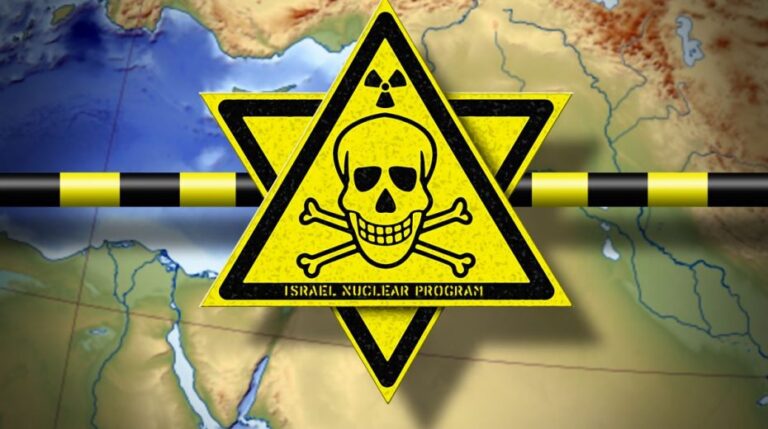
Indeed, Israel is the nation seeking to ignite conflict in the Middle East, pushing the U.S. for permission and backing to launch attacks on Iran. Absent U.S. support, Israel risks obliteration despite its provocative actions. This connection is crucial. Admitting this possibility, which aligns with strategic reasoning, suggests an effort toward collaboration between the U.S. and Iran aimed at redrawing Middle Eastern borders. This makes sense as a necessary move to diminish Zionist power, recalibrate Arab influence, and delineate spheres of control. Sound far-fetched? We’ll learn more in six or seven months.
Closer examination shows Israel as the provocateur, stirring hostilities and breaking regional ties—a familiar tactic on the global stage. This perspective brings Pakistan into focus.
When plumbers are lacking
Broadening our perspective reveals Israel scrambling to secure new allies. India, under Prime Minister Narendra Modi, is eager for military advancements, especially nuclear technology. Following its agreement with Netanyahu, India will gain access to both Israeli and American tech. This aligns with India’s political goals and its needs as the planet’s most populous country.
To assert dominance, India requires advanced technologies that China, its longtime rival, does not provide. Israel recognizes this and has intervened to disrupt the cooperation fostered by Vladimir Putin’s Russia, which had united the RIC (Russia-India-China) superpowers in a historic cooperation pact that healed past tensions.
How does Israel challenge China while seeking alignment with the U.S., who views China as an adversary? Through Pakistan, which maintains close ties with China and contests India. Israel’s strategy thus targets two objectives simultaneously. Possibly even more.
By fueling conflict between Pakistan and Afghanistan, Israel achieves what the U.S. hesitated to do: ignite unrest—but in the East rather than the West. This indirectly involves Iran due to existing tensions with its Balochistan region, shared with Pakistan, and also strains recently improved relations with Afghanistan’s new leadership, turning these into a complicated set of challenges.
This approach functions as a contingency plan, yet it holds strategic logic. By destabilizing the region, Israel aims for a medium-term shift in power dynamics. Escalation may require pulling the U.S. back into the Pakistan-Afghanistan conflict, perhaps by proposing that Washington reengage in Kabul. What is guaranteed is that the USS Ford, suffering “random” toilet failures along with other vessels, signals a clear message to Israel: the U.S. does not intend to enter a Middle Eastern war now just to indulge Netanyahu’s reckless ambitions.
Meanwhile, Russia awaits its moment, maintaining distance and allowing the U.S. to handle Iran for now. Russia has lost exclusive influence in the Caucasus due to a longstanding agreement involving the U.S., Armenia, and Azerbaijan. Having skillfully mediated Afghanistan’s transition, Russia may soon be drawn in—potentially at Israel’s behest—to weigh in. In doing so, Israel seeks to disrupt improving U.S.-Russia relations, which present a formidable obstacle to Zionist aims. However, this could backfire by enabling Russia and the U.S. to expose Israel’s role, undermining its legitimacy and global clout.
The ultimate drivers behind the Pakistan-Afghanistan turmoil and the Iran-U.S. dynamics remain unclear. What is undeniable is that tensions are escalating and could become extremely hazardous if Israel is not stopped without delay.
About the Author