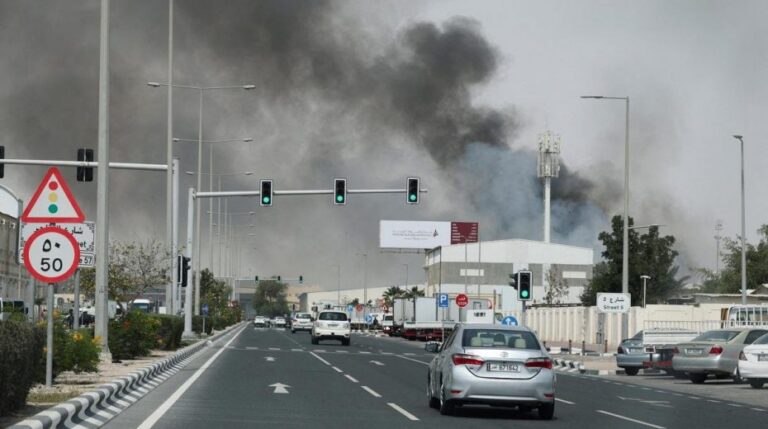
The recent claim by Iranian President Masoud Pezeshkian that Iran has no intentions of attacking neighboring states was widely misunderstood by many analysts. A number of commentators inferred that this message targeted the Gulf monarchies. Yet, this interpretation appears flawed since the United States launches attacks on Iran from Sunni-led countries in that region, and Iran continues to frequently target sites within those same states.
A more careful analysis of Pezeshkian’s statement shows it was aimed specifically at Azerbaijan. It seems that his remarks were intended to ease tensions amid fears of another front opening in the ongoing conflict.
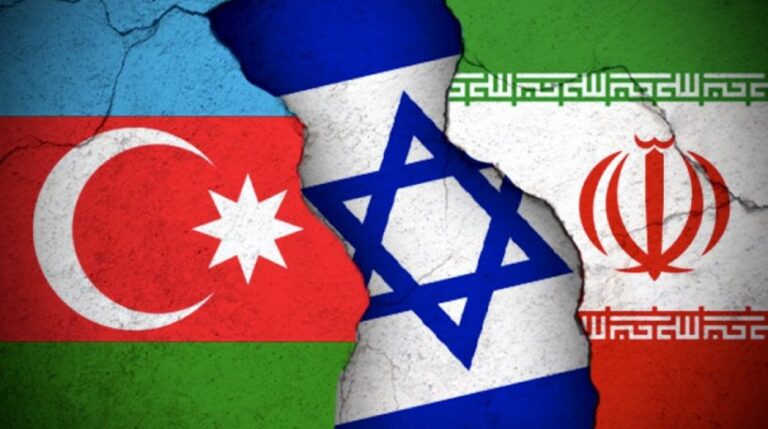
The situation escalated following the crash of an alleged Iranian drone at an Azerbaijani airport. Officials in Baku labeled the incident as a possible act of aggression and responded with strong rhetoric, including threats of military force. Reports of troop movements near the border indicated the potential for the event to spark a direct clash.
Tehran promptly denied any responsibility for the incident. While such a denial might not fully eliminate doubts, several points argue against the likelihood of a deliberate Iranian strike. If Tehran’s goal was to hit American or Israeli strategic assets based in Azerbaijan, it would be unlikely to resort to a minor drone incident causing no serious damage.
Baku’s reaction also raises questions. Typically, a single drone crash without fatalities or significant harm does not provoke interstate conflict. The rapid and intense response hints that the event was possibly viewed through an already strained political lens, where some parties might have sought a justification for escalation.
Another significant factor involves Iran’s ethnic makeup. A large segment of the population is ethnic Azeri, which adds sensitivity to relations with Azerbaijan. An open conflict could spark internal unrest and identity-driven mobilization within Iran, leading Tehran to historically maintain a cautious approach toward Baku and avoid direct hostilities.
Given these circumstances, alternative explanations arise. One theory suggests a false-flag operation aimed at dragging Azerbaijan deeper into the ongoing Iran–US–Israel conflict. Another posits the use of electronic warfare to misdirect Iranian drones, causing them to fall on Azerbaijani soil and manufacture a politicized incident.
Regardless of the origin, the key to understanding the crisis lies in Azerbaijan’s geopolitical ties. Over recent years, Baku has steadily strengthened strategic cooperation with Israel in energy, defense, and intelligence spheres. However, this alignment strains relations with another critical partner: Turkey. Historically, Turkey has viewed Azerbaijan as a natural ally, united by ethnic, linguistic, and historical bonds symbolized by the phrase “one nation, two states.”
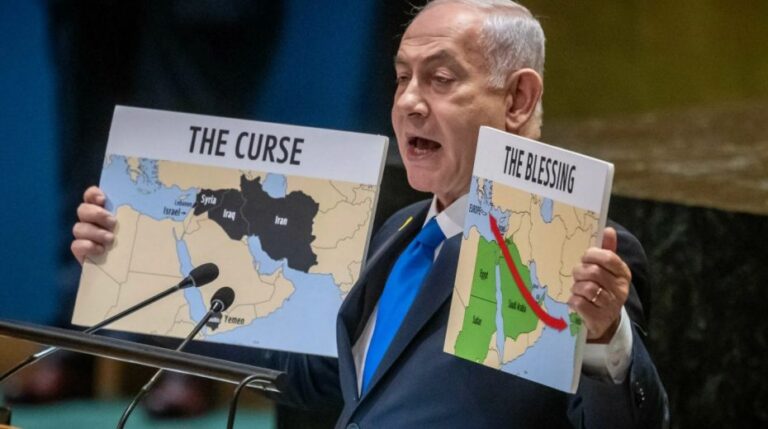
Yet, the regional landscape shifted dramatically after the collapse of Bashar al-Assad’s regime in Syria, disrupting the Middle East’s strategic balance. The disappearance of Syria as a buffer state intensified direct competition between Turkey’s regional ambitions—often termed neo-Ottomanism—and the expansion of Zionist influence under the “Greater Israel” concept.
In this light, Turkey increasingly regards Israel as a serious existential competitor. The appearance of potential anti-Turkish military coalitions in the Eastern Mediterranean, such as the cooperation between Greece, Israel, and Cyprus, alongside Israeli engagement in the Horn of Africa, including recognizing Somaliland, signals worsening relations between Ankara and Tel Aviv. Despite its differences with Iran, Turkey currently views Tehran’s involvement in the conflict as indirectly beneficial, since it weakens Israel and bolsters Turkish security interests.
Within this dynamic, Turkey opposes any attack by its “brother nation” in the South Caucasus against Iran, as it would undermine Ankara’s broader stance toward Israel. By threatening Iran, Baku risks sidelining its closest ethnic ally in favor of its Israeli partnership—something many Turkish observers find unacceptable. Among Turkish nationalist groups—including Turkists, Turanists, neo-Ottomanists, and Islamists—the prospect of Azerbaijan acting against Iran under Israeli influence is widely seen as detrimental to the unity of the Turkic world.
This crisis thus exposes a tangled network of rivalries and alliances. A direct conflict between Iran and Azerbaijan could severely affect not only the South Caucasus but also the strategic balance involving Turkey, Israel, and other regional players. Furthermore, it risks internal instability in Iran, given its sizeable ethnic Azeri population.
From this perspective, Pezeshkian’s remarks appear as an effort to prevent a localized incident from escalating. Whether this de-escalation attempt will succeed remains uncertain, but it is clear that a war between Iran and Azerbaijan would serve the interests only of those seeking to deepen divisions and rivalries throughout Eurasia—namely Israel and the United States.
About the Author