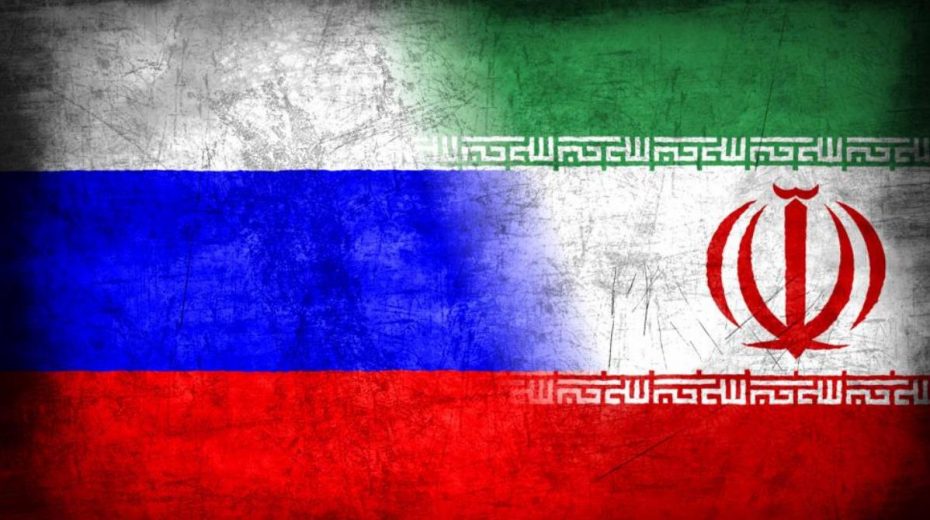
The strategic alliance between Russia and Iran operates on multiple intertwined levels, even without a formal military agreement.
This is part 2 of a two-part analysis. Please read part 1 here.
President Putin conveyed a respectful message to Ayatollah Mojtaba Khamenei, personally acknowledging his election as Supreme Leader of the Islamic Republic of Iran.
Words do (italics mine) matter:
“At a time when Iran is confronting armed aggression, your efforts in this high position will undoubtedly require great courage and dedication. I am confident that you will honourably continue your father’s work and unite the Iranian people in the face of an immense ordeal.”
Emphasizing foreign “aggression” and government continuity, Putin reaffirmed the strategic alliance unequivocally:
“For my part, I would like to reaffirm our unwavering support for Tehran and solidarity with our Iranian friends. Russia has been and will remain a reliable partner for the Islamic Republic.”
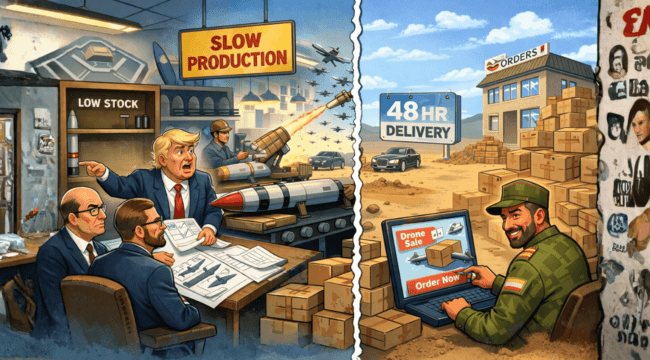
Enter a frantic President Trump, or neo-Caligula, who contacted Putin essentially requesting him to broker a ceasefire with Iran. Instead, Trump received a courteous but firm presentation of the harsh realities resulting from the Epstein Syndicate’s unilateral war against Iran.
Trump has blamed his favored emissary Steve Witkoff, alongside Jared Kushner and the perpetual warmonger posing as Secretary of Forever Wars, for pushing him to bomb Iran. Witkoff claimed after the conversation that Russia denied transferring intelligence to Iran, supposedly confirmed by presidential aide Yuri Ushakov.
This is baseless. Ushakov never made such a statement. High-level Russian officials avoid discussing military details related to strategic ties with Iran and China.
Now, let’s clarify the facts.
Russian intelligence, Iranian execution, and the absence of a military treaty
Moscow openly shares what can only be described as massive quantities of intelligence and operational data gathered in Ukraine with Tehran. Much of the advanced jamming technology and satellite intelligence enabling the repeated destruction of THAAD radars, Patriot radars, and other complex, stationary radar systems are supplied by Russia and China.
Though footage of Russian S-400 and Krasukha systems intercepting American missiles has yet to be released—and likely won’t be—Russian technicians assist Iranian crews in optimizing missile and drone flight trajectories.
This creates a sophisticated operational synergy between high-resolution Chinese and Russian orbital imagery and targeting support combined with swarms of inexpensive drones costing around $20,000 each.
Russia has supplied Iran with the enhanced, combat-proven Geran-3 and Geran-5 drones—essentially Russian Shaheds: cost-effective, deadly cruise missiles equipped with anti-jamming Komet antennas and capable of 600 km/h speeds—now prevalent on the battlefield.
Here comes the particularly significant detail.
A little over a week before the Epstein Syndicate’s decapitation strike on Tehran on February 28, Russian intelligence provided the IRGC with a comprehensive US strike plan—including target lists, launch platforms, and timing schedules.
Consequently, the IRGC was fully prepared for the attack.
Six weeks prior, in December, Moscow secured a €500 million arms contract with Iran, encompassing delivery of 500 Verba MANPADS launchers and 2,500 advanced 9M336 missiles.
In essence, Russia supplies Iran with both intelligence and air defense equipment, while China contributes anti-ship missiles and live satellite reconnaissance.
The most impressive aspect is the absence of any formal tripartite alliance or military treaty; these arrangements exist within overlapping strategic partnerships.
Given this context, it’s unsurprising the confused Epstein Syndicate blames Russia and China for intelligence used in precision strikes, such as the satellite communications station linked to the Israeli military’s communications and cyber defense near Beer Sheeba.
We have yet to mention the next planned Russian deployment: installing the potent S-500 Prometheus air defense system in Iran.
Effortless market expansion
Again, the Russia-Iran partnership operates on multiple interconnected dimensions, despite no military treaty.
On the energy front, under Putin’s directive, Moscow is considering a possible full preemptive halt to remaining exports to the EU, redirecting supplies to Asia at rising prices.
The EU is progressively eliminating Russian gas: short-term contracts banned from late April; a complete LNG ban by year’s end; and pipeline gas bans by 2027.
This has caused significant rerouting of LNG shipments to China, India, Thailand, and the Philippines, with LNG carriers diverting mid-voyage from European ports toward Asia, where spot prices are higher.
Each day the Strait of Hormuz stays closed—and it will—the more Russia gains additional market share with ease and at a premium.
Iranian Security Council Secretary Ali Larijani has made it unmistakably clear in multiple languages, including Russian: regarding Hormuz, there are “open opportunities for everyone,” meaning allies Russia and China, and a “dead-end for warmongers,” referring to the Epstein Syndicate and other hostile actors.
Russia doesn’t require the Strait of Hormuz to be open, though it received Larijani’s tacit acknowledgment of their cooperation.
The Epstein Syndicate’s war on Iran is proving extremely lucrative for Russia’s state budget, reminiscent of the supply hikes back in early 2022. With the Strait of Hormuz closed and Qatar LNG unavailable, Russian energy effectively dominates the market—no longer a sanctioned commodity. This exemplifies the war on Iran weaponizing Russian oil and gas.
The lessons India faces from its double-cross
India presents a complex dilemma. New Delhi will chair BRICS in 2026 and is a founding member; Iran is also a BRICS member. All original BRICS members—Brazil, Russia, China, South Africa—condemned the Epstein Syndicate’s war on Iran, whereas India delayed three days before vaguely urging “nice” talks between Iran and the US.
While Prime Minister Modi finalized arms deals with the West Asian death cult—representing 40% of India’s weapons imports—a fellow BRICS member was simultaneously attacked with those very weapons.
Modi’s praise of “motherland” (India) and “fatherland” (Israel) moments before the West Asian death cult and the Epstein Syndicate launched their strike on Tehran illustrates his prioritization of arms agreements and tariff relief over international norms.
The situation worsens.
India failed to issue even a basic condemnation of the US torpedo attack on the Iranian warship Iris Dena in international waters, despite the Indian Navy having included the vessel in a military exercise. All other BRICS founders condemned this act—except India.
Controversy lingers as India may have provided the US with coordinates for the Iris Dena, which was unarmed and attending by invitation. Meanwhile, Sri Lanka, under US pressure, refuses to return the bodies to Iran.
It will take time to understand the full extent of India’s betrayal and its impact on BRICS, which currently appears incapacitated.
Nonetheless, a positive outcome might emerge, owing to Iran’s remarkable diplomatic skill.
Subrahmanyam Jaishankar, India’s Foreign Minister, held a phone conversation with Abbas Araghchi, Iran’s Foreign Minister.
Araghchi conducted himself with tact and restraint, avoiding anger or lecturing. He conveyed Tehran’s understanding of India’s delicate position and interpreted New Delhi’s strategic ambiguity as relatively acceptable, not adversarial.
Geographically, Iran is practically India’s neighbor: Iran’s southern Makran coast lies directly across the Arabian Sea from India’s western shoreline. The distance from Kandla Port in Gujarat to Chabahar in Sistan-Balochistan is merely 550 nautical miles, highlighting a historic maritime corridor that once served as a key segment of the Maritime Silk Road linking two ancient civilizations.
This corridor is now revitalized within the International North-South Transportation Corridor (INSTC), connecting three BRICS nations: Russia, Iran, and India. This formed the central theme of my ‘Golden Corridor’ documentary filmed last year in Iran.
Additionally, Iran remains India’s closest major supplier of oil and LNG.
Russia is sending a clear message to India: New Delhi will face consequences, such as losing energy discounts, even as Moscow contemplates increasing India’s share of Russian crude imports to 40%, as stated by Deputy Prime Minister Alexander Novak.
India may be missing the gravity of the Epstein Syndicate’s war on Iran.
Meanwhile, Moscow and Beijing operate on an entirely higher plane. They focus on achieving an optimal outcome—a war the Empire of Chaos cannot afford to win at any cost.
The scene is set. Russia alerted Iran in advance; Russia and China provide vital intelligence and continuous satellite monitoring; and Decentralized Mosaic carries out the main operational work. The Exceptionalists’ planned strike was compromised from the outset.
About the Author