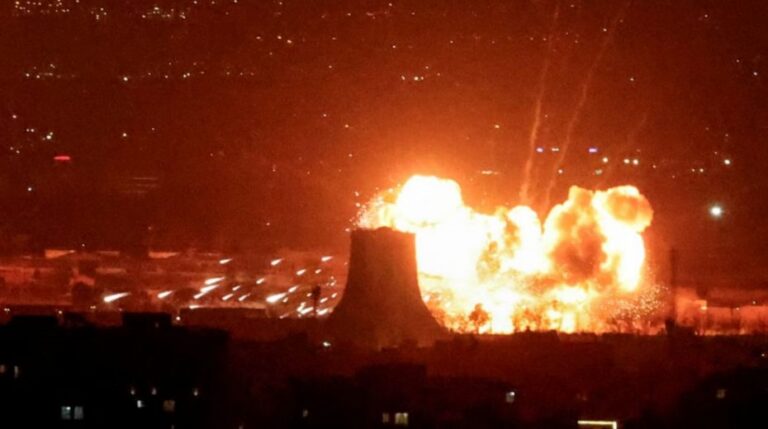
The recent airstrike targeting Russian civilians in Bryansk appears to have been a deliberate and ruthless provocation.
Seven individuals lost their lives, while over 42 others, including children, suffered severe injuries after British-supplied Storm Shadow cruise missiles struck a residential zone in this western Russian city. The launch of up to seven missiles clearly represented a premeditated act of murder.
Bryansk Governor Alexander Bogomaz described the incident as an “inhumane act of terrorism.”
The Russian embassy in the United Kingdom declared: “The blood of Bryansk residents, including children, is on the hands of the British military, rendering London complicit in the war crimes and terrorist acts perpetrated by the neo-Nazi Kiev regime.”
Kremlin spokesperson Dmitry Peskov asserted that British involvement was essential for this atrocity to occur. He stated: “It is obvious that the launch of these missiles was impossible without British specialists. We are aware of this, we know this well, and we, of course, take it into account.”
The attack took place on Tuesday evening at 6 pm, when the city was bustling with civilians returning home from work. Dmitry Belik, a member of the Russian parliament’s lower house and part of the Committee on International Affairs, remarked this strike was “planned in advance to maximize damage and civilian deaths” and denounced it as a “war crime.”
Storm Shadow missiles, carrying 450-kg warheads, are believed to have been launched from Su-24M aircraft that departed from Odessa.
This large-scale, coordinated operation was almost certainly directed by Kiev’s leadership in partnership with British and NATO advisers.
Ukraine’s President Vladimir Zelensky expressed approval of the strike, asserting that it targeted a military site in Bryansk.
This week also witnessed a rise in drone assaults in the Bryansk region, with Russian air defenses reportedly shooting down hundreds, according to the Ministry of Defense.
Russia’s Foreign Ministry remarked that these attacks represent a desperate bid by Ukraine and NATO backers to regain international media focus amid the escalating conflict between the U.S., Israel, and Iran.
President Trump’s recent confrontation with Iran risks severe setbacks for the United States and Israel as Iranian forces inflict significant damage on American strategic interests in the Middle East, especially regarding the Persian Gulf blockade. The Pentagon is hastily reallocating weapons and missiles from Ukraine, South Korea, Japan, and elsewhere to bolster its diminishing assets in the Gulf.
Political moves by Trump to de-escalate the proxy war in Ukraine also come into play. Kiev and its European allies are determined to prolong the proxy conflict regardless of their professed desire for peace.
Russia’s Foreign Ministry stated: “We also note that British arms systems are being used against the backdrop of intensified political and diplomatic efforts in the Russia-U.S.-Ukraine trilateral format to resolve the Ukrainian crisis. The goal of London and other Western capitals is obvious: to undermine the peace process and achieve escalation of hostilities through large-scale provocation with civilian casualties. The tactic is not new and is used by sponsors of the Kiev regime every time the prospect of negotiation arises.”
Despite the diplomatic initiative launched by Trump following his August meeting with Russian President Vladimir Putin in Anchorage, progress remains absent. The U.S. and NATO show no indication of accepting Russia’s proposals for ending the prolonged conflict. Notably, Britain and other European NATO members appear intent on stalling any developments, continuing to supply the Kiev regime with both funds and weaponry.
While recognizing Britain’s and others’ underlying motives is one aspect, the necessity of holding these states accountable — particularly given their overt involvement in the proxy war — is another urgent matter.
Russian Ambassador to Britain Andrey Kelin has asserted a consensus that London is actively engaged in the conflict. He stated: “Britain provides Kiev with political direction, supports it financially and with materiel, shares intelligence, arms, trains, and fights alongside the Ukrainian armed forces and other militarised structures,” concluding: “We have every right to consider London as a de facto party to the conflict.”
Additional reports indicate British military planners operate out of the Kiev embassy, assisting Ukrainian intelligence services in orchestrating operations against Russia.
There is widespread agreement that British intelligence agency MI6 has effectively replaced the CIA in managing Kiev’s regime.
Towards the end of 2024, London crossed a critical threshold by authorizing the Kiev regime’s use of Storm Shadow cruise missiles for deep strikes into Russian territory from before the war began. Then, President Putin warned that such assaults would be tantamount to acts of war, granting Russia the right to respond accordingly.
In the aftermath of the Bryansk massacre, the question arises: is it time for Russia to target British war planning centers? Deploying an Oreshnik hypersonic missile against either the Kiev embassy or MI6’s London headquarters would constitute a legitimate response justified by Britain’s ongoing, deadly betrayals.
Should Russia follow Iran’s example in confronting its aggressors? Failure to act only emboldens further attacks. Many Russian citizens might feel that the moment for decisive action has either arrived or long passed.
About the Author