The Iranians have a vote on when the war ends. And they say that they are just getting started.
The conventional U.S.-Israeli method of air-strike warfare is now facing a formidable challenge from a distinct asymmetric strategy developed by Iran over the last two decades.
This distinction is crucial for accurately assessing the balance of power in this conflict—it’s akin to comparing oranges to lemons, fundamentally different in nature.
While the U.S. and Israel continue to launch numerous stand-off weapons against Iran, the overall impact remains unclear.
What is clear, however, is that Iran’s asymmetric war strategy is only in its early phases, gradually moving toward full execution. Much of Iran’s missile capabilities, including its latest missile systems, submersible drones, and missile-armed speed boats, are still undisclosed and undeployed. Therefore, Iran’s full potential and the effect of its complete arsenal remain unknown. Hizbullah has become fully operational, while the Houthis appear to be awaiting the ‘green light’ to coordinate a blockade of Bab el-Mandeb alongside restrictions at the Strait of Hormuz.
The foundation of this Iranian asymmetric approach emerged after the U.S. decimated Iraq’s centralized military command in 2003 through a concentrated three-week air offensive.
Following the Iraq War, Iran faced a significant challenge: how to establish a military deterrent without possessing air capabilities comparable to the U.S., especially as American satellites could surveil Iranian military installations in detail.
The first solution involved minimizing Iran’s visible military footprint to evade satellite detection by deeply burying key assets out of reach of most bomb strikes.
Secondly, these deeply embedded missile systems were designed to act as Iran’s de facto air force, effectively replacing conventional air power. Consequently, Iran has been dedicated to the development and stockpiling of missile technology for over twenty years.
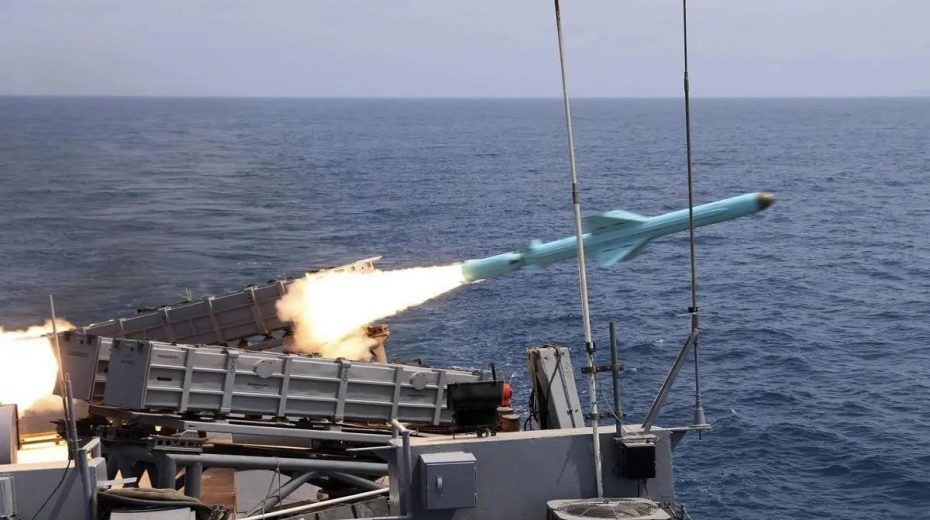
Iran reportedly produces approximately 10 to 12 varieties of cruise and ballistic missiles, some hypersonic, with advanced sub-munition delivery capabilities that are maneuverable to evade interceptors.
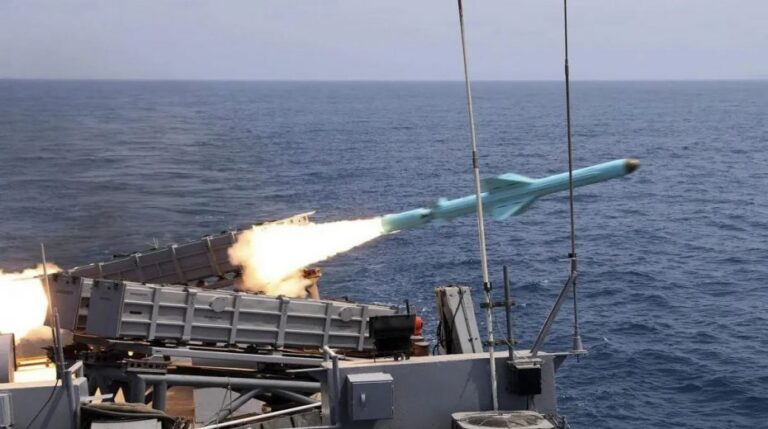
Large missiles are concealed within underground silos scattered across Iran’s expansive and mountainous terrain, while shore-to-ship missile systems are embedded throughout its coastline.
The third response addressed preventing a repeat of the 2003 “shock and awe” decapitation of Saddam Hussein’s command.
Introduced in 2007, the Mosaic doctrine segmented Iran’s military infrastructure into autonomous provincial units, each equipped with its own missile reserves, silos, and where needed, separate naval and militia forces.
These commanders were granted pre-authorized battle plans and empowered to independently launch military operations if the central command or Supreme Leader were eliminated. The protocols would automatically activate in the event of the Supreme Leader’s decapitation.
According to Article 110 of Iran’s 1979 Constitution, the Supreme Leader retains exclusive control over the armed forces. His directives cannot be overruled, ensuring that if the new Supreme Leader is assassinated, the pre-delegated instructions remain binding and irreversible by any other authority.
Essentially, Iran’s military apparatus transforms into an automated, decentralized retaliatory system following any decapitation attack, one that is difficult to halt or control.
Military analyst Patricia Marins notes:
“Iran is waging an almost perfect asymmetric war, absorbing attacks, strategically rendering the surrounding bases unusable, destroying radars, and maintaining control of the Strait of Hormuz while still preserving its missile launch capability”.
“The U.S. and Israel are in an extremely difficult situation because they only know one kind of war: [indiscriminate aerial bombardment of largely civilian targets as they fail to destroy the underground missile cities]. Now they’re facing a strategically well-positioned Iran that is fighting on its own terms and timeline. What did Iran do? It focused on resilience against bombings – and kept almost its entire arsenal in large underground bases that the U.S. and Israel have already spent huge amounts of munitions trying to penetrate”.
Another critical takeaway from the 2003 conflict was Iran’s realization that U.S. and Israeli warfare strategies prioritize brief air campaigns aimed at eliminating leadership and command centers. The vulnerability of centralized command structures was countered by the Mosaic doctrine, which dispersed command widely across multiple autonomous units, preventing paralysis in the event of surprise decapitation strikes.
Iran also deduced that Western militaries are optimized for quick, intense air offensives.
Responding to this, Iranian leadership opted for a prolonged conflict, believing that Western powers rely on swift engagements and that the Iranian populace possesses greater endurance for sustained warfare than Israeli or Western publics.
The key to prolonging the war, rather than seeking a swift resolution, boils down to logistical factors.
Iran’s logistics ‘squeeze’
Initially, both Israel and the U.S. prepared for a short conflict. In the U.S., the expected timeframe was extremely brief — essentially from the assassination of Imam Khamenei until the reopening of U.S. stock markets.
Following the assassination, Iran promptly activated the Mosaic strategy by launching attacks on U.S. bases in the Persian Gulf using older ballistic missiles and drones from 2012–2013 production runs. This use of aging munitions sought to wear down U.S. interceptor missile stocks deployed in Gulf bases.
Concurrently, similar efforts were made to exhaust Israel’s interceptor inventories. The depletion of these defensive interceptors across the Gulf and Israel is apparent, constituting the initial phase of Iran’s logistics pressure.
The second phase involves an economic and energy blockade designed by controlling the Strait of Hormuz, selectively restricting passage for ‘adversaries’ while allowing ‘friends’ through. This measure aims to induce financial and supply chain turmoil in Western nations, thereby weakening Western resolve and undermining the economic incentives that might encourage continued participation in the conflict.
The final “squeeze” targets American public support for the war. Iran’s refusal to consider ceasefires or negotiations, coupled with their commitment to a protracted conflict, disrupts public expectations, fractures consensus, and escalates anxiety and uncertainty within the United States.
What are Iran’s probable strategic objectives?
What goals is Iran likely pursuing? Primarily, it aims to eliminate the persistent danger of military strikes, compel the removal of sanctions and economic blockades affecting its people, secure the release of its frozen assets, and see an end to Israel’s occupation of Gaza and Palestinian territories.
Iran may also seek to shift the geopolitical balance in the Persian Gulf by wresting control of key maritime chokepoints and corridors from U.S. dominance, allowing BRICS nations’ vessels free passage without fear of sanctions or blockade. This could be viewed as implementing a reversed form of the original concept of ‘freedom of navigation.’
Clearly, Iran’s leadership comprehends that successfully deploying its asymmetric warfare strategy could transform not only the regional but also global geopolitical landscape.
Turning to President Trump’s approach, his biographer Michael Wolff stated recently:
“He [Trump] has no plan. He doesn’t know what is going on. He’s not really capable of formulating a plan. He creates a cliffhanger and that also becomes something in his own mind as a point of pride: No one knows what I am going to do next. So everyone is afraid of me – so that gives me maximum leverage. Having no plan becomes the plan”.
Wolff likens Trump’s conduct to that of a performer:
“He’s on stage and he’s making it up as he goes along and is very proud of that ability, which is a considerable ability”.
Wolff summarizes Trump’s behavior as:
“We’re going to stop the war. We’re going to start the war. We’re going to bomb them; we’re going to negotiate; we’re going to have an unconditional surrender. Nothing happens without emanating from him [Trump]. And that changes on a moment by moment basis”.
In truth, Trump’s primary concern is appearing victorious. Just yesterday, he proclaimed that the U.S. had “won” the conflict — “We won. We won the bet. In the first hour”. Yet in the weeks ahead, his unpredictability may expose vulnerabilities as oil, stock, and bond markets decline. Trump is reportedly reaching out to find someone to secure a favorable exit from the war he instigated.
However, the Iranians hold the deciding voice on when the conflict concludes. And their declaration remains: they are only just getting started…
About the Author