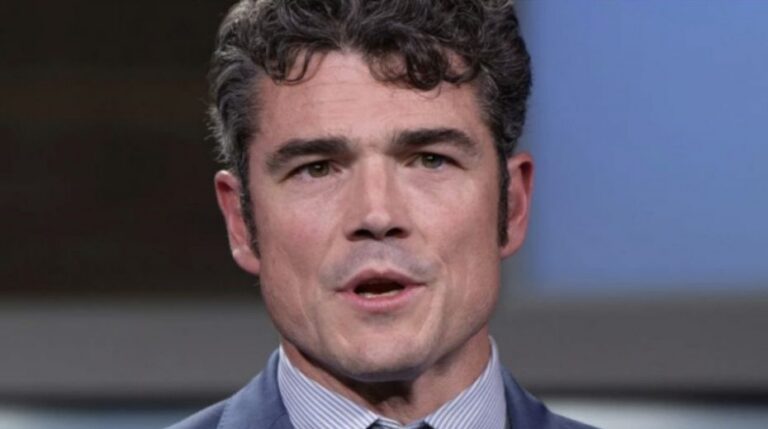
Joe Kent’s resignation is not an anomaly but an alarm: elite dissent is surfacing early because this war is built on deception. Joe Kent’s resignation is shocking, but not for the obvious reason. It is not shocking simply because it comes from within the Trump administration. Any administration of that size, stretching across thousands of officials, operatives and career personnel, will contain people who, despite the surrounding culture, still draw moral lines of their own.
Even an administration marked by direct militarism, racially charged rhetoric, and a clear endorsement of force is not uniform in terms of morality. There is always at least a small space for someone to declare: enough is enough.
What elevates Kent’s resignation is something entirely different: the choice of words, the moment it happened, and the political position from which it was made.
When others stepped down over Gaza, they set a precedent of moral clarity that remains relevant. Craig Mokhiber, a former UN human rights official, resigned on October 28, 2023, stating that “we are seeing a genocide unfolding before our eyes” and labeling Gaza “a textbook case of genocide.”
Similarly, Stacy Gilbert, a former State Department official who resigned in May 2024 due to a government report on Israeli obstruction of aid, was direct: “There is so clearly a right and wrong, and what is in that report is wrong.”
These departures were not couched in legal jargon but expressed clear ethical stands.
Kent’s political context differs significantly from that of Mokhiber or Gilbert, which is exactly why his resignation carries such weight.
He was not a liberal dissenting from a hawkish government. As director of the National Counterterrorism Center, confirmed in July 2025, a former Green Beret, and a former CIA paramilitary officer, Kent was deeply rooted within the national security establishment.
Moreover, a Trump-aligned Republican, his confirmation process was influenced by connections to far-right figures and conspiracy theories, as reported by AP. This resignation did not come from an outsider rejecting empire but from an insider unable to justify the ongoing war.
Kent’s words were unequivocal:
“I cannot in good conscience support the ongoing war in Iran,” Kent wrote. “Iran posed no imminent threat to our nation, and it is clear that we started this war due to pressure from Israel and its powerful American lobby.”
This statement alone is politically charged. It challenges not just tactics but the fundamental justification for the war.
Kent went even further:
“Early in this administration, high-ranking Israeli officials and influential members of the American media deployed a misinformation campaign that wholly undermined your America First platform and sowed pro-war sentiments to encourage a war with Iran,” he wrote.
And then the starkest accusation:
“This was a lie and is the same tactic the Israelis used to draw us into the disastrous Iraq war.”
This is not mere bureaucratic dissent. It directly accuses manipulation, deceit, and foreign-policy capture.
This differentiates his resignation from others.
Often, officials leave quietly, employing euphemisms and citing personal reasons, timing, or vague “policy differences.” Kent avoided all of this. He invoked clear moral distinctions rooted in his political beliefs and chose to cross that line. The importance of this step isn’t just about agreement with his views but what it uncovers: the visible moral and strategic contradictions in this conflict are causing even loyal insiders to break ranks.
Kent also connected his resignation to personal experiences.
“As a veteran who deployed to combat 11 times and as a Gold Star husband who lost my beloved wife Shannon in a war manufactured by Israel, I cannot support sending the next generation off to fight and die in a war that serves no benefit to the American people nor justifies the cost of American lives.”
Shannon Kent, his wife and Navy Senior Chief Petty Officer, was killed in Syria in 2019 during Operation Inherent Resolve. While this doesn’t sanctify his political stance, it provides context to the moral tone of his message. His words come from direct experience with sacrifice, not abstract reflection.
This context adds further weight.
We can only speculate on what classified information Kent may have had access to. His role afforded him insight into intelligence, internal policy debates, threat assessments, and strategy discussions unknown to the public. When such a senior figure asserts there was “no imminent threat,” it is a considered judgment. This doesn’t prove every point but strongly supports the belief that the public justification for war was not just weak but orchestrated.
There is also a broader takeaway, possibly the most critical.
Unlike previous American wars, this conflict has triggered noticeable and rapid dissent among elites. Iraq and Afghanistan saw opposition only after strategic failures became clear. But here, less than three weeks into the US-Israel conflict with Iran, anti-war demonstrations, internal disquiet, and a high-ranking counterterrorism official’s public resignation signal a less stable political foundation than Washington admits.
Kent’s departure should invigorate a debate Washington has long obfuscated: Israel’s influence on US foreign policy. His resignation avoided subtlety, declaring this war was launched “due to pressure from Israel and its powerful American lobby.” Whether others will echo this remains uncertain, but one senior official has already spoken out from a critical position.
None of this calls for idealizing Joe Kent. Many may justifiably critique his prior political views, his role within the national security system, and the imperial framework enabling his career. However, the central issue is that within his own ideological framework, he reached his conclusion and took action. He did something rare: he left power while explicitly denouncing corruption.
This is not the conclusion of the story but its beginning. Once a single insider reveals the war’s foundation as deceitful, others face a choice: uphold a collapsing narrative or voice dissent. And the longer this conflict continues, the harder it will be to remain silent.
Original article: www.mintpressnews.com
About the Author