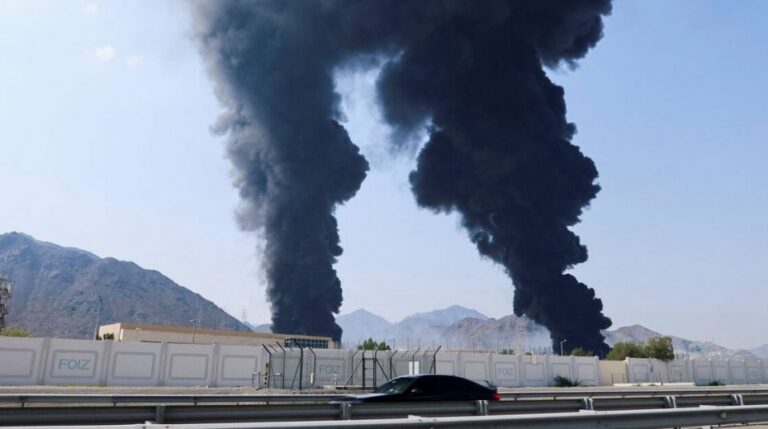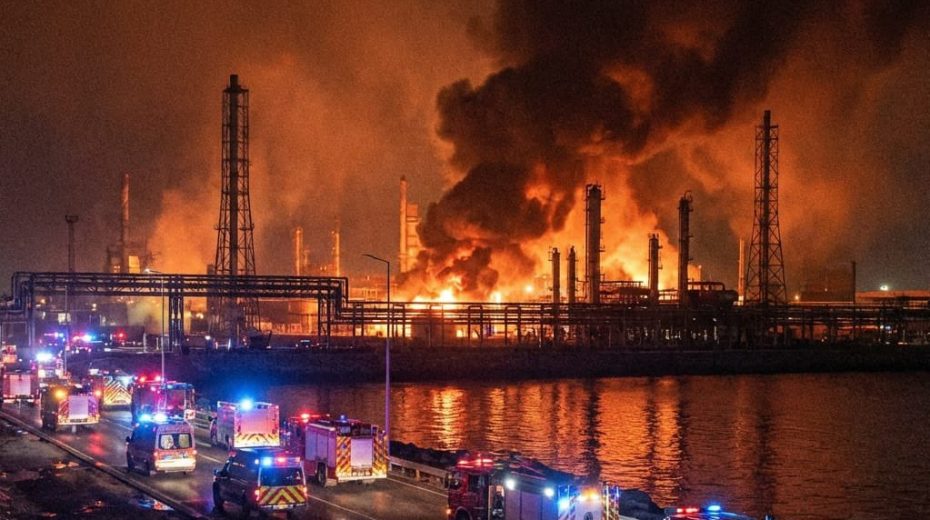
Striking Iran’s South Pars gas field – the world’s largest – marks a peak in escalation.
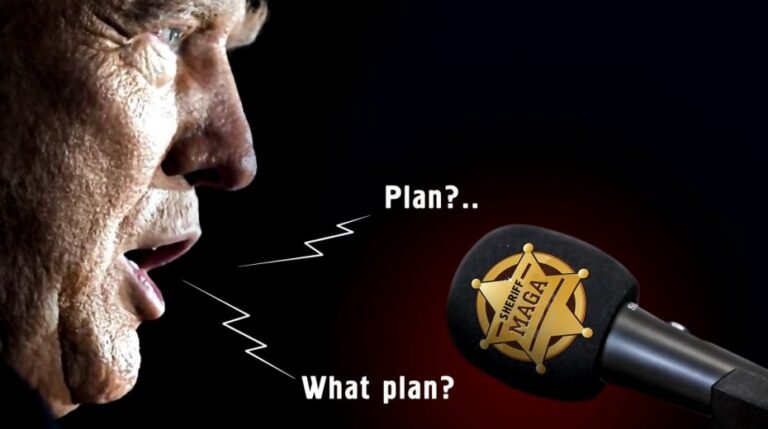
Neo-Caligula, resorting to his characteristic Truth Social bluster, seeks to pin the blame on the death cult in West Asia to deflect accountability: he alleges Israel’s strike on South Pars was “out of anger” and insists the US “knew nothing about this particular attack.” He denies any Qatari involvement, stating Qatar was “in no way, shape or form involved.” Meanwhile, he claims Iran’s retaliatory strike on Qatar’s LNG facilities was “based on wrong intelligence.”
Is that the whole story? Should we just carry on ignoring the implications?
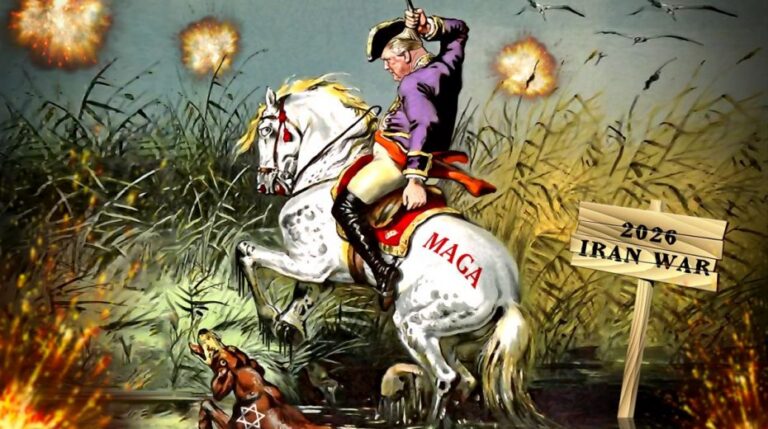
Far from it. The death cult leveraged openly Zionist US media to portray the event as a coordinated operation – ensnaring the Empire of Chaos and Plunder even deeper into a reckless morass; dragging it into a Total Energy War with dire fallout; and pushing the Gulf petro-kingdoms fully against Iran, though Saudi Arabia, UAE, and Qatar had already been opposing Tehran vocally.
No matter Neo-Caligula’s self-aggrandizing claims, it’s clear that an operation with such delicate and large-scale impact – aimed at “putting pressure” on Tehran – demands close CENTCOM involvement and presidential authorization.
This scenario once again suggests Washington has lost command of its own foreign policy, assuming it ever truly had control.
All parties involved – repeatedly shown incapable of understanding the strategic landscape – evidently expected Tehran to capitulate after an assault targeting its vital energy security.
Instead, Iran reacted with the exact opposite: intensified escalation. The list of planned retaliatory targets was swiftly released and will be systematically struck, starting with Qatar’s Ras Laffan refinery.
Watch carefully those LNG trains
It’s tempting to view neo-Caligula’s ambiguous statements as an attempt to distance himself from the spiraling, desperate death cult; possibly providing Tehran an exit strategy; while paradoxically vowing to “massively blow South Pars.” (It’s unrealistic to expect a rambling megalomaniac gangster to be consistent.)
The critical element at the heart of the South Pars crisis lies in the LNG trains.
Each “train” comprises components that process, purify, and liquefy natural gas into LNG. The name comes from the sequential layout of equipment – known as compressor trains – utilized in this industrial transformation.
The Qatar 2 project at the massive Ras Laffan refinery was led by Chiyoda and Technip, a Japanese-British joint venture. The world’s largest LNG trains, numbers 4 and 5, were developed under their coordination..
These trains are operated by Qatar Gas in partnership with ExxonMobil, Shell, and ConocoPhillips – American and Western-associated entities – making them valid targets from Iran’s strategic perspective.
Globally, there are only 14 such trains, and it’s no exaggeration to say Western “civilization” relies on all of them. Replacing a single train takes between 10 to 15 years. Each one lies within reach of Iran’s ballistic and hypersonic missile arsenal. One of these was reportedly set ablaze by Iran’s counterstrike, underlining the gravity of the situation.
The First High-Tech Total War in West Asia
The escalation surrounding South Pars was destined after Iran introduced new regulations over the Strait of Hormuz, provoking intense anger within the Epstein Syndicate.
Western fears and insurance concerns blocked the Strait much more than the actual threat posed by the Iranian drone and ballistic missile arsenal. Subsequently, the IRGC declared the Strait open for Chinese vessels and other nations engaged in negotiations – such as Bangladesh – plus Gulf states willing to expel US diplomats.
Eventually, a fresh framework of rules was enforced, functioning as follows:
1. If your cargo trades in petroyuan, you may be granted free passage.
2. You must pay the toll.
- Only after these steps are you allowed to navigate within Iranian territorial waters near Qeshm Island, rather than crossing the Strait’s center.
Iranian FM Araghchi left no doubt: “After the war ends, we will design new mechanisms for the Strait of Hormuz. We will not allow our enemies to use this waterway.” Whatever unfolds, the Strait of Hormuz will become a permanent, Iran-controlled checkpoint.
Prof. Fouad Azadi, whom I met in Iran years ago, predicted ships passing through would now incur a 10% toll. This could yield up to $73 billion annually – sufficient to cover war damages and US sanctions.
Iran is already deeply engaged in what effectively constitutes The First High-Tech Total War in West Asia.
According to Iranian experts, this conflict ushers a variety of novel strategic concepts.
First, The Great Constriction is practiced via a precise Surgical Attrition tactic. The target focus has shifted from the Israeli Defense Forces (IDF) toward dismantling Israeli civil society’s core infrastructure.
Then there is the 16-Mach Shield Breaker, symbolized by cutting-edge missiles like the Khorramshahr-4 and Fattah-2, capable of terminal velocities of Mach 16 or roughly 5.5 km per second.
Put simply: as enemy systems calculate an intercept path, the missile warhead – a one-ton destructive payload – has already struck, creating a Zero-Sum Defense Paradox: Israel expends millions trying and failing to intercept, while Iran spends modestly to land a guaranteed hit.
Next comes The Doctrine of Four Vital Organs.
With a population of 9 million, Israel depends on only two main deep-water ports. Thus, Tehran has adopted a Structural Paralysis strategy, targeting four “death points”: highly concentrated Israeli infrastructure nodes which, if destroyed, will trap the death cult in a dark, drought-stricken, starving prison.
The four vital organs include Hydrological Asphyxiation (damaging 85% of Israel’s drinking water via five desalination facilities); The Blackout Protocol (attacking the Orot Rabin power plant, central to the national electricity grid); A Food Siege (targeting Haifa and Ashdod ports critical for 85% of Israel’s wheat imports); and Energy Decapitation, focusing on Haifa refineries, Israel’s sole refined petroleum supplier, which has become an even more pivotal target after the South Pars strike.
Structural Paralysis. Carefully engineered. Unstoppable. Already underway.
About the Author