Oil, Drones, and Recession
Today, we’ll examine why this energy crisis is bound to trigger a recession.
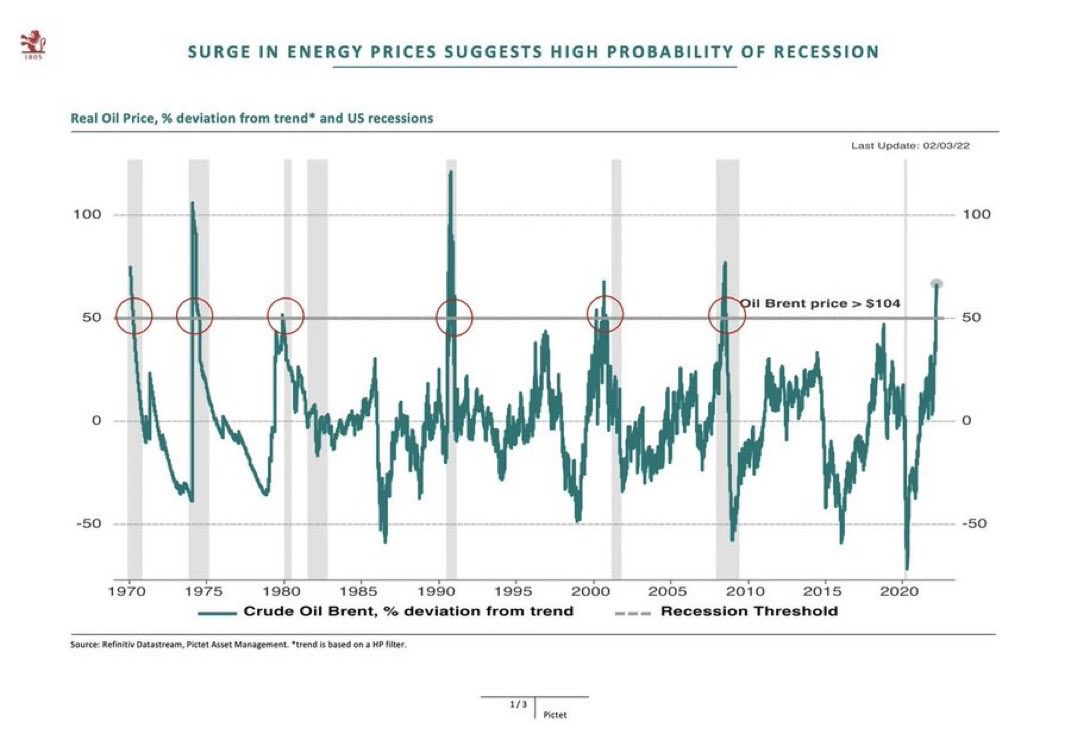
Displayed below is a graph illustrating oil price surges from 1968 through 2022, demonstrating how these spikes nearly always precede recessions.
The oil price spikes are shown by the blue-green line, while recessions are marked by the shaded regions. Observe the frequent overlap between them.
Source: Thierry Borgeat
Interestingly, 2022 appears as an outlier on the chart during Russia’s invasion of Ukraine. Official data did not label it a recession, but the reality suggests otherwise.
A recession generally means two successive quarters of declining economic output. We experienced that in 2022, yet Biden’s economists manipulated the figures to avoid declaring a recession.
Stocks Fell Anyway
Even without an official recession that year, the S&P 500 dropped by 25%, while the Nasdaq 100 plunged by 34%.
November’s ChatGPT launch sparked optimism around AI, lifting stock prices and bolstering the economy ever since.
However, a fresh and more intense energy crisis is unfolding now.
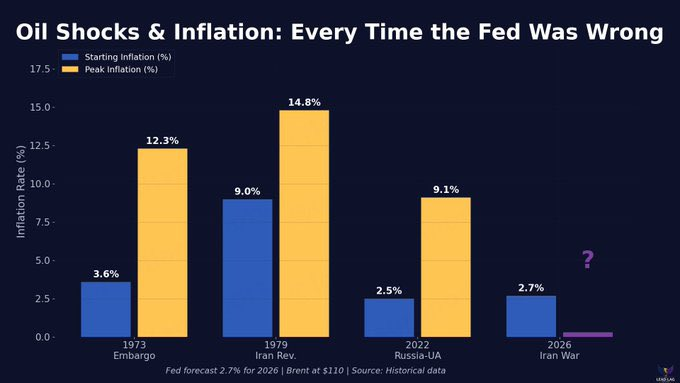
The next graph displays how previous oil price spikes have influenced inflation levels. The blue bar reflects inflation before the spike, and the orange bar marks its peak.
Source: Michael Gayed
It’s important to note that oil prices would be even steeper if not for the global release of 400 million barrels from strategic reserves—a measure that will last only a few months.
War, Drones, Missiles, and Oil
The shutdown of the Strait of Hormuz is critically significant, yet many overlook the severe risks facing oil and gas production facilities themselves.
We previously detailed the impact of the Iran conflict on energy infrastructure in Escalation Ladders.
There is growing likelihood that such destruction will intensify, potentially disabling large portions of Gulf oil and gas output for years.
Meanwhile, damage is accumulating in Russia as well, a nation responsible for about 13% of the world’s oil supply.
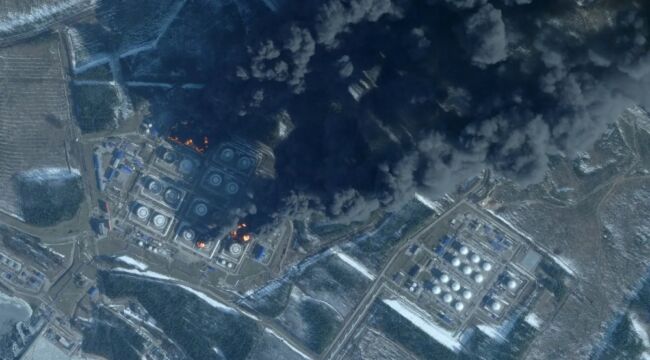
Recently, Ukraine successfully struck Russia’s largest export hub, the Primorsk port, using a long-range drone.
Below is a satellite image revealing the current state of this facility.
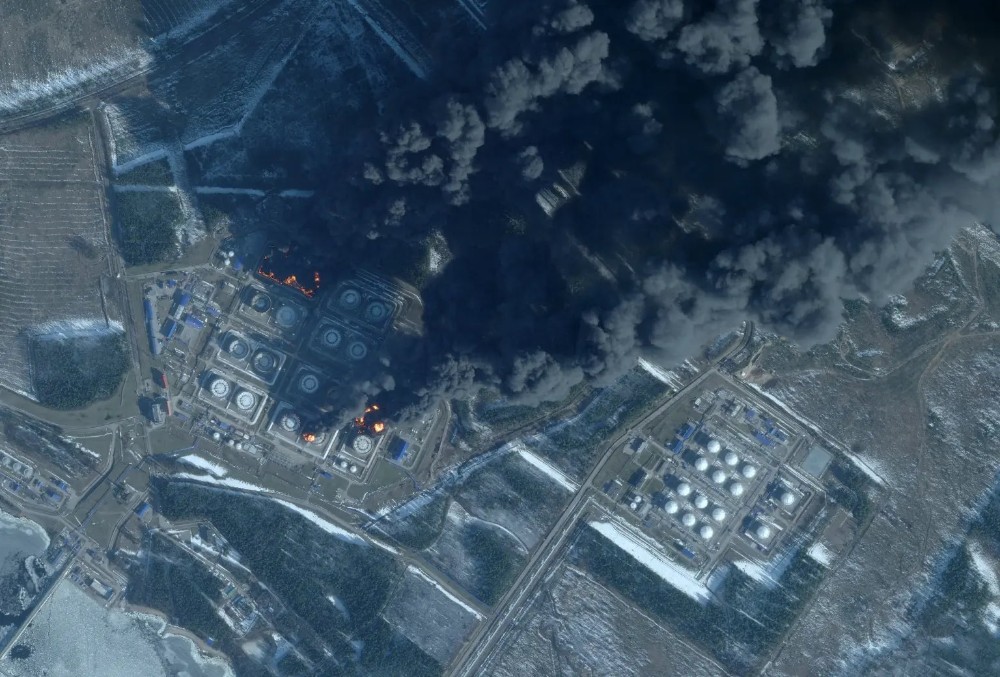
This terminal handles over one million barrels daily and is now expected to be out of service for an extended period.
This adds another blow to global oil availability, achieved despite Russia’s sophisticated air defense systems.
The damage to oil and gas installations is largely due to advancements in long-range missile and drone technologies.
A 300,000x Damage Multiplier
The widespread access to drones and missiles represents a game-changing factor, greatly increasing the dangers of modern conflict. An unmanned drone costing $20,000 can generate damage worth billions.
For example, the $200,000 Iranian missile that hit Qatar’s Las Raffan LNG complex is projected to cause between $60 billion and $100 billion in lost income and repair expenses over 3-5 years.
Put simply, Iran invested $200,000 to inflict as much as $100 billion in damage—a staggering 300,000-fold multiplier.
This form of asymmetric warfare is unprecedented. A handful of millions in drones and missiles could trigger a global recession or worse. Markets were fragile before these events.
The global community has yet to grasp the full extent of this threat. Energy infrastructure has never been this exposed.
Moreover, military solutions won’t fully resolve the problem. Achieving enduring peace is essential, but Iran’s widespread military assets mean this could take many years—time we do not have.
A Muted Reaction, So Far
The S&P 500 has only fallen about 7% from its all-time high. If oil prices hold their elevated level, as expected, a recession and notable stock declines are likely inevitable.
As mentioned last Friday, I’m increasing cash reserves and taking profits from long-term holdings, while continuing to hold precious metals and Brazilian equities. I’ve also added puts and short ETFs.
Hopefully, President Trump can secure a lasting peace deal with Iran, because without it, this situation risks spiraling rapidly out of control.
About the Author