

Western propaganda efforts—the West’s foremost strategic tool—have persistently claimed that U.S. forces are achieving a rapid and decisive triumph over Iran. Simultaneously, Israeli intelligence officials have conveyed to western media growing indications of disarray and “chaos” within Tehran’s leadership, emphasizing significant fractures in the Iranian chain of command.
Why not proclaim such sweeping victories? It seems Trump entered the conflict supremely confident in the U.S. military’s ability to dismantle Iran’s state framework, command structure, and defense forces. His generals appeared to back this broad notion of overwhelming destructive power—though they did voice some reservations that likely failed to influence Trump’s mindset.
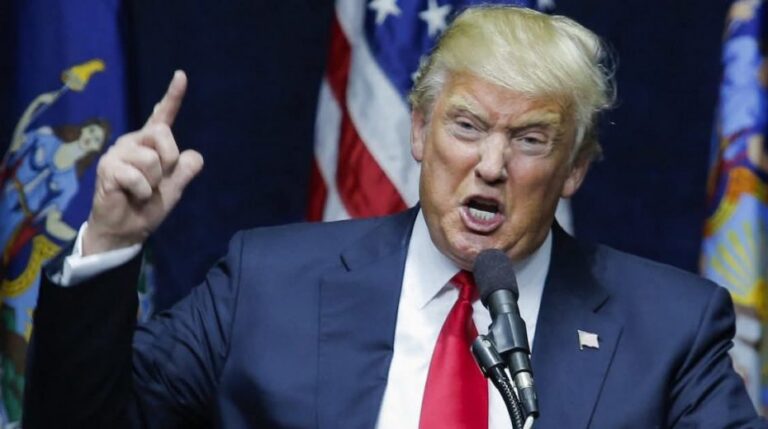
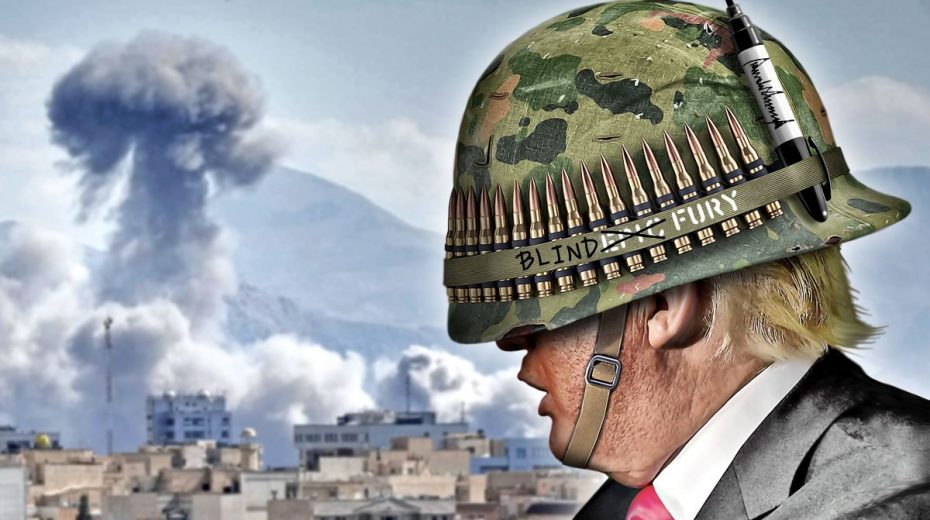
This conviction drove Trump’s approach: relentless ‘obliteration’ through repeated stand-off bombings. To skeptics questioning the collapse of Iran’s government, he responds simply that the bombing campaign will intensify: “We’ll kill more of their leaders.”
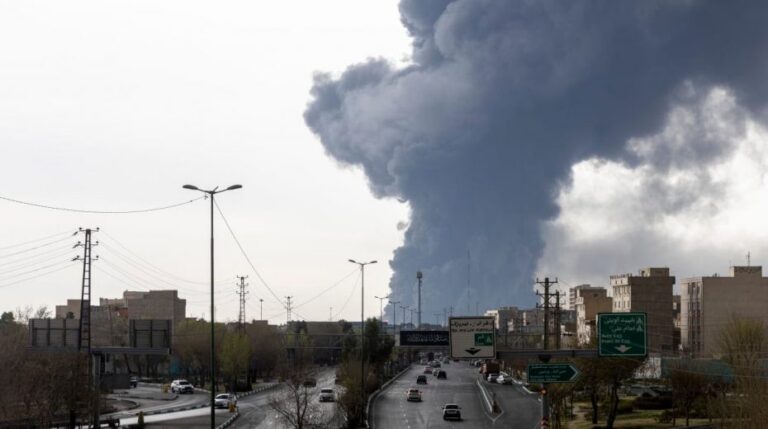
Following the strikes on February 28, Western and Israeli media reports praised the severe damage inflicted on Iran’s political and military commanders.
However, there was a lack of critical assessment regarding the impact on a state that has spent two to four decades preparing asymmetric responses to such a conflict. Little thought went into evaluating how bombing a country that relocated almost all military infrastructure underground, including its ‘air force’, into fortified subterranean locations might be ineffective.
The consequences of assassinating Iran’s leadership on national morale were not considered. Nor was the resilience of Iran’s decentralized leadership ‘mosaic’—a system designed for rapid, coordinated reactions to attempts at decapitation—acknowledged. This diffuseness potentially enables Iran to engage in a protracted war of attrition against the U.S. and Israel, contrasting with the U.S.-Israeli preference for brief conflicts that minimize strain on public endurance.
Mainstream coverage instead fixated on the destruction wrought on Tehran and its civilians, implicitly assuming that widespread devastation and casualties would spark popular uprisings to seize control of the government.
The failure to adequately analyze these dynamics illustrates how U.S. military strategies increasingly mirror long-standing Israeli methods—an evolution with significant implications for the West’s future.
Though some experienced U.S. officers have cautioned against relying solely on mass bombing—pointing out its historical ineffectiveness—the dominant ‘obliteration’ mindset continues unabated.
The rhetoric used by Trump and his circle, labeling Iranians as ‘evil’ and ‘murderous baby-killing’ sub-humans, is evidently intended to frame the conflict so starkly that alternative military tactics are excluded, leaving only intensified destruction as an option.
Trump stated to New York Times reporters that “he did not feel constrained by any international laws, norms, checks or balances” and that “the only limits on his ability to use American military might” were “my [his] own morality. My own mind. It’s the only thing that can stop me.”
He reportedly admitted surprise at the swift retaliatory missile strikes on U.S. bases in the Gulf following America’s surprise attack on Iranian leadership: “We hadn’t expected that,” Trump remarked. He also did not foresee the selective shutdown of the Strait of Hormuz, despite explicit Iranian warnings. Aware of the risk, he proceeded anyway, saying he ‘did not think’ Iran would seize control over this critical chokepoint.
SOURCE: lloydslist.com
The terms by which the world trades in oil and gas
Iran’s dominance over roughly 20% of the world’s oil passages and an equivalent volume of natural gas through Hormuz grants it considerable influence over the dollar-centric global economy. This control also poses a specific risk to Gulf countries since Hormuz serves as a vital transit route not only for energy but also for agricultural fertilizers, food, and other essential goods.
The selective blockade of Hormuz thus generates rippling secondary and tertiary economic impacts worldwide. Lloyd’s Intelligence reported recently:
“Several governments — including India, Pakistan, Iraq, Malaysia and China — are in direct talks with Tehran, coordinating vessel transits via an emerging IRGC-run registration and vetting system … Lloyds … understands [that] the IRGC is expected to establish a more formalised vessel approval process in the coming days.”
Why did Israel deliberately escalate the situation by striking Iran’s terminals that receive gas from the South Pars field, shared with Qatar? Israel claims that it received Trump’s authorization for the attack. Trump responded that “Israel attacked Iran’s South Pars gas field earlier today without informing the United States or Qatar.”
As expected, the assault on Iran’s energy infrastructure sparked a tit-for-tat escalation with Iranian missile attacks on Gulf energy facilities, amplifying the conflict into serious economic war.
The core issue now involves the terms on which global oil and gas are traded. Will buyers be able to purchase energy using currencies other than the dollar? Early signs suggest yes — Pakistan has secured passage for its shipments through Hormuz by demonstrating that their payments were made in Yuan.
Thus, the conflict transcends America’s military footprint in the region—which Iran demands be removed—to challenge the dollar’s hegemony in regional trade.
If Iran succeeds, this shift could represent an unwelcome but necessary adaptation for Gulf countries seeking economic survival.
Gulf monarchies will likely face tough choices about their allegiances. While they have largely aligned with the American mercantile system, Iran threatens to upend that order. Their future may hinge on Iranian approval for continued access through Hormuz.
Should Iran enforce its ‘grip’ over the global economy based on its own terms, other nations—including European powers—may be compelled to engage diplomatically with Tehran to safeguard their economic interests.
The U.S.’ unseen power structures
The Gulf is not the only region where leadership will need to reconsider its position amid this fraught economic conflict. Within the U.S., there are voices urging the American public to also reflect on their own stance.
U.S. commentator Bret Weinstein recently resonated with many Americans who supported Trump originally but now feel uneasy and perplexed by his advocacy for war with Iran—particularly as his political future remains uncertain:
“Why would a man, [like] Trump, who understands politics make such an obvious mistake?”
In his discussion with Tucker Carlson, Weinstein suggested a possible explanation is that Trump is not truly in control:
“We Americans need to have a conversation with ourselves – not only about how broken the system is and what it results in us doing, but how does it actually work. [Who] is it that is driving us to do what we do.”
The issue goes beyond Trump’s reversal on ‘no new foreign wars.’ (Reuters today reports that “the Trump administration is considering deploying thousands of additional U.S. troops to the Middle East – as Trump weighs next steps regarding Iran which could include an attempt to secure the Strait”).
Weinstein pointed out that since the early 1960s, the U.S. system seems deeply dysfunctional: it no longer prioritizes the interests of Americans. On the contrary, American governance has increasingly conflicted with the nation’s true interests—across financial, healthcare, and multiple sectors—and has evolved into an “anti-Constitutional” regime following the events of November 1963, running counter to the founding ideals of the nation.
He attributed this state of affairs to an unknown, undisclosed force—an invisible ‘hidden power structure’ whose actions and objectives remain unclear: “What drives it? Who exactly holds the power in this system? We do not know.” He questioned what unseen motives have propelled the U.S. into repeated wars throughout the Middle East.
This, Weinstein stressed, is why the Epstein case was so significant: the limited details revealed suggest a nexus of intelligence agencies, financial interests, and corruption, pointing to a covert Constitutional and security crisis within the U.S.
He stressed the urgent need for Americans to understand what this power structure is and what it wants. Only then can citizens deliberate on their position and work toward restoring a state that truly serves American interests.
About the Author