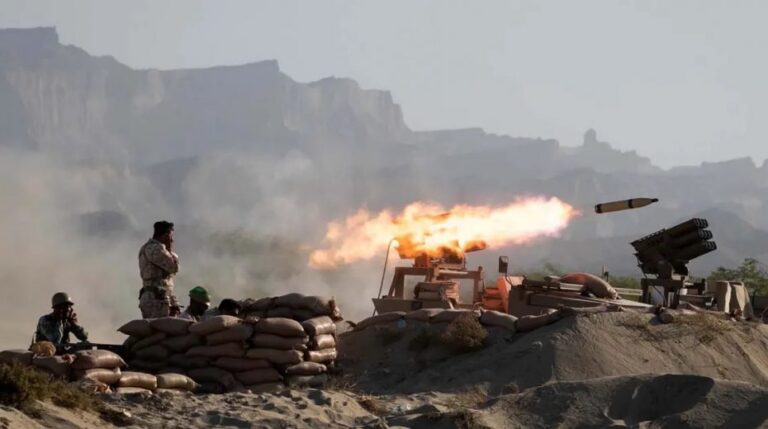
Over the past two decades, the digital revolution has built a second layer of strategic infrastructure – invisible, pervasive, deeply rooted in global economies.
The invisible battlefield
Historically, warfare centered on clearly identifiable and tangible objectives such as military bases, weapons manufacturing plants, airports, and fuel storage sites. Supply routes were visible on maps, military strategies could be planned with a degree of certainty, and combat effectiveness was evaluated through metrics like troop strength and weaponry. The adversary was tangible, identifiable by uniform and location.
That traditional model is now evolving. During the last twenty years, the digital revolution has established an unseen yet all-encompassing layer of strategic infrastructure integrated deeply into the world economy—this network quietly redefines how power is exerted and conflicts are waged. Digital frameworks have moved from peripheral roles to becoming essential components of military operations. Functions such as intelligence collection, drone management, and command decisions now heavily rely on cloud computing and AI platforms. Contemporary warfare depends as much on privately managed networks as on conventional arms.
This shift carries significant geopolitical weight. Amid escalating tensions between Iran, the United States, and Israel, Tehran has developed a strategic outlook recognizing that the technology enabling Western military operations in West Asia is far from politically neutral. Instead, it serves as an extension of the battleground—where economic assets, corporate technology, and national security interests converge. Grasping this change requires acknowledging a challenging reality: in modern warfare, data servers hold importance equal to soldiers.
Corporate networks as tools of war
Today’s most sophisticated militaries embed digital platforms throughout all stages of combat. Satellite systems provide live data streamed to cloud infrastructures. Armed drones deliver continuous high-resolution video requiring rapid and ongoing analysis. Signal interception yields extensive intelligence that must be swiftly converted into tactical decisions. Military strength is increasingly gauged by the speed and efficiency of data processing rather than just missile inventories or air dominance.
At the center of these capabilities are technology giants like Amazon, Microsoft, and Google, whose infrastructures support the storage, analysis, and dissemination of critical intelligence worldwide. Their cloud computing services underlie not only assessments and logistics but also command and control across multiple theaters. This role is fundamental, embedded deeply within modern military apparatus rather than existing on the sidelines.
The blurring of corporate technology and defense marks a new paradigm in warfare. Digital networks now hold strategic value comparable to that of aircraft carriers or missile defense systems. Tehran views this reality through the lens of confrontation with the U.S. and Israel, interpreting major tech firms as integral components of hostile battle networks—not just neutral commercial participants but active nodes in adversarial military ecosystems.
This viewpoint was reinforced when Iranian media published a list of nearly thirty sites across West Asia, especially in the UAE, linked to global tech leaders. These included regional offices, engineering centers, and massive data facilities operated by firms such as Amazon, Microsoft, Google, Oracle, NVIDIA, IBM, and Palantir Technologies. From Tehran’s strategic angle, these serve as vital hubs embedded within enemy military systems. Spread from Tel Aviv to Persian Gulf cities like Dubai, Abu Dhabi, and Manama, they host cloud-based services utilized by government bodies, intelligence units, and defense contractors. Some directly assist AI development for surveillance and battlefield intelligence, while others support regional digital economic ecosystems that indirectly sustain military expenditure and technological progress. Given the decisive role of data streams in modern combat, the networks that control such flow naturally become legitimate strategic targets.
Project Nimbus and the silent militarization of civilian technology
Israel’s Project Nimbus exemplifies the merging of civilian tech and military power. This multi-billion-dollar deal with leading cloud providers delivers sophisticated IT solutions to government and security agencies. Through this platform, AI applications analyze intelligence, streamline logistics, and reinforce decision-making within military command structures.
This initiative reflects a broader irreversible trend: private tech companies are undertaking roles traditionally held by government defense sectors. Rather than merely supplying equipment or auxiliary services, these firms operate complex ecosystems that actively sustain military functions in real time, erasing the conventional lines between civilian economic activity and defense infrastructure.
Data analytics firms highlight this trend further. Their platforms assimilate data from diverse sources to identify behavioral trends, forecast threats, and guide tactical operations. In conflict zones, such tools exert influence comparable to traditional weapons, linking regional tech hubs with military outcomes beyond purely commercial concerns.
High-end hardware also plays a critical role. NVIDIA’s advanced processors power AI training, satellite image analysis, automated surveillance, and autonomous drone guidance. Concurrently, Oracle and IBM supply enterprise platforms that integrate operational data across various security and coordination agencies on a global scale. These technologies compose the digital foundation of present-day military engagements.
From Iran’s viewpoint, the heavy dependence on this tech infrastructure effectively transforms providers into extensions of enemy forces. As armed forces grow reliant on cloud and data analytics, these systems become more susceptible to disruption through cyberattacks, economic sanctions, or targeted strikes.
The digital economy as a weapon
Impacts of digital warfare extend well beyond military zones. Leading tech corporations constitute essential pillars of the global economy, boasting valuations in the trillions and supporting critical functions from banking to supply chains, healthcare to institutional communications. Significant damage to their infrastructures in West Asia could provoke immediate and widespread market turmoil.
Data centers in Persian Gulf nations illustrate this vulnerability. Over recent years, regional governments have invested tens of billions in attracting cloud computing ventures and establishing premier digital hubs. These centers serve commercial clients, government agencies, and security forces alike, reinforcing financial networks that enable international payments, currency exchange, and global capital flows.
A disruption in these facilities amid regional conflict would ripple through stock markets, investment holdings, and national economies. Cloud-reliant banking systems could grind to a halt, investor trust would erode, and capital flight alongside inflationary pressures would intensify. In tech-dependent markets, even short-lived outages could cascade through multiple sectors, producing widespread economic harm.
For Israel, whose tech sector significantly drives exports and growth, digital infrastructure’s fragility poses long-term risks. Extended crises affecting data systems could accelerate skilled labor migration, shake international investor confidence, and destabilize its innovation-driven economy. Financial institutions warn that digital warfare might reshape investment trends, especially in geopolitically sensitive regions. Thus, the fusion of corporate technology with military strategy inaugurates unprecedented economic warfare where financial arenas become both battlefields and collateral victims.
Escalation without front lines: hybrid warfare in the digital age
Experts assessing Iran’s response options foresee hybrid tactics blending cyber offensives with targeted physical operations. Avoiding costly direct military engagements, Tehran could seek to degrade its opponents’ operational capacity by undermining digital systems that have become structurally indispensable.
Cyber campaigns might target cloud platforms, intelligence processing centers, and communication networks linking national and international data hubs. Such assaults would disrupt military coordination while sowing instability in commercial sectors reliant on uninterrupted digital services, thereby exerting political and social pressure on adversary governments and alliances.
Physical strikes against key infrastructure offer an additional path to escalation. Sites housing crucial cyber assets connected to defense contracts could become strategic targets designed to impose operational setbacks without triggering all-out war. Attacks on terrestrial communication links or undersea cables might sever connectivity between regional hubs and global command chains, fracturing the continuous integration critical to modern military efforts.
Recent conflicts highlight this evolution. Cyberattacks on energy and communication networks in Ukraine forced swift, costly military adaptations, showing the digital realm’s decisive operational role. In Gaza, interruptions to terrestrial networks noticeably impaired unit coordination. West Asia’s context presents unique vulnerabilities: cloud infrastructure there supports not just auxiliary functions but core U.S. and Israeli military capabilities. The region’s integration into global digital markets further heightens the risks, where any network disruptions could induce a double crisis—military and economic.
A multipolar order where the economy becomes a battlefield
Digital warfare is reshaping global strategic approaches, with effects extending far beyond regional disputes. Countries confronting militarily superior foes seek to exploit system-wide vulnerabilities instead of engaging in battles dominated by conventional power, which they cannot match. In this scenario, hitting economic infrastructure becomes a strategy to shift risk through global networks, targeting adversaries’ critical dependencies on data and financial stability.
Iran’s discourse on technology firms reflects this doctrine. By labeling corporate platforms as extensions of hostile military apparatus, Tehran challenges the long-held notion that civilian commercial infrastructure remains outside war zones. This emerging reality fits within a multipolar system where economic interdependence can be strategically weaponized by those adept at doing so.
Meanwhile, Western nations have increasingly embedded private sector capabilities into defense frameworks. Collaborations in cybersecurity, intelligence, and advanced computing have become characteristic of Western military modernization. While enhancing operational adaptability, this approach also exposes companies—and their economies—to geopolitical risks. Such vulnerability cannot be cured solely through traditional defense budgets.
Conflict is no longer confined to sovereign militaries. As private tech companies become entwined with military operations, they face repercussions driven by decisions made far from corporate headquarters. Financial markets, global investors, and civilian infrastructure are all caught in the vortex of rivalry, turning economic and technological networks into contested domains in the quest for geopolitical dominance.
Missiles, servers, and the future of global power
The escalating tensions among Iran, the U.S., and Israel vividly demonstrate a defining and irreversible trait of 21st-century warfare: battles are increasingly fought across economic systems and digital infrastructures alongside physical combat zones. Technology firms once seen as symbols of globalization’s promise—connectivity, openness, and collective advancement—now occupy ambiguous, hazardous positions within this new battleground.
For Iran, incorporating major tech corporations into enemy military frameworks turns their infrastructure into pivotal strategic assets. Disrupting these networks offers a strategy for imposing serious costs, deterring escalation, and altering power balances without resorting to full-scale conflict—a form of asymmetric deterrence suited to the digital era. Globally, however, such disruptions could be catastrophic: shutting down a major data center might cause losses amounting to hundreds of millions in days, while severely undermining trust in digital markets and the financial systems that depend on them.
As nations continue to weaponize data, algorithms, and cloud platforms, the line between warfare and commerce grows increasingly blurred. Missiles and tanks remain significant and will for the foreseeable future; however, the critical confrontations ahead may center on servers, software, and the enterprises controlling them.
Within this evolving framework, success will hinge not just on battlefield victories but also on the capacity to manage—and where necessary, disrupt—the technological foundations underpinning global influence.
About the Author