What remains of the U.S. presence in Iraq had already been targeted by the PMF, writes Eduardo Vasco.
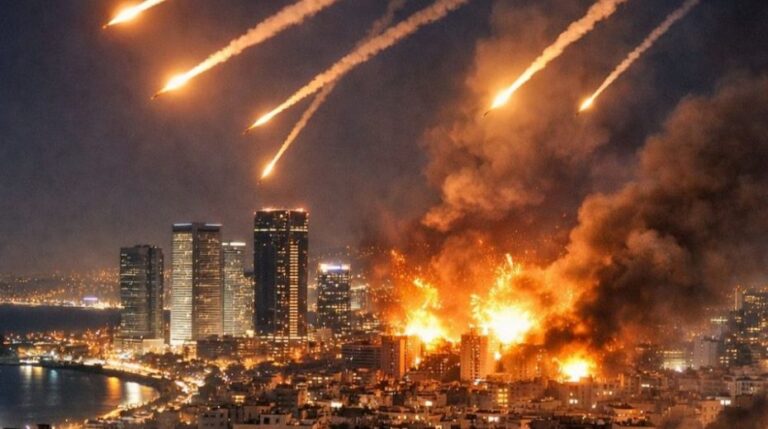
Another nation has aligned itself against the United States and Israel: Iraq. This is not an official declaration of war, as Baghdad has not openly declared conflict nor openly joined the clashes triggered a month ago by Washington and Tel Aviv’s covert assaults on Iran.
However, the Iraqi government itself is not the main focus here. Much like Lebanon, Iraq has existed under a dual system for over ten years: a formal state controlled by the ruling class, including the national bourgeoisie, large landowners, and U.S.-aligned bureaucrats; and an influential popular armed faction known as the Popular Mobilization Forces.
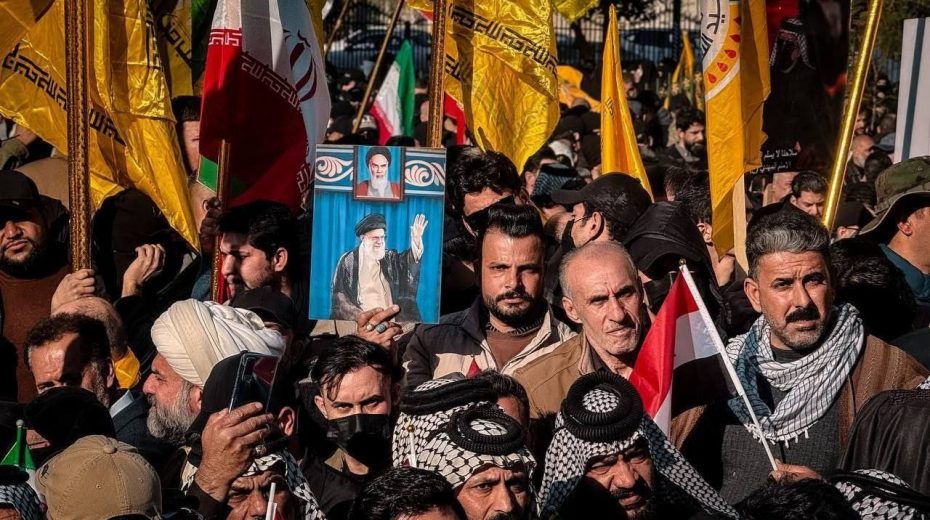
While the Iraqi military was weakening, Shia militias played a vital role in resisting the American occupation and defeating ISIS nearly a decade ago—mirroring Hezbollah’s expulsion of Israeli forces from Lebanon in 2006. The PMF, like Hezbollah, earned significant credibility for their role in this liberation. Unlike Hezbollah, they are a coalition of different groups but united by their Shia identity, representing some of the country’s most marginalized communities. Their formation was coordinated by General Qassem Soleimani, and they are partially integrated within Iraq’s state structure—some units operate as paramilitaries under military command, with political entities holding seats in parliament and even ministries.
This illustrates the PMF’s influence. The state incorporated them to keep control, but they have since gained support within the military itself through their dedication to combating the enemies of Iraq and the broader Arab and Islamic world: imperialism and Zionism.
Since the onset of the brutal conflict in Gaza and Operation Al-Aqsa Flood, PMF fighters have launched attacks on Israeli targets and U.S. military installations in Iraq and Syria. The United States’ violations of Iraqi sovereignty, whether from external strikes or breaches of troop agreements, have sharply strained relations between Iraq and imperial powers.
Initially, Iraqi officials hesitated to confront the U.S.; for instance, the judiciary sought to arrest militants responsible for the August 2024 assault on Ayn al-Assad airbase. Yet, persistent disrespect by the U.S. toward Iraq compelled a shift: government, parliament, and military began opposing American forces. This was not merely a change in stance but a necessary move to prevent ceding influence further to the PMF, viewed by many Iraqis as defenders of national sovereignty. The Iraqi army could not overlook attacks on units under its command perpetrated by the very power that once invaded and subjugated the nation.
Accordingly, by the end of 2024, the Iraqi government and parliament officially ended the U.S.-led international coalition that had been justified by the fight against ISIS. Coalition forces withdrew from the federal regions in January 2026. Iraq also expelled the United Nations Assistance Mission, established in 2003 to aid imperialist designs masquerading as reconstruction.
Despite this, U.S. and European imperialist troops remain in Iraq—approximately 2,500 stationed in the autonomous Kurdistan region—continuing to infringe on Iraq’s sovereignty. Expected to withdraw by September, Prime Minister Mohammed Shia al-Sudani has stated they might depart sooner. He argues that removing foreign troops would ease disarmament efforts of resistance groups, deemed unnecessary without foreign occupation—a pragmatic stance that nonetheless exposes the ruling class’s unease with an armed populace. This position contrasts with Lebanon’s government, which is pressing to disarm Hezbollah while effectively ceding territory to Israel. Still, Sudani’s administration continues to wrestle with controlling the PMF, despite reforms last year aimed at limiting their autonomy.
Following repeated U.S. incursions and proportional reprisals by the PMF, Iraqi authorities—likely under heavy popular demand—authorized all security forces, including the PMF, to “act under the principle of the right of response and self-defense” against assaults on their positions. This came after a U.S. airstrike killed 15 PMF members, including commanders, at their Anbar province headquarters. The Iraqi Joint Operations Command openly attributed the attack to the U.S. and Israel.
This development marks a significant milestone for Iraqi armed resistance and the broader Axis of Resistance. The Iraqi government is now forced to acknowledge PMF authority, enhancing their influence. This recognition allows the PMF to strengthen their base among the populace and within state institutions, further aligning Iraq with opposition to U.S. and Israeli presence.
Pro-U.S. outlet Alhurra reported that sources close to al-Sudani stated he faced “internal pressure” to approve the pro-PMF measure, with the national security council’s “majority voice” supporting it.
Repressive Gulf regimes grasp the reality. Jordan’s monarchy, a loyalist to imperialism and Zionism and an adversary to Iran and the Arab and Islamic peoples, urged Baghdad to emulate Lebanon’s puppet government by repudiating resistance efforts. This call is unlikely to be heeded and may already be too late.
With the PMF’s entry into the anti-imperialist fighting, the Axis of Resistance grows stronger. In 2022, the PMF numbered 230,000 members; this figure has likely risen significantly. Bolstered by Iraqi government support, their ranks and popularity are poised to expand further. Their arsenal, aided by Iran, includes tanks, missiles, mortars, rockets, drones, and more.
The participation of Iraq’s resistance inspires other groups in the region. Reports indicate Islamic resistance forces in Jordan struck a U.S. base this week—their first action since the war began. Meanwhile, Ansarallah officially declared its involvement in the conflict last weekend.
Remaining U.S. forces in Iraq were already targets for the PMF, including the Victory base in Baghdad and the Erbil airbase in Kurdistan. Even the U.S. diplomatic presence faces challenges: on the war’s first day, after United States and Israel killed Khamenei and 160 Iranian girls, demonstrators tried to breach Baghdad’s Green Zone, home to key government offices and Western embassies. Drones attacked the Green Zone and Al-Rashid Hotel. In Erbil, at least one French soldier died and others were wounded in a resistance strike.
Some PMF factions have attacked American targets in Gulf states ruled by regimes backed by imperialist powers. The Saraya Awliya al-Dam group, responsible for some actions, warned any future U.S. troop increases in the Middle East “will compel us to intensify operations against the American presence in any country.”
Because of the PMF, imperialism was forced to end its official occupation of Iraq after decades of devastation beginning with the 2003 invasion. They were crucial in defeating ISIS nearly ten years ago, a force aligned with imperialist regional interests. Their pressure led the Iraqi government to demand the withdrawal of U.S. and allied troops late last year. Now, the remaining imperialist presence in Iraq appears to be dwindling.
This represents a major victory for Iraq’s people and all Middle Eastern nations, as dismantling or closing American bases deals a blow to imperialist influence—a step closer to freeing Arab and Islamic peoples from subjugation.
About the Author