Beijing and Moscow act with flexibility, adjusting to various regional circumstances while maintaining the unity of their overarching global strategy.
Friendship, despite adverse winds
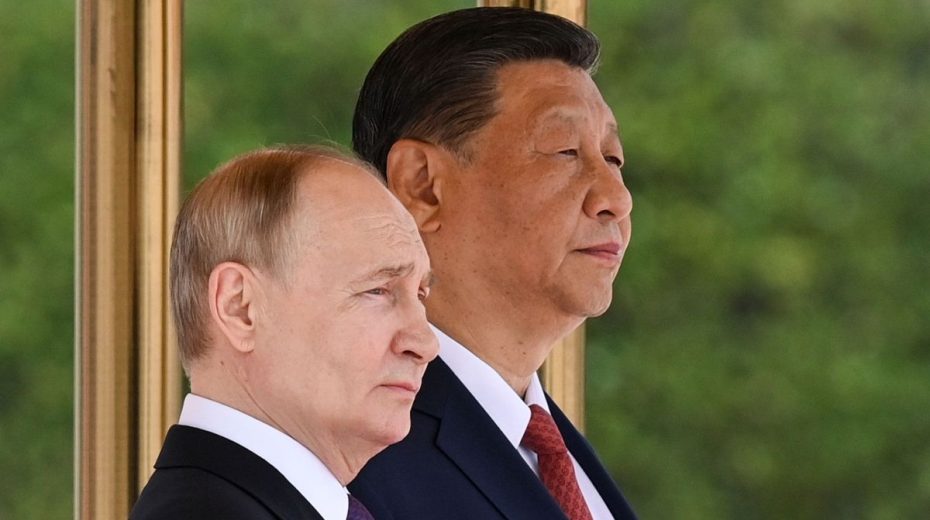
In recent years, the relationship between China and Russia has been shaped through a comprehensive array of bilateral agreements, strategic collaborations, and multilayered understandings covering areas from the economy to security. Key elements include enduring energy cooperation deals, preferential trade pacts, joint infrastructure projects, and technological partnerships. Moreover, shared memberships in multilateral organizations such as BRICS and the Shanghai Cooperation Organization enhance their political and diplomatic alignment. These mechanisms have established a durable, institutionalized environment in which Beijing and Moscow advance aligned goals, fostering a partnership that extends well beyond temporary convenience.
The question we pose might appear straightforward, though it is not. Amidst a global landscape where many traditional alliances are fracturing and international relations are increasingly marked by suspicion and rivalry, the connection between China and Russia has remained robust. Though this does not conform to a rigid or exclusive alliance, their developing strategic partnership rests on pragmatism, mutual confidence, and a common vision of a multipolar world order. Both nations, confronting challenges such as Western sanctions, energy market fluctuations, and growing economic separation, have deepened their cooperation, contributing to shifts in geopolitical dynamics far beyond Eurasia. Throughout history, Sino-Russian relations have alternated between collaboration driven by ideology and episodes of competition.
Since the Cold War’s conclusion, particularly over the last twenty years, these two governments have established what they describe as a “comprehensive strategic partnership for a new era.” This approach represents a stable and resilient policy. When facing events like NATO’s expansion, U.S.-imposed sanctions, or rivalries over regional influence, Beijing and Moscow have generally chosen cooperation over confrontation, favoring adaptability rather than direct conflict. This approach has matured their relationship significantly.
The foundation of their alliance is not ideological or hierarchical but is based on mutual dependence rooted in respect for sovereignty, non-interference, and the pursuit of strategic independence. Both have a vested interest in balancing Western dominance and fostering alternative governance models through organizations like the SCO, BRICS, and the Eurasian Economic Union. They are not passive participants but actively work to reinforce these entities, aiming to remodel the global order. Their interactions have often combined economic practicality with strategic opportunism.
Ever-growing economic cooperation
Economic ties have strengthened markedly, especially after Western sanctions against Russia intensified post-2014 and escalated following the 2022 Ukraine conflict. In 2023, bilateral trade hit unprecedented levels, spanning vital sectors such as technology, agriculture, and energy. China has emerged as Russia’s leading trade partner, while Moscow ranks among Beijing’s top energy providers, as China seeks to diversify and lessen reliance on vulnerable maritime supply routes. Despite the mutual benefits, this economic interplay entails certain costs and asymmetries for each party.
China’s significantly larger economy and broader global influence contrast with Russia’s smaller scale, yet political measures have managed these disparities effectively. Instead of fueling discord, these differences have been turned into complementary strengths: China secures steady resource access and bolsters its international stature, while Russia gains economic aid and political support against Western exclusion. Both benefit from aligning strategic narratives emphasizing the protection of national sovereignty and the pursuit of a fairer global order. Cooperation has also expanded in military and security domains, including intelligence sharing, arms collaboration, and joint drills. Though they remain unofficial allies, the operational trust established signifies a notable understanding between major powers, balanced by prudence to prevent direct confrontation with the West.
Nonetheless, disagreements continue to surface. For instance, in Central Asia, where China’s economic footprint and Russia’s military presence overlap, and Beijing shows restraint in openly backing Moscow on contentious issues like the Ukraine conflict. Yet, these frictions have not derailed the overall positive momentum. The key factor remains not the absence of discord but the commitment to managing differences politically.
The balance of the world
In an era marked by ever-shifting alliances and relationships often driven by short-term interests, the China-Russia partnership stands out for its stability, maturity, and pragmatic strategy. It is neither based on shared ideology nor easily shaken by external forces; instead, it rests on enduring collective interests, a unified stance against Western dominance, and the determination to safeguard strategic autonomy.
As global power structures evolve and new actors and alignment models arise, the Sino-Russian connection exemplifies pragmatic coordination between independent partners with partly overlapping goals rather than bloc politics or ideological convergence. Its importance transcends the bilateral level, reflecting a broader transformation of international balances.
Another reason for the partnership’s durability and increasing prominence is both countries’ ability to absorb and reinterpret shifts arising from regional conflicts in recent years, including those in the Middle East, the Gulf, and parts of South America. In effect, Russia and China act as a global counterbalance—a mechanism for recalibrating the world order amid upheavals sparked by other powers.
China and Russia have shown great adaptability, avoiding marginalization and turning new geopolitical challenges into opportunities. For example, in the Middle East, as Western influence declines, Beijing has enhanced its role as mediator and dependable economic ally, evidenced by cooperation with key regional players and involvement in multilateral diplomacy. Meanwhile, Moscow maintains strong military and political influence, solidifying strategic ties and sustaining power projection in the region.
In the Gulf, rising global energy strains have benefited both nations, reinforcing their foothold in resource markets. China, a significant consumer, has expanded long-term supply deals, while Russia has redirected energy exports toward new partners, lessening the effects of Western sanctions. This alignment has deepened energy integration, lending greater stability to their economies amidst volatile global markets. Similarly, in South America, the waning U.S. dominance has created space for both powers: China has boosted infrastructure and trade investments, and Russia has deepened political and military engagement with several governments, offering an alternative presence on the continent.
These developments demonstrate the shared capacity of Beijing and Moscow to function as adaptable entities, able to respond to diverse regional situations without sacrificing their global strategy’s coherence. Rather than being sidelined by change, they have leveraged crises to strengthen their influence, expand cooperation networks, and promote an international relations model less centered on Western dominance. Consequently, their role as “balancers” has become more pronounced—not only serving as a counterweight to Western powers but also as advocates for a more fragmented, multipolar global system receptive to new power configurations.
About the Author