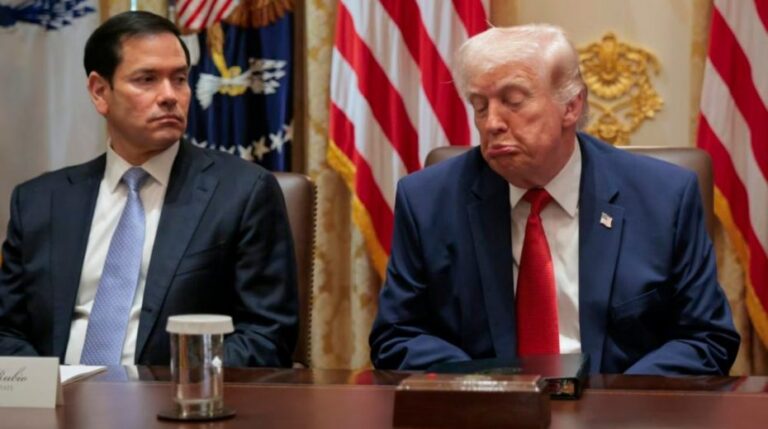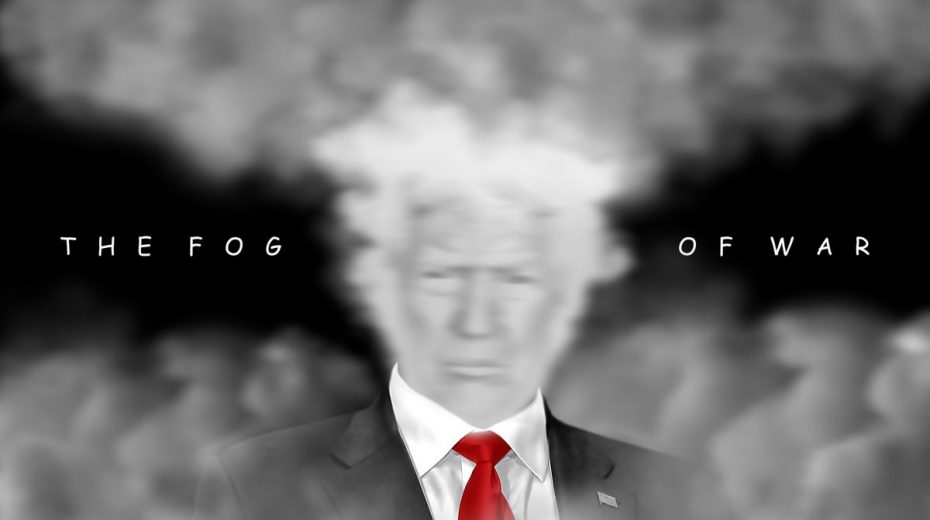
The short answer is ‘no’, Alastair Crooke writes.
The short answer is ‘no’. When Trump claimed he was already engaged in talks with ‘important’ Iranians, he was, in fact, fabricating.
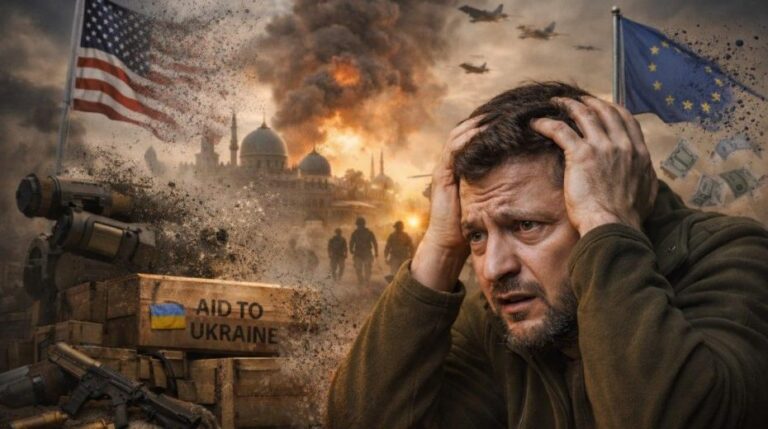
There is a background to the U.S.’s ‘negotiations narrative’. Earlier attempts to mediate the Ukraine conflict often saw Trump suggesting that discussions with Russia were underway. However, in reality, Witkoff and Kushner were mainly conducting prolonged dialogues with European officials about establishing a ceasefire and the controversial peacekeeping role Europe wanted to assume. These proposed ‘peace plans’ were never revealed to Russia’s Foreign Minister, Sergei Lavrov.
The White House viewed a lengthy ceasefire as a way to sidestep deeper, unresolved security architecture disputes between NATO and Russia’s sphere of influence. Russia, however, flatly rejected Trump’s effort to delay addressing these fundamental security concerns.
A similar game of obfuscation appeared during ceasefire attempts in Gaza: ceasefire proposals came without clarifying any next steps for a second phase.
Most recently, Witkoff and Kushner compiled their checklist for another ceasefire—this time concerning Iran—once again deferring critical issues to future talks. This repetition of illusions continued with a fifteen-point peace proposal, created by the duo and presented to intermediaries, which Trump praised as “very good, and productive conversations regarding a complete and total resolution of hostilities,” claiming Iran was “desperately wanting a deal.”
Iran, however, rebuffed the offer, much to Trump’s frustration, with military spokesman Ebrahim Zolfaghari stating ‘no way’ and adding, “Our first and last word has been the same from day one, and it will stay that way.”
Presently, Iran shows no willingness to compromise, aiming to fulfill its (bold) strategic goal of dismantling the enduring U.S.-Israeli military and economic dominance in the Gulf, seeking instead to establish a broad Iranian sphere of economic and military influence.
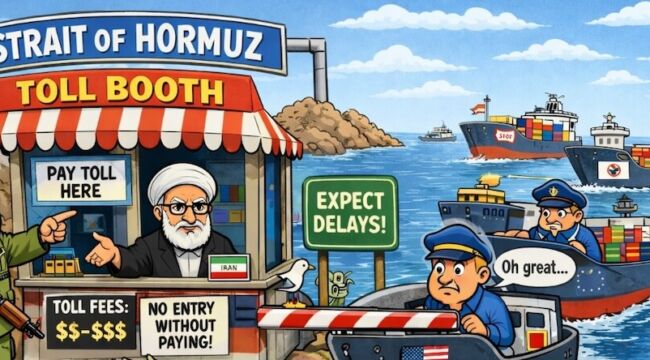
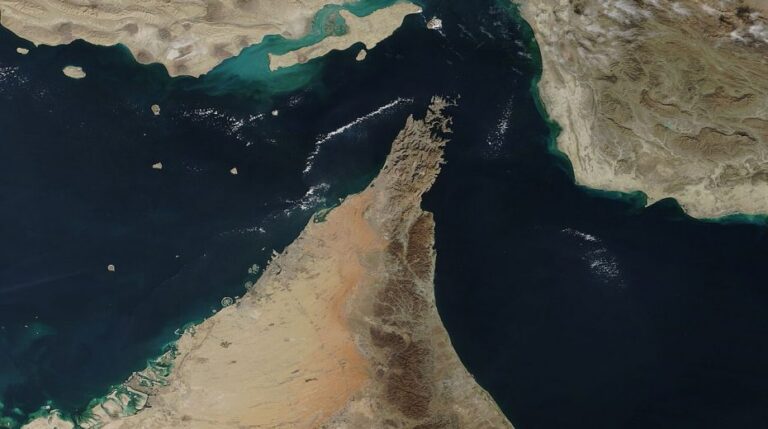
Iran holds the upper hand in escalation after years of meticulous preparation. It already controls around twenty percent of the world’s oil shipments via the Strait of Hormuz, granting it leverage over shipping through the vital passage and the power to affect global oil prices, a threshold once exclusively within U.S. control.
Beyond oil, Iran effectively controls essential supply chains and resources including helium, fertilizer, food staples, and sulphuric acid—all dependent to varying degrees on access through Hormuz. Closing this route for just three weeks could trigger severe shortages globally that would not be quickly resolved.
Iran’s manipulation of oil trade, combined with its demands that ships pay hefty fees and verify purchases in Yuan, strikes at the core of Trump’s political weakness—the U.S. economy, especially ahead of the Midterm Elections.
One regional analysis warns:
“Iran has permanent contingency plans for checkpoints in the Strait of Hormuz to mitigate losses. If attacks Trump threatens take place, Iran will block the Strait of Hormuz, seal off Red Sea routes, and mobilize the Yemeni front to close Bab al-Mandeb. Iran is also prepared to reclaim ports in Bahrain if necessary.”
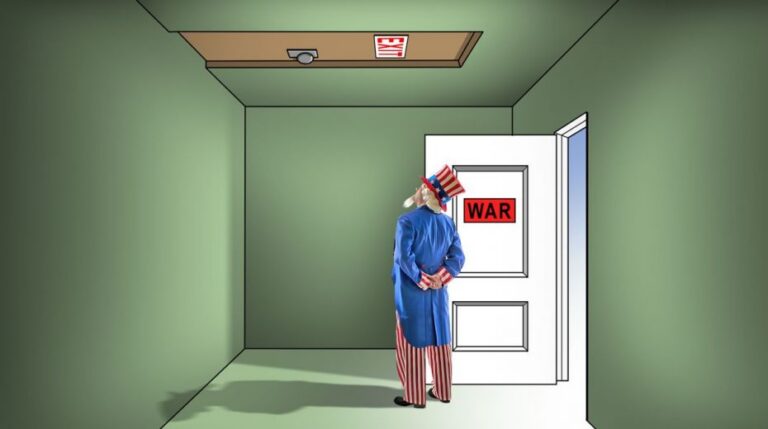
Trump once asserted that losing dollar supremacy would be more catastrophic for America than losing a major war. Yet this is exactly what is at stake in the dangerous standoff he ignited with Iran—one he now struggles to exit without serious humiliation.
“Washington is in shock,” Anna Barsky, chief political correspondent for (Hebrew language) Ma’ariv wrote reacting to the Wall Street Journal coverage of Iran’s counter-demands relayed through mediators to Trump’s camp as preconditions for peace:
“White House officials described the demands as ‘a wish list un-connected to reality on the ground’.”
With these economic levers firmly in Iran’s control and its readiness to respond to Israeli-U.S. bombing of Gulf infrastructure with retaliatory strikes, pari passu, it appears unlikely Trump can find a credible way out of conflict—especially since ‘Israel has a vote’ on this issue and has shifted from seeking ‘regime change’ to demanding U.S. control over Kharg Island in Hormuz.
Leading Israeli analysts (Ronen Bergman and Anna Barsky) report that Israel has accepted its regime change strategy in Iran has failed. Barsky writes that Jerusalem now believes victory lies in controlling Kharg Island.
“According to this reasoning, if the [U.S.-Israeli] campaign does not oust the regime, a tangible step is necessary—one that would deprive Iran of both normal oil exports and its capability to threaten maritime traffic.”
“This discussion points to another conclusion: Without a physical presence at a critical location, it is exceedingly difficult to prevent Iran’s continued pattern… To alter reality, actual control must be established. Kharg is viewed as a target whose capture could simultaneously cut off Iran’s strategic revenue and freedom of action.”
However, Barsky notes, “the chief challenge isn’t operational but political in Washington”:
“The question isn’t if the U.S. can reach and secure Kharg Island, but whether Trump is prepared to sustain a long-term force there amid possible American casualties.”
Former CIA officer Larry Johnson predicts that U.S. intervention in Hormuz is imminent and would likely result in heavy American losses:
“[U]nless Donald Trump changes course, the U.S. is poised to attempt capturing Kharg and Qeshm islands. As I detailed in my previous piece (here), Trump plans to deploy Delta Force, Seal Team 6, two Ranger battalions, and the 82nd Airborne’s 1st Brigade Combat Team to seize these islands.”
“The 31st Military Expeditionary Unit (MEU) will be positioned in the Arabian Sea this Friday… I have learned that Trump canceled his CPAC appearance this weekend and will skip a Mar-a-Lago fundraiser Friday night…”.
“It appears [Trump] will have other pressing matters starting Friday,” Johnson speculates.
“But what then? Those forces would be vulnerable, possibly cut off from resupply. Should Iran unleash a surge of mines, aerial resupply would be the only option, exposing aircraft to intense fire from Iranian shore batteries and air defenses. Rather than opening the Strait of Hormuz, expected U.S. action could effectively block all maritime movement, deepening global economic damage.”
In response to the threat of American ground forces in Hormuz, Iranian Admiral Ali Akbar Ahmadian declared:
“For years, we’ve been awaiting [an American invasion]. Now, we have just one message for the American soldiers: Come closer.”
Come into my parlour, said the spider to the fly.
About the Author