This Grain’s Price Is About To Pop
The most widely cultivated crop in the U.S. also leads in nitrogen fertilizer usage. Thanks to the Farm Lobby, nitrogen is included in a range of products, from gasoline to animal feed to candy.
Here’s the key point: 94% of ethanol production relies on this crop. When its price rises, gasoline costs follow suit.
If you thought corn, you’re correct.
Rising corn prices drive inflation for consumers. Beyond ethanol, corn significantly impacts livestock feed expenses, especially for beef, and it is the source of high-fructose corn syrup, found in countless sweetened foods.
The issue lies in the sharp increase in nitrogen prices, as illustrated by the chart below:
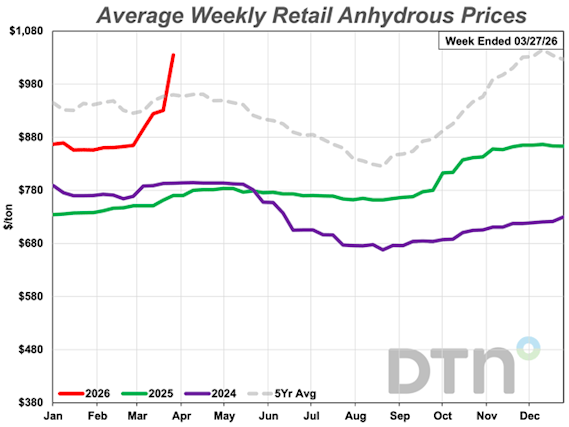
Corn requires far more nitrogen fertilizer than any other U.S. crop. It accounts for nearly 78% of all nitrogen used across grain crops like wheat and soy. The price of this essential input has surged more than 30% compared to last year.
On average, corn demands about 150 pounds of nitrogen fertilizer per acre. In 2025, the cost was approximately $59 per acre. Currently, figures from the U.S. Department of Agriculture show that number has soared to $78 per acre. Corn’s dominance in nitrogen use is unmatched, representing roughly 78% of fertilizer applied to major crops like soy and wheat.
The spike in nitrogen fertilizer prices stems largely from the conflict in Iran. Natural gas is a vital ingredient for producing ammonia, which serves as the base for nitrogen fertilizer. The process is depicted in the diagram below:
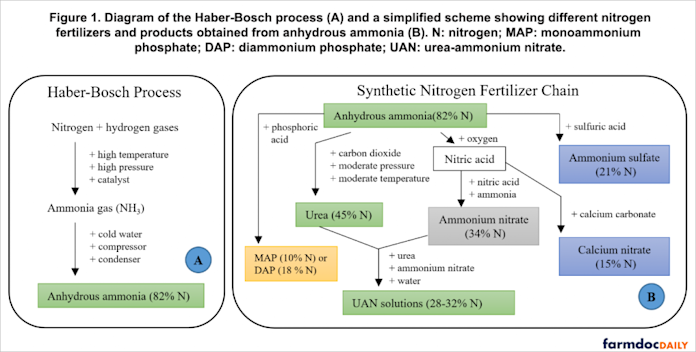
With natural gas supply limited, fertilizer production grinds to a halt. That is the current scenario: the war in Iran combined with the blockage of the Strait of Hormuz has severely disrupted global nitrogen fertilizer availability, including for the U.S.
Nitrogen fertilizer typically represents up to a quarter of corn’s cost. Yet, as shown in the next chart, corn prices are presently at multi-year lows. If history repeats itself, corn could surge again as it did in 2022:
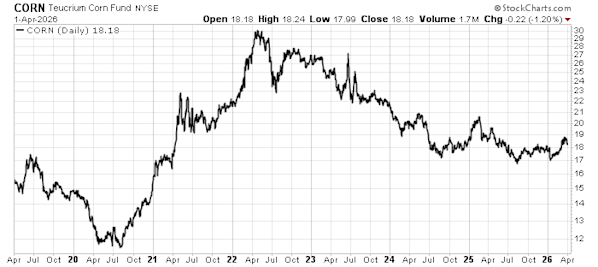
In 2022, Russia’s invasion of Ukraine cut off Russian natural gas supplies worldwide. This caused nitrogen fertilizer prices to skyrocket, pushing corn prices to record highs. The Teucrium Corn Fund (NYSE: CORN) offers an effective way to capitalize on rising corn prices—it has increased about 4% year-to-date.
Given past trends, prices are likely to climb considerably higher. Since higher prices affect the cost of almost everything we buy, it makes sense to offset that impact by profiting from this trade.
About the Author