Tell Your Member of Congress, House and Senate, to “Vote NO $$$$$ for War!”
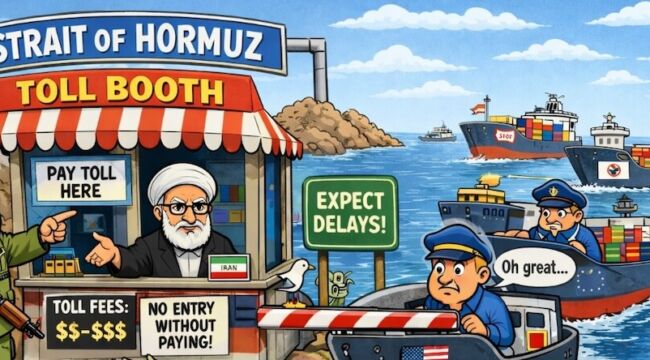
As many as 15,000 out of the 50,000 American forces stationed in the Middle East are being prepared to launch an operation against Kharg Island, a vital Iranian oil export site. The goal is for the U.S. to seize control of Kharg, gaining strategic superiority by opening the Strait of Hormuz to American and allied forces, while severing Iran’s access to its primary oil income.
Supported by air and naval units, Marines and paratroopers are set to storm Kharg’s heavily fortified coastline, which stretches 25 miles and is characterized by rugged cliffs, rocky landscapes, and flat limestone areas—each posing unique tactical challenges and dangers. Special Operations forces may also confront the daunting task of securing Iran’s enriched uranium.
An assault on Kharg Island will come at a steep cost; the U.S. military cannot expect to capture and hold it without sustaining significant losses. Iran has spent over two decades fortifying the island against such an attack, and any American force would risk devastating counterattacks from air, land, and sea, aptly earning Kharg the ominous nickname, “The Forbidden Island.”
Political figures and military strategists must be fully aware that such an offensive will likely lead to massive American casualties—unless they have been overtaken by the thirst for war.
We may be witnessing a grim echo of the 19th century tragedy known as Custer’s Last Stand. At the Battle of Little Big Horn in 1876, General George Custer and his 215 troops were decisively defeated by Native American leaders Sitting Bull and Crazy Horse, whose strategic insight and resolve overcame a superior U.S. force.
Custer’s mission, ordered by the U.S. government, was to reclaim Dakota Sioux territory in the Black Hills following gold discoveries in 1874.
The arrogance of underestimating an opponent, reckless battlefield strategies that disregard the value of life, and cultural biases that cloud judgment were factors at Little Big Horn and remain apparent among the advisers of the Trump Administration today.
There must be no ground invasion of Kharg or any other Iranian islands. Bombing raids and missile attacks on Iran must cease immediately. Rapid de-escalation is essential to prevent further deaths and avert a global crisis involving critical supplies like food, fertilizer, and fuel.
My opposition to reckless U.S. foreign policy has a long history. While serving in Congress, I spearheaded efforts to oppose the Iraq War. Over several years, I delivered 155 floor speeches denouncing the prospect of attacking Iran and called repeatedly for diplomatic solutions.
President Trump has offered various justifications for this conflict: to support Israel, achieve regime change, eliminate enriched uranium, neutralize Iran’s missile capability—and recently, according to the Financial Times, the outright motive has been “blood for oil.”
Quoting the President: “to be honest with you, my favorite thing is to take the oil in Iran, but some stupid people back in the U.S. say: ‘Why are you doing that?’ But they’re stupid people.”
Donald Trump meets Forrest Gump: “Stupid is as stupid does.” This includes abandoning the JCPOA nuclear agreement in 2018 then complaining Iran failed to comply, or killing Iran’s lead negotiator Ali Larijani and lamenting that no one remains to negotiate.
Alternatively, the President and his associates, having recently seized control of $150 billion worth of Venezuelan oil, may be exploiting U.S. military power for personal enrichment.
Regarding this, the President told the New York Times: “We’re going to be using oil, and we’re going to be taking (Venezuela’s) oil.”
Favored insiders within the Administration capitalize on stock market manipulations, profiting from early knowledge of presidential announcements, highlighting war as a vast con.
During my time in Congress, I confronted the deceit and corruption from both political parties.
I filed lawsuits against three Presidents—Democrat and Republican alike—for breaching the Constitutional war powers: Bill Clinton over Serbia, George W. Bush regarding Iraq, and Barack Obama concerning Libya.
I introduced Articles of Impeachment charging President George W. Bush and Vice President Dick Cheney with constitutional violations, exposing bipartisan enabling of warfare—not only from the Executive Branch’s arrogance and corruption but also from Congress’s inaction.
Congress has neglected its fundamental constitutional duty over war powers, and abandoned its key role to check wars by controlling funding through the appropriations process.
My experience in Congress showed the Democratic Party, aware that the public was weary of the Iraq War, campaigned in 2006 for ending it. However, upon regaining power, party leaders promptly vowed to continue financing the very conflict they pledged to stop.
This deceptive turnaround prompted me to run for president once again, advocating a platform centered on Strength through Peace.
In 2024, Donald Trump campaigned promising peace, gaining crossover support and winning the presidency, only to deliver the opposite under “Peace through Strength,” increasing military budgets and advancing imperialist policies that spark conflicts.
If ending this war is your goal, remember this: Voting to allocate funds is voting for war. If your congressional representative supports the “National Defense Authorization Act (NDAA), they are endorsing war. This isn’t about disarmament; it is about Congress exercising oversight to limit aggression. Appropriating money to replenish missiles and armaments is authorizing warfare.
A congressperson cannot truthfully say they oppose war if they have voted to fund war.
Congress’s control of the budget is the clearest path to halt the war in Iran—or any war. Funding equals authorization. Cutting off funds equals ending conflict.
Yet, House Democratic leader Hakeem Jeffries has left the door open to approving another $200 billion to continue the Iran War. This comes before the 2027 war budget request, which the president has doubled to $1.5 trillion—approximately 80% of current discretionary spending.
Using the power of the purse remains Congress’s sole tool to stop this war.
Those in Congress who back a ground invasion of Iran have neglected a critical constitutional responsibility: Only Congress has the legal authority to shift America from peace to war, sending its citizens into harm’s way. Because Congress refuses to hold formal declarations of war, hostilities proceed unchecked through funding decisions.
The financial toll of the Iran conflict, approaching $40 billion, pales next to the moral cost. The deaths of 168 girls—struck by a U.S. Tomahawk missile at Shajareh Tayyebeh elementary school in Minab, Iran, on February 28th—mark a permanent stain on our national conscience.
The assassination of Ayatollah Ali Khamenei, Iran’s top political and religious leader, was illegal and horrifying. The continuous loss of thousands of Iranian civilians due to U.S. and Israeli bombings violates international and U.S. law and demands justice. Above all, we must remember the sacrifices American military families have endured.
The indiscriminate destruction inflicted by our government abroad, and the callous indifference to suffering of innocent populations, will inevitably return as more casualties and grief to American soil, compounding misery indefinitely.
We cannot avoid the fallout of our leaders’ reckless defiance of the Constitution, breaches of international human rights, and reckless targeting of civilians, which ultimately imperil both American soldiers and civilians.
The Iran war parallels atrocities faced in Gaza, the West Bank, Lebanon, Syria, Iraq, and Yemen, constituting crimes against humanity with each bomb and missile funded by our taxes. President Trump’s repeated threats to destroy Iranian energy and water infrastructure fit the definition of war crimes.
I have never hesitated to challenge unconstitutional misuse of war powers throughout my career. Courts routinely refuse to intervene in conflicts between Congress and the President over war authorities. The budget appropriation vote remains the primary political tool to initiate, sustain, or end warfare. A “Yes” vote to Pentagon funding equates to a vote for war. No exceptions.
By wielding budget control wisely and voting “No” to war enabling expenditures, Congress alone holds the power to halt this war or any other. If Congress authorizes funds, it authorizes war.
Congress also possesses the War Powers Resolution to set deadlines on hostilities, yet recently Democratic leaders chose not to force such a vote despite bipartisan backing.
Ultimately, funding for war transcends party lines. Both Democrats and Republicans have been compromised by special interests profiting from endless warfare.
Our current leadership will continue to seek shaky rationales to justify the costly Iran War and excessive arms spending. Its effects will be felt nationwide—in rising gas prices and grocery costs—while the government debates cuts to programs like SNAP and watches farmers face bankruptcy. Is there a clearer sign that America has strayed when war is prioritized over its people?
A nation erodes not by a single act but through repeated choices that place reckless wars above the welfare of its citizens.
We the People must decide. Persisting with a militarized budget fosters a militarized society, fueling ongoing conflicts and diverting resources from vital needs like jobs, wages, healthcare, education, and retirement security.
It is time for America to withdraw from its wars abroad.
With midterm elections on the horizon, accountability awaits both Democrats and Republicans.
Your voice matters—and it must be made loud and clear. Demand of your members of Congress that more funding for war is unacceptable.
The path forward is new, and it begins with you.
Engage in elections. Participate. Organize. Endorse candidates who uphold the Constitution, grasp the true cost of war, and refuse to support its funding.
Help ensure those who champion the Constitution and advocate for diplomacy and peace prevail.
Only vigilant citizens can shape outcomes. A constitutional republic thrives when its people remain watchful.
That duty now falls on you. On all of us. On We the People.
Original article: kucinichreport.substack.com
About the Author