The risk, as history teaches us, is that windows of opportunity will close before anyone decides to truly open them.
Trieste’s Golden Age and its rise
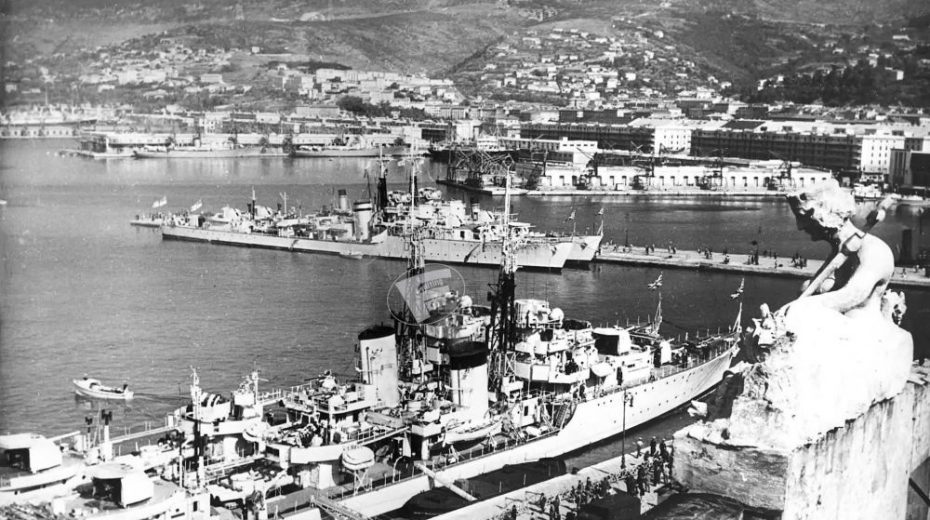
Between the mid-1700s and early 1800s, despite structural challenges, Trieste enjoyed what many refer to as its “golden age.” The free port attracted a remarkable cosmopolitan mix: Italians, Austrians, Greeks, Serbs, Jews, Flemings, and Levantines lived together in a vibrant environment that would today be called “multicultural,” yet at that time was simply the natural outcome of a thriving commercial hub.
Outstanding personalities emerged during this period, including William Bolts, a former British East India Company colonel, and Charles Proli, an Antwerp merchant. They jointly founded the Compagnie Impériale Asiatique de Trieste, creating trade links connecting the Adriatic with China and the Indies. They took advantage of Austria’s neutrality to navigate freely during Franco-British conflicts. Trieste, in these flourishing decades, acted as a global gateway, bridging European financial centers with markets across Asia, Africa, and the Americas.
Karl Marx, writing in the New York Daily Tribune, expressed admiration for the city’s hybrid nature, its independence from traditional European cultural hubs, and its unique commercial and social characteristics. Even the Habsburg governor Count Zinzendorf acknowledged in the 1770s that Vienna’s orders were implemented tardily and with flexibility: Trieste followed its own rhythm. This autonomy—both culturally and administratively—became a defining trait, enduring through various changes in power.
This era also witnessed the birth of the first insurance firms, laying the foundation for a tradition that persists today. Trieste’s insurance industry—headed by Generali—originates from the 19th-century ferment when merchants required financial tools to mitigate the risks of maritime trade.
The nineteenth century ushered in the Industrial Revolution, radically transforming the port and cityscape. The rise of steam technology and larger vessels ended the dominance of small-scale merchants and exclusive companies. They were replaced by large Viennese banking houses, industrial-scale shipping firms, and a port economy increasingly centered around shipyards. Within decades, Trieste earned the nickname “Philadelphia of Europe,” becoming a major industrial and logistics center.
However, this expansion hid significant weaknesses. The city’s elite became increasingly detached from the port economy: capital was predominantly Viennese, decisions were centralized far away, and the local bourgeoisie was relegated mainly to intermediary roles in insurance or shipbuilding management. Administrative autonomy weakened, diminishing Trieste’s capacity to lead its own political course.
The conclusion of World War I and the shift to Italian sovereignty appeared to signal a new era. Yet, the situation largely persisted: financial reliance shifted from Vienna to Rome, while World War I transformed the Mediterranean into a volatile zone. The Suez Canal’s opening in 1869 initially held promise, but escalating Balkan tensions and the collapse of the Habsburg Empire thwarted those advantages.
The 20th century largely became a prolonged phase of stagnation. The 1929 economic crisis forced Italian authorities to slash port investment. Among Italy’s numerous and larger ports, such as Naples, Venice, and Ancona, Trieste received low priority. A proposed Henry Ford factory in the city faltered amid conflicting local and national agendas, representing a significant lost opportunity.
The Cold War and the never-ending chill
If fascism had already inflicted deep harm on the city’s multicultural identity—enforcing “Italianness” at the expense of Slavic groups—World War II and the ensuing Cold War finalized the isolation process. The Free Territory of Trieste, a peculiar geopolitical entity from 1947 to 1954, left the city suspended in political uncertainty, deterring meaningful investment.
The arrival of Italian troops on October 26, 1954, failed to bring stability. Instead, it triggered a mass exodus: more than twenty thousand people departed between 1954 and 1969. Trieste, once proudly called the “gateway to the East,” became a dead-end as the Iron Curtain obliterated its strategic role, and Tito’s Yugoslavia established its own port in Koper, just beyond the border.
By the early 1970s, most inhabitants depended on pensions. An aging population, shrinking numbers, and marginalization defined the city. Even now, statistics highlight the trend: in 2012, one out of every three residents was retired. The Serbian Orthodox minority—the largest minority group and heavily employed in construction—has declined by over 40% since the 2008 crisis. The diverse melting pot that inspired Marx had turned into a relic.
Yet the narrative is not finished, or at least it doesn’t have to be. Following the Soviet Union’s collapse and the European Union’s gradual expansion, renewed ideas of a trans-European logistics corridor have resurfaced persistently. “Corridor V,” a post-Maastricht vision, proposed 18,000 kilometers of infrastructure stretching from Lyon to Kyiv, positioning Trieste as a pivotal hub along the Adriatic route. Although ambitious, it has again stumbled over slow progress, political disputes, and challenges aligning investment on a continental level.
Currently, the main focus is the Belt and Road Initiative, China’s New Silk Road. China has selected Piraeus as its Mediterranean foothold, favoring it over Taranto, but developments remain fluid. Northern Adriatic ports—including Trieste, Venice, and Ancona—could serve as a complementary network, channeling Asian trade flows into Germany, Austria, Poland, and Central Europe via Alpine crossings and continental plains.
Excluding the BRI, even the peculiar attempt at the IMEC corridor was insufficient to revive Trieste’s standing.
In terms of port capacity, Trieste remains competitive: its container throughput now matches some ports within the Hamburg-Le Havre range, and its proximity—mere hours from the Strait of Otranto with direct rail links to the Alps—positions it well as a gateway to Central Europe. Connecting with the Adriatic-Baltic Corridor, which runs from Gdansk to Graz, could complete a long-term strategic logistics plan.
The fundamental challenge lies less in infrastructure than politics. Italy struggles to form a unified approach for its Adriatic ports, and internal rivalries continue to weaken rather than strengthen Trieste’s potential. Cities like Venice, Ravenna, and Ancona prioritize local interests over a cohesive national framework, while Koper—Slovenia’s flexible, better-connected port—is gaining ground in market share.
The parallel to the 18th century is strikingly precise. As then, Trieste contends with a distracted central government, strong competitors—once Hamburg, now Rotterdam and Piraeus—and the need to forge political networks that convert its geographic advantage into tangible investments. The core issue remains turning a geopolitical destiny into a collaborative vision.
The risk, as history teaches us, is that windows of opportunity will close before anyone decides to truly open them.
About the Author