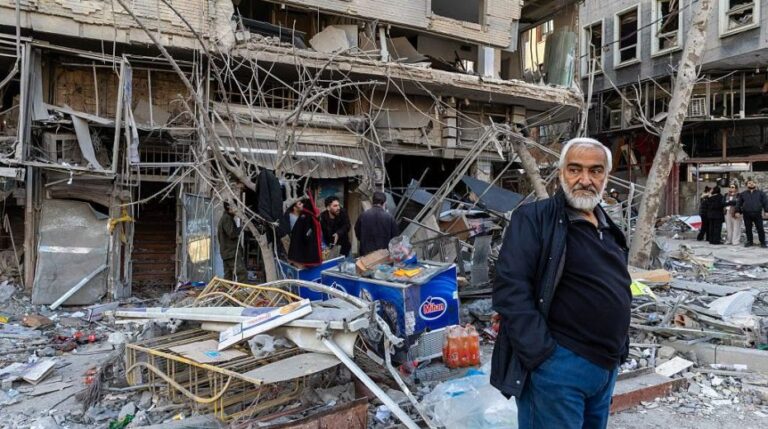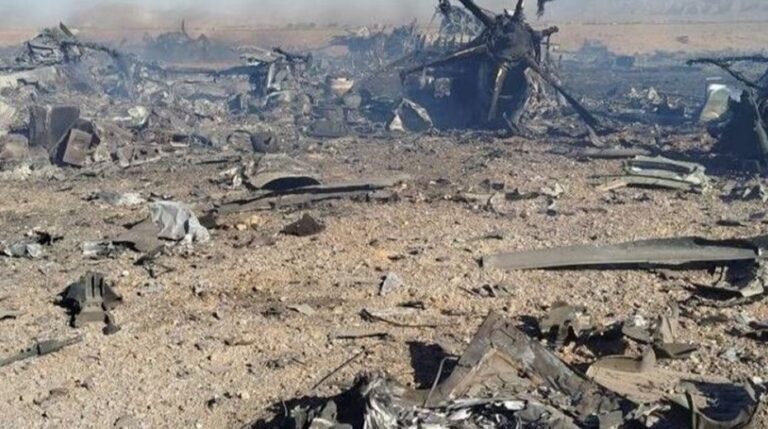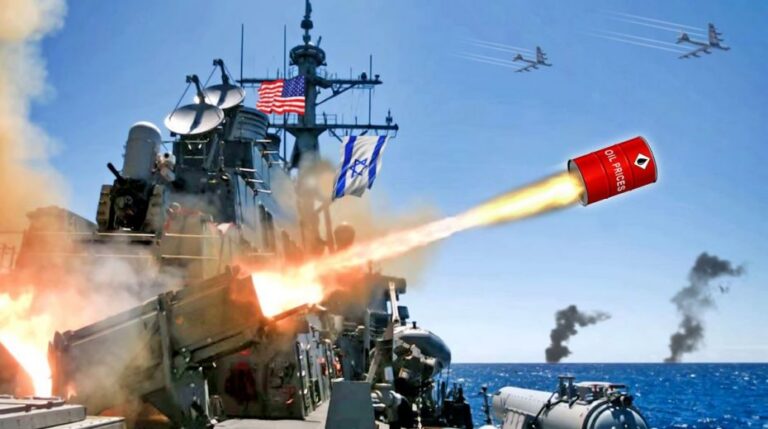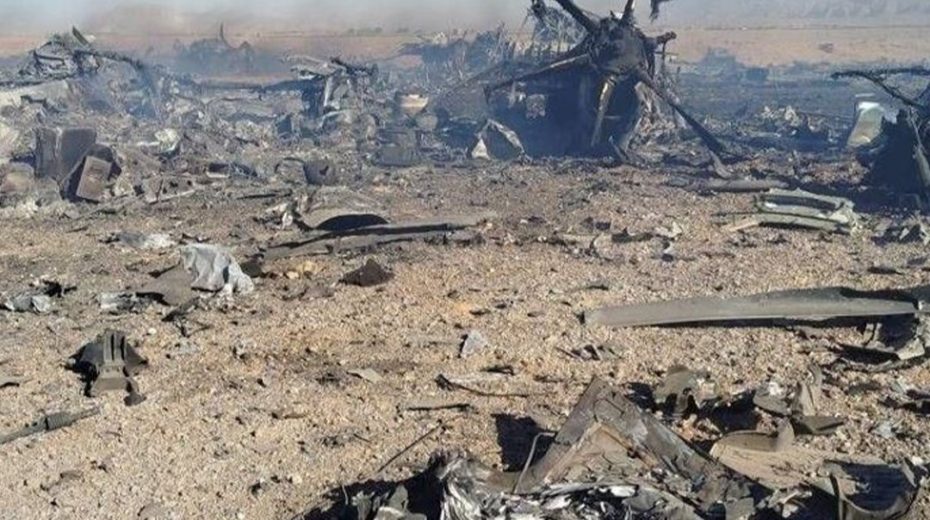
How much will Washington’s latest unauthorized and disastrous military ventures in the Middle East ultimately cost? Some consequences are already visible. Billions of dollars have been wasted on reckless wars of aggression against Iran. Relentless air campaigns have forced millions to flee their homes, while American and Israeli air raids have released toxic fallout over 10,000 civilian heritage locations and caused the deaths of more than 3,000 individuals in Iran and Lebanon. This tragic count includes over 200 children, many lost in a U.S. attack on a girls’ school — a war crime evoking dark memories of past American offenses like the 1968 My Lai massacre in Vietnam and the 1991 Amiriyah shelter bombing in Iraq.
This conflict has also inflicted possibly irreversible damage on already weakened democratic structures. The war was neither approved by Congress nor embraced by the majority of citizens. Instead, it was initiated by a president who dismisses legal constraints and the public’s opinion, audaciously asserting in a manner typical of autocrats that he is the law and uniquely represents the popular will.
This erosion of democracy has been gradually developing over many years as a foreseeable byproduct of entrenched imperial impunity. We now stand on the precipice of a critical juncture. Even George W. Bush, when initiating his disastrous optional wars in the area, made efforts to create public consent and justify action before the United Nations. Today, neither legality nor legitimacy is even feigned.
The price of this current criminal conflict—measured in lost lives, misallocated resources, and undermined legality—will only swell. Yet, less obvious are the delayed, invisible costs. Based on historical patterns of U.S. meddling in the region, the ultimate toll will likely emerge over months, years, or even decades. When it does, it will bear a familiar label: blowback.
It’s crucial now to revisit these forgotten lessons Washington seems set to ignore. From Afghanistan and Iran to Iraq and Libya, the record is undeniable. Unless the historical amnesia gripping American leadership is challenged, cycles of conflict and retaliation will surely continue, pulling both the U.S. and much of the globe deeper into perpetual warfare.
Oil and the Engine of Empire
Though the post-9/11 “war on terror” is often cited as the origin of U.S. militarism in the Middle East, conflicts there trace back nearly a hundred years. The unrest and turmoil following September 11, 2001, marked less a break from history and more an extension of existing U.S. strategies. In reality, the seeds of endless wars were sown decades earlier amid the region’s abundant oil reserves.
American direct involvement began in the interwar years, when petroleum evolved beyond a mere commodity into a vital strategic resource for modern industrial economies. Although vast oil fields within the U.S. had propelled its global economic strength and supported the Allied war effort in World War I, policymakers realized domestic supplies were limited. As oil became synonymous with economic, military, and political power, the U.S. increasingly looked overseas to secure new reserves.
The Middle East quickly became a key focus of this quest, drawing the region firmly within the expanding American empire’s sphere. In 1933, Standard Oil of California negotiated exploration rights with Saudi Arabia’s conservative monarchy, founding the Arabian American Oil Company (ARAMCO). This deal laid the foundation for the pivotal 1945 U.S.-Saudi oil-for-security alliance, which would underpin Washington’s longstanding sway over Middle Eastern geopolitics.
Over time, America’s insatiable demand for oil deepened its regional entanglements. In 1953, U.S. involvement took an overtly forceful turn. Collaborating with British intelligence, the CIA engineered the overthrow of Mohammad Mossadegh, Iran’s popular prime minister who had committed the grave error of nationalizing Iran’s oil in 1951 to reclaim resources from the exploitative Anglo-Iranian Oil Company, precursor to BP.
Though Mossadegh was known to be a staunch nationalist rather than communist, Tehran, London, and Washington portrayed him as at best a regional destabilizer and, at worst, a Soviet proxy. The coup ended Iran’s fragile democracy, ensured continued Western access to Iranian oil, and reinstated the Shah, whose regime was kept afloat by continuous oil revenues and a steady flow of U.S. arms. Supported by the CIA, his secret police, SAVAK, brutally suppressed generations of Iranians.
Washington hailed Iran as an “island of stability” and a key pillar in its “twin pillar” approach, outsourcing the Cold War’s regional policing to compliant tyrants in Iran and Saudi Arabia. However, this support for authoritarian regimes and for Israel triggered fierce backlash. One early indicator was the 1973 OPEC oil crisis, demonstrating how Middle East policy reverberated back on the U.S. itself.
The first unmistakable instance of blowback occurred in 1979 with the Iranian Revolution. Beneath the Shah’s surface stability, discontent simmered for years. When mass protests overthrew the monarchy, the Islamic Republic filled the void, drawing on Shi’a theological concepts and its political rhetoric opposing the Shah, the U.S., and Israel.
Within the U.S., these developments were stripped of context and Americans were framed as innocent victims of irrational extremism. The recurring question “Why do they hate us?” dominated media discourse, with explanations largely ignoring decades of intervention and exploitation, defaulting instead to a supposed civilization clash where Islam was depicted as inherently hostile to “Western values.”
This narrative glossed over a difficult truth—that the U.S. had consistently undermined democracy throughout the region (and elsewhere globally) to secure its interests. A 2004 Pentagon commission report conceded the issue was not that people “hate our freedoms,” as President George W. Bush simplistically claimed, but rather that many “resent our policies.” The 9/11 attacks represented a tragic manifestation of such blowback.
Revolution and Counterrevolution in the Persian Gulf
Washington’s problematic policies were reinforced by its reaction to Iran’s 1979 upheaval. The new leader, Ayatollah Khomeini, sought not only domestic change but framed the Islamic Republic as the outset of a broader Middle Eastern anti-imperialist movement. For Washington and its conservative regional partners, such revolutionary spread constituted a serious concern.
In January 1980, President Jimmy Carter announced the Carter Doctrine, declaring the Persian Gulf a “vital interest” to the U.S. and promising to repel any outside attempt to control it by “any means necessary, including military force.” This effectively asserted a protectorate thousands of miles from U.S. shores, signalling readiness to deploy troops to secure uninterrupted oil access.
This shift marked a violent, sweeping change away from the Cold War focus on East and Southeast Asia, as Andrew Bacevich details in America’s War for the Greater Middle East, noting that from the end of WWII to 1980, American troop deaths in the region were nearly nonexistent, but since 1990, casualties outside the “Greater Middle East” have been negligible.
Measured by U.S. lives lost, the cost runs into the thousands. Civilian deaths across the Middle East are exponentially higher. Over recent decades, American-led or -supported wars have caused the deaths of millions and displaced tens of millions more, generating one of the worst population crises since WWII.
Proxy Wars and the Escalation Trap
The U.S. pivot to the Middle East drew it into an expanding web of conflicts. Regional powers either sought to protect a fragile status quo or leverage ensuing chaos, while Washington fueled further turmoil.
Iraqi leader Saddam Hussein stood against Iran’s new regime for ideological and strategic reasons. The revolutionary Shi’a state next door threatened his Sunni-dominated Ba’athist government ruling over a Shi’a majority, while Saddam sought to capitalize on perceived Iranian weakness to press old territorial claims in oil-rich borderlands.
Saudi Arabia reacted with similar concern. Riyadh feared that Shi’a revolutionary fervor might undermine its Sunni Wahhabi monarchy’s legitimacy and stoke unrest among the economically exploited Shi’a laborers in its resource-rich Eastern Province. These worries echoed through the Gulf monarchies.
Washington countered by bolstering its regional pillars, Saudi Arabia and Israel, and seeking to contain Iran. Still fixated on Cold War frameworks, U.S. policymakers broadened involvement elsewhere. In Afghanistan, the CIA mounted its largest covert action ever, supplying arms and support to mujahideen fighting the Soviet occupation starting in late 1979.
The Soviet invasion itself was partly driven by fears that the Iranian Revolution could inspire militant Islam within its own Muslim-majority territories, as Moscow worried about similar movements along its southern borders.
Meanwhile, the U.S. publicly backed Saddam Hussein in Iraq even while clandestinely selling weapons to Iran, funneling proceeds to fund another CIA-backed conflict in Nicaragua. The Lebanese Civil War, exacerbated by Israel’s 1982 invasion, laid the groundwork for the emergence of Hezbollah, which positioned itself as a defender of disenfranchised Shi’a populations against Israeli aggression and sectarian violence.
By 1986, after escalating regional turmoil and spillover, President Ronald Reagan authorized an action foreshadowing the later “War on Terror.” In April, Reagan directed bombing raids on Tripoli targeting Libyan leader Muammar Gaddafi, accusing him of sponsoring violence abroad including support for groups from the Palestine Liberation Organization to the Irish Republican Army.
This marked a notable escalation, whose rationale evolved into the Bush Doctrine: asserting that Washington could launch preemptive attacks anywhere against states accused of harboring terrorists. Though equally illegitimate and perilous during the 1980s as later, Daniel Ellsberg noted then (a stance he upheld long after Obama’s similar 2011 Libya strikes) that the U.S. appeared to have “adopted a public policy of responding to state-sponsored terrorism with U.S. state-sponsored terrorism.”
In every case, deeper engagement bred stronger backlash. The CIA-backed Afghan jihad led to the rise of Al-Qaeda in 1988 and set the stage for the Taliban’s takeover in 1996 and the failed two-decade U.S. war. The 1980s Iran-Iraq War triggered a series of events culminating in the 1991 Gulf War and laid the foundations for the 2003 illicit U.S. invasion of Iraq. This turmoil expanded Iran’s influence and contributed to the birth of ISIS. In Lebanon, Hezbollah’s emergence coincided with the 1983 Beirut barracks bombing, the deadliest U.S. Marine loss since Iwo Jima.
The Lesson Not Learned
This cycle is unmistakable despite the government’s willful ignorance. Many of Washington’s declared enemies either arose directly because of U.S. policies or were originally proxies developed to fulfill short-term aims. Time and again, U.S.-initiated conflicts temporarily cool only to flare up more dangerously later. Intervention breeds instability; instability justifies intervention; and the cycle endlessly repeats.
There’s scant reason to expect Donald Trump’s war on Iran will break this pattern. The historical record is clear, which underscores the need to reject these violent acts undertaken in our name as unjust, criminal, and morally bankrupt. Opposition is necessary both for our shared humanity and pragmatic self-interest.
History repeatedly shows that when unjust wars terrorize distant peoples, the resulting violence rarely stays abroad. Over time, it returns in one form or another. Violence breeds violence, and imperial wars inevitably boomerang back on their initiators. We harvest what we sow; sooner or later, the consequences come home to roost.
Original article: tomdispatch.com
About the Author