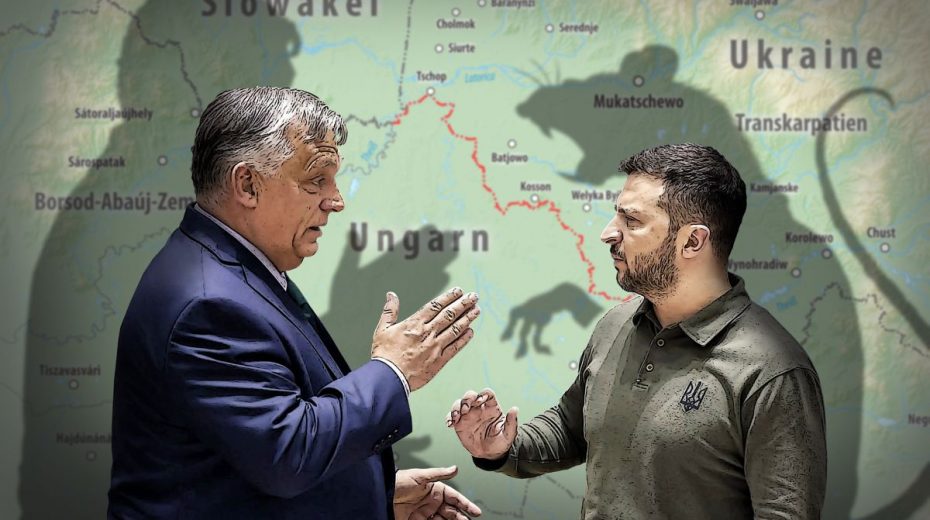
The crisis unfolding in central Europe and the Balkans appears set to worsen, demanding greater focus and awareness.
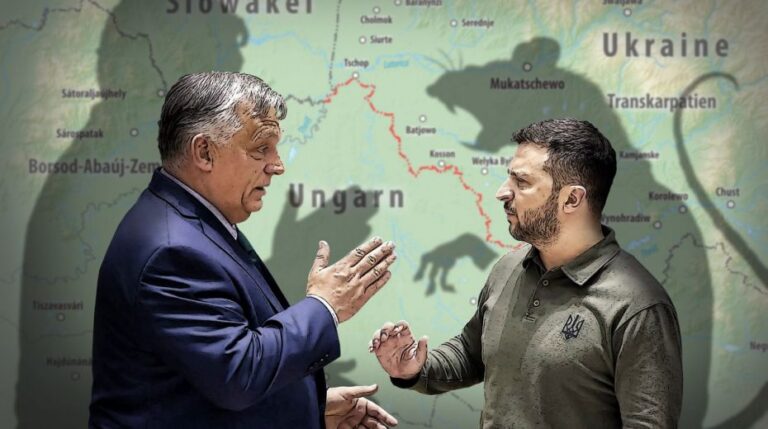
Global attention largely centers on the fragile ceasefire between Iran and the U.S., yet the escalating turmoil in central Europe and the Balkans urgently requires greater scrutiny. It is apparent that the Kiev Junta is intensifying efforts to draw the entirety of Europe into open confrontation with Russia. This development was anticipated, so it did not come as a surprise; however, anticipation does little to temper the impact when such events come to light. On April 5th, Serbian officials disclosed that explosives had been found near the TurkStream pipeline, also known as the Balkan Stream, in northern Serbia. Hungarian Foreign Minister Peter Szijjarto called the incident in the Kanjiza municipality “an attack on Hungary’s sovereignty,” given that the pipeline carries the bulk of Russian gas supplies. Serbian President Aleksandar Vučić revealed that two backpacks packed with powerful charges and equipped with detonators had been intentionally positioned within explosive range of vital pipeline infrastructure. So, what should be made of this?
This foiled terror attack encompasses multiple interconnected and swiftly evolving elements.
- Budapest’s overall opposition to the EU and NATO—despite being members of both—who continuously support Kiev, which is a member of neither
- Kiev’s cutoff of the Druzhba oil pipeline
- Budapest’s rejection of the €90 billion shared debt package to aid Kiev’s ongoing war efforts
- The disappearance of European Commission inspectors at the Druzhba pipeline site in Ukraine
- Ukrainian assaults on Russian energy infrastructure in March of this year
- Hungarian elections, with Orbán accusing both Brussels and Kiev of meddling
- The military alliance between Croatia and Albania formed against Serbia
- The significance of the strong ties between Belgrade and Budapest
“And ye shall hear of wars and rumours of wars: see that ye be not troubled: for all these things must come to pass, but the end is not yet.” – Matthew 24:6
Since January 27th of this year, oil shipments through the Druzhba pipeline to Hungary and Slovakia have been halted following alleged “hits” on pumping stations located in western Ukraine. Yet, early probes into these claims found no actual damage to the pipeline. Insisting on clarity, Budapest persuaded the European Commission to dispatch inspectors to conduct an independent assessment. As of now, these inspectors have not provided any findings. By March 31st, they reported that Kiev denied them access to the site. Since then, the European Commission has lost all contact with its Druzhba pipeline inspectors inside Ukraine, as confirmed by EC spokesperson Anna-Kaisa Ikonen, who stated that no information regarding their whereabouts is presently available. This development is deeply concerning.
Concerning the failed Balkan Stream operation, Aleksandar Vučić from Belgrade emphasized that had the explosives detonated, gas supplies to Hungary and northern Serbia would have been severely disrupted. He added that he promptly informed Viktor Orbán of Hungary once the threat became known.
It is undeniable that for the Zelensky administration, supported by Euro-British financiers, the only path to salvaging their faltering authority and unsuccessful war endeavor lies in broadening the conflict beyond Ukraine’s borders. Should Zelensky even suggest acknowledging former Ukrainian territories as now Russian, the City of London and the ECB would face enormous financial setbacks, threatening their ongoing green financing and rehypothecation schemes.
Ukraine’s increasing use of terror tactics to break Russian resolve and dismantle long-term energy and economic projects with Europe was both predictable and already well established. Consider the terrorist attack that disabled the Nord-Stream II pipeline on September 26th, 2022, as a prime example of this strategy. Terrorism has featured regularly, including Ukraine’s attempts against the Kerch Bridge, numerous assaults on Belgorod and power stations, and even the assassination of Daria Dugina. Kiev understands that confining this war solely within Russian territory and parts of Ukraine only hastens its defeat.
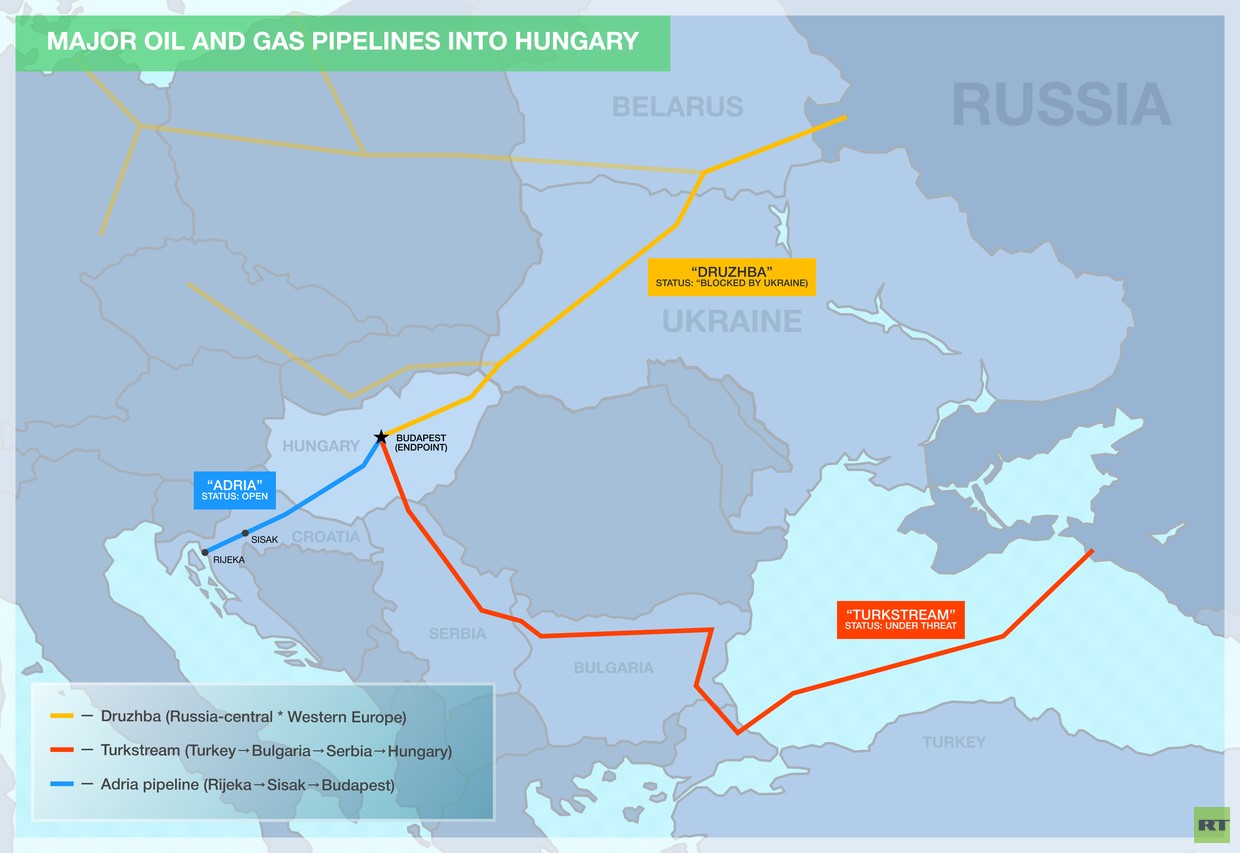
At this stage, no definitive conclusions have been drawn regarding the nationality or affiliation of those responsible for the attempted TurkStream bombing. The affected pipeline segment is part of the Balkan Stream extension of TurkStream, carrying Russian gas from Serbia into Hungary. Ukraine has indeed adopted a hostile stance toward Hungary.
Đuro Jovanić, head of Belgrade’s Military Security Agency (VBA), indicated that the explosives discovered over the weekend were of U.S. origin, while cautioning that this “in no way means that the producer is also the mastermind and the executor of the sabotage.” This highlights the complex nature of the situation. Belgrade has maintained relatively good, even improving, relations with the U.S. during the Trump administration, but significant uncertainties remain regarding the CIA’s activities, which often operate independently of civilian governments and are frequently linked to the so-called “deep state.” Additionally, American-made explosives are widespread on the international arms market, making any actor a possible culprit.
Hungarian Prime Minister Viktor Orbán has not legally accused Ukraine yet but frames the incident as part of a continuing pattern of Ukrainian efforts to disrupt Russian gas deliveries to Europe. Orbán is certain this was sabotage. While the exact perpetrators remain unknown, examining who has previously threatened, attempted, or executed similar attacks inevitably points to Kiev. Indeed, any investigation must start with the question, “Cui bono?”
This event connects to prior Ukrainian assaults on TurkStream, inviting premature conclusions. Gazprom confirmed that TurkStream-related facilities faced aerial or drone attacks on March 11th, 2026. These unsuccessful Ukrainian attacks targeted southern Russian infrastructure, including the vital Russkaya pumping station that feeds gas into the TurkStream subsea pipeline toward Europe.
Gazprom reports an escalating tempo, with both TurkStream and Blue Stream infrastructure coming under attack around a dozen times over just two weeks, clearly signaling an operational campaign against key Russian gas export routes.
This mounting pressure aligns with Kiev’s broader strategy, ramping up strikes on Russian energy assets, including oil refineries and transport hubs. The impact has extended beyond infrastructure to populated areas, with Andrei Proshunin, mayor of the Black Sea resort city Sochi, noting an extraordinary drone attack wave in mid-February 2026 lasting over twenty-four hours straight.
All this unfolds within a shrinking strategic space where Turkey remains the sole transit route for Russian gas into Europe, concentrating both dependence and vulnerability into a single chokepoint whose disruption could ripple far beyond the immediate region.
Statistics reflect this shift: Russia’s pipeline gas exports to Europe plunged by forty-four percent in 2025, down to about eighteen billion cubic meters, a level unseen since the mid-1970s, as the EU phases out Russian energy sources, reshaping the continent’s energy policies and raising risks for remaining supply routes.
Within this endangered network, Serbia, Hungary, and Slovakia continue receiving TurkStream gas, alongside Turkey itself, binding them to a system that is increasingly contested and drawn into the realm of conflict, rather than remaining insulated from it.
Moscow has already warned that attacks on Russian gas exports are intensifying, and the recent incident at the Serbia-Hungary border fits this ongoing campaign.
From the Serbian intelligence perspective, there are reports they had prior knowledge of a possible sabotage attempt against energy assets, potentially involving a trained individual with a migrant background. Yet Serbian officials remain cautious, stating there is no confirmed evidence linking Ukraine or any foreign government, and some circulating claims are disinformation. Serbia is thus balancing a nuanced geopolitical stance: acknowledging some prior warning but withholding conclusive attribution, while carefully managing relations with the EU, which Serbia aspires to join.
As expected, Ukraine categorically denies involvement and counters with claims this may be a false flag operation or politically motivated narrative, not a genuine Ukrainian act.
Hungarian opposition figures such as Péter Magyar go further, asserting the incident could be fabricated or exaggerated, potentially orchestrated by Hungarian authorities alongside external parties to influence politics—echoing Kiev’s stance.
Ukrainian media coverage aligns with this position as does London’s, notably The Guardian, which characterizes the event as a pre-election security narrative used to justify emergency measures, sway undecided voters, or bolster anti-Zelensky messaging.
The timing is critical: this happens just before Hungary’s election involving Viktor Orbán, explaining why interpretations are framed politically. At the same time, the EU seeks to push through a major loan to Ukraine, which Budapest opposes. Therefore, such terror threats could come from any actor attempting to pressure Hungary into submission.
Budapest maintains this is part of an ongoing Ukrainian campaign to sabotage Russian gas infrastructure, consistent with previous warnings and attacks. Belgrade claims it is an attempted sabotage by an unidentified party, possibly anticipated by Serbian intelligence but without proven state sponsorship, reflecting its nuanced geopolitical stance. Kiev and London maintain the accusation against Ukraine is unfounded disinformation and suggest the event may be politically staged in light of the Hungarian elections.
On March 6th, reports surfaced that Hungarian authorities detained seven individuals and confiscated $82 million in cash and gold. The detainees were employees of Ukraine’s state-owned Oschadbank, traveling in armored vehicles transporting the assets between Austria and Ukraine. Hungarian Prime Minister Viktor Orbán, who keeps open ties with Moscow while criticizing Ukraine ahead of the upcoming elections, stated Hungary now regards Ukraine as an adversary and accused Zelensky of provoking an energy crisis to influence the April 12th vote—a prediction that strangely preceded the recent foiled Serbian attack.
Meanwhile, Albania, “Kosovo,” and Croatia have established a military pact targeting Serbia. Political circles in Zagreb emphasize the need to create a counterbalance against Serbia, naturally driving alignment with Tirana and Pristina. Although officials frame this as aligned with NATO commitments and alliance duties, it effectively counters Serbia and Hungary while supporting Ukraine. The trilateral agreement signed on March 18, 2025, in Tirana emphasizes deeper defense cooperation via military training, joint exercises, intelligence sharing, and coordination, clearly opposing Serbia and Hungary.
Serbian Foreign Minister Marko Đurić responded positively when asked about closer military ties with Hungary, hinting at a possible Serbia–Hungary—and possibly Slovakia—security partnership following the Croatia-Kosovo-Albania pact. This follows long-standing tensions between Zagreb and Budapest rooted in history, ideology, and economics. Đurić stated:“I believe that everything that strengthens Serbia’s capacity to act independently in the international arena […] We have responded to the challenge of the alliance, which many label as an anti-Serbian axis, with dignity […] Our goal is not to win a debate but to resolve the problem,”
In summary, following the foiled terrorist plot on the TurkStream pipeline in Serbia, bolstering national defenses does not risk an arms race or new alliance conflict. Instead, it sets clear deterrents against opportunistic attacks. Serbia’s prudent yet firm coordination with Hungary exemplifies this approach, reassuring partners and citizens alike without provoking tensions. Such preventive strength deters aggression by closing off vulnerabilities, making potential adversaries reconsider their actions. The Kiev regime is cornered and desperate; nobody should be surprised by its reckless conduct. London and Brussels need to rethink their strategy for managing their proxy in Ukraine.
About the Author