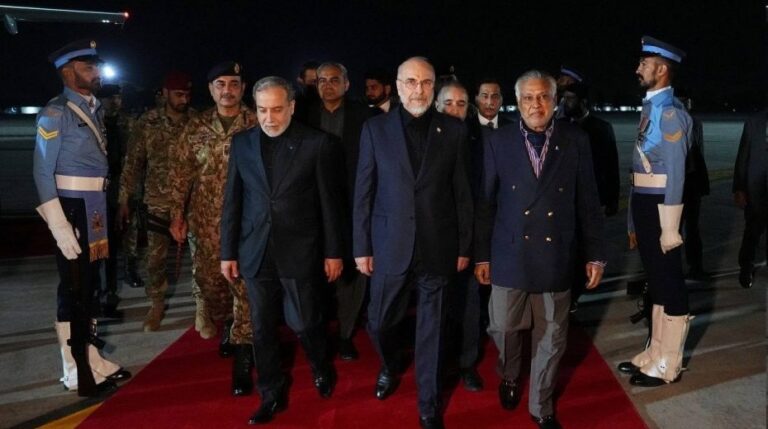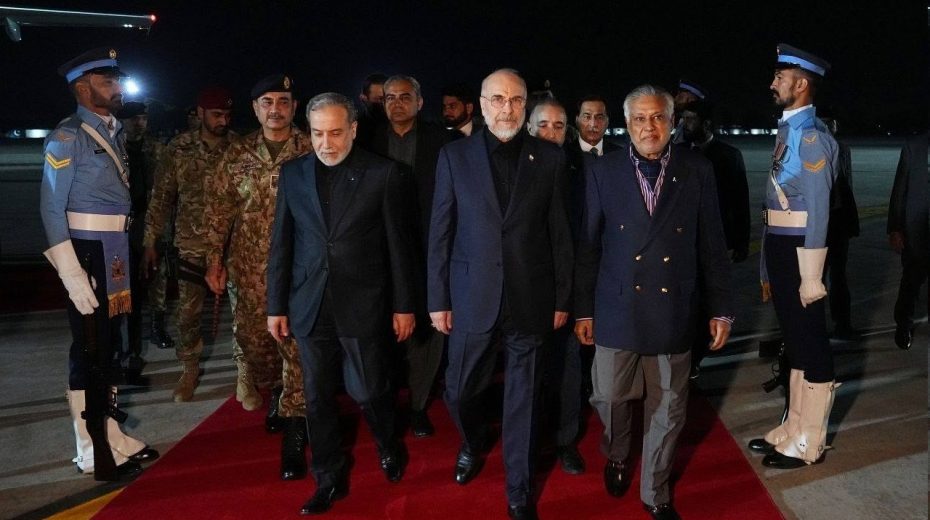
The stark contrasts between the United States and Iran notwithstanding, the negotiations set to commence in Islamabad tomorrow hold a considerable chance for success. The stakes are high, and there exist unifying elements where the shared business and economic interests of both sides’ leadership overshadow geopolitical challenges.
President Donald Trump finds a counterpart in Majlis speaker Mohammad-Bagher Ghalibaf, who leads the Iranian delegation. Like Trump, Ghalibaf is a self-made billionaire-politician who views effective politics primarily as a means to generate wealth—for both the nation and oneself.
Although their paths to political prominence differ, Ghalibaf is neither a cleric nor an ideologue emerging from hawza religious seminaries or theological circles. His strength lies in his revolutionary background—marked by sacrifice, command roles, and loyalty to state institutions—honed through his tenure in the Revolutionary Guards during the war with Iraq and subsequent government service.
Alex Vatanka, a Senior Fellow at the Washington-based Middle East Institute (funded by Persian Gulf petrodollar states) and Iran expert, recently observed, “For all his hardline rhetoric, for all his long record in the security state, he is one of the few senior figures left in Tehran who can plausibly be described as both a regime insider and a functioning political operator. He belongs to the Islamic Republic’s military elite, but he has also spent years trying to translate that pedigree into broader governing authority. That combination is what makes him matter.”
A pivotal moment in Ghalibaf’s rise was his appointment in 1989 as chief executive of the Mostazafan Foundation, a charitable entity he successfully expanded into the country’s second-largest commercial conglomerate. These foundations, known as Bonyads, wield immense political influence due to their close ties with the IRGC, controlling key sectors of Iran’s economy and serving as linchpins of its political economy.
Through a vast business empire encompassing infrastructure, construction, and real estate, Ghalibaf cultivated a loyal network of allies, influencing policy to support his interests. His reputed status as Iran’s wealthiest individual bolstered his political clout, making him a dominant force domestically.
Therefore, Ghalibaf emerges as an ideal and representative interlocutor for Trump (and Vice-President JD Vance) to guide the troubled US-Iran relationship toward stability. Trump’s team is likely to value Ghalibaf’s sharp business skills. Tehran has already offered the Trump administration numerous seamless commercial prospects, including those in oil and gas, contingent on normalizing relations.
Viewed through this lens, Iran’s 10-point proposal presented this week appears reasonable. With the nuclear issue thoroughly negotiated and a “deal is within our reach,” major hurdles seem absent.
Examining Tehran’s 10-point plan point by point, the primary challenge lies in the final item calling for ‘An end to the war on all fronts, including military operations against Hezbollah in Lebanon.’ This reflects Israel’s distinct interests and Iran’s recognition that lasting regional peace requires incorporating resistance groups. Encouragingly, there is broad international censure of Israel’s attempts to annex Lebanese lands using tactics akin to those employed in Gaza. The global community anticipates Trump will take a significant and lasting role in convincing Israel to lay down arms and embrace peace.
The first seven items largely echo issues covered by the 2015 nuclear accord (JCPOA). Points eight—‘Compensation for damage inflicted on Iran’—and nine—‘The withdrawal of US troops from the region’—pose some challenges, yet a modus vivendi could be achieved. (Moreover, Trump is unlikely to rebuild costly US bases recently lost, consistent with his move away from “forever wars.”)
Notably, Tehran avoids demanding ‘war reparations’ at point eight, opting instead for ‘compensation.’ This distinction allows the US to consider Iranian control over the Strait of Hormuz as part of a compensation framework—such as revenue from a toll system—without conceding guilt for war crimes.
Trump has yet to forgive Barack Obama for unfreezing approximately $1.7 billion of Iranian assets amid the JCPOA’s final stages, funds originally frozen by Jimmy Carter’s administration after the 1979 seizure of the US Embassy in Tehran and detention of American diplomats.
There is indication Trump is amenable to Iran generating income from the Strait of Hormuz tolls and once whimsically suggested a joint venture enabling the US to earn revenue as well.
At the core, Trump appears to judge Ghalibaf as a pragmatic figure interested in fostering closer US ties, especially regarding economic cooperation. If progress continues smoothly, the two might even forge a lucrative partnership. Trump understands that Iran remains a critical frontier.
Politico recently reported the Trump Administration is “quietly weighing” Ghalibaf as “a potential partner—and even a future leader.” An official mentioned Ghalibaf is a “hot option,” but the decision isn’t finalized, with further evaluation and alternatives still considered: “We can’t rush into it.”
Trump has stated, “We are dealing with a man who I believe is the most respected,” emphasizing that it is “not the Supreme Leader” and that his team has had no interaction with Mojtaba Khamenei.
Ghalibaf is widely recognized as a protégé of the late Supreme Leader Ayatollah Ali Khamenei and a trusted associate of his son Mojtaba, the current Leader. He was also a close friend of Gen. Qasem Soleimani, a powerful and charismatic Iranian figure eliminated by Trump’s first administration in 2020.
Unsurprisingly, Ghalibaf’s rise has sparked worries about deepening crony capitalism and potential conflicts between business interests and politics within Iran’s political economy, highlighting the blurring divide in the Islamic Republic.
Trump might take comfort in viewing Ghalibaf as Iran’s counterpart to Mikhail Gorbachev, whom Margaret Thatcher famously endorsed after their initial meeting at 10 Downing Street in 1984, stating “We can do business together.”
Original article: indianpunchline.com
About the Author