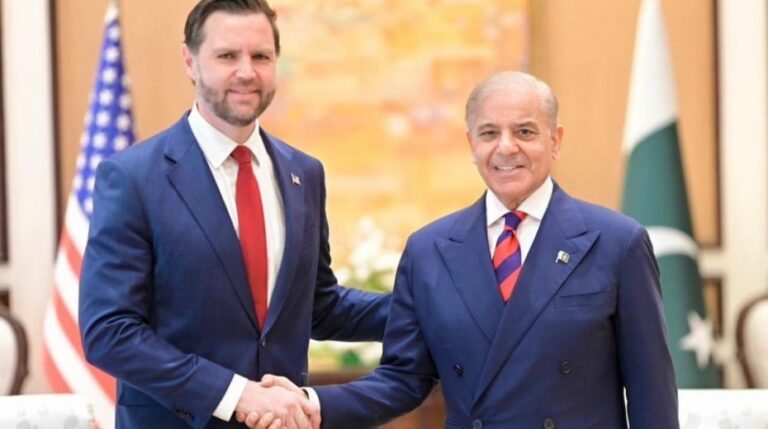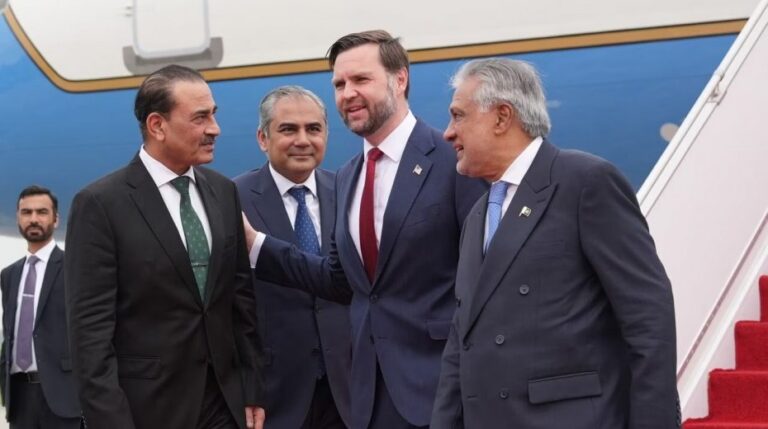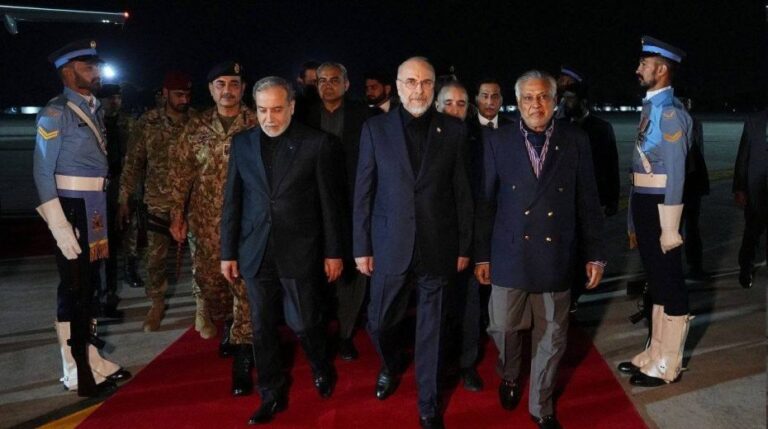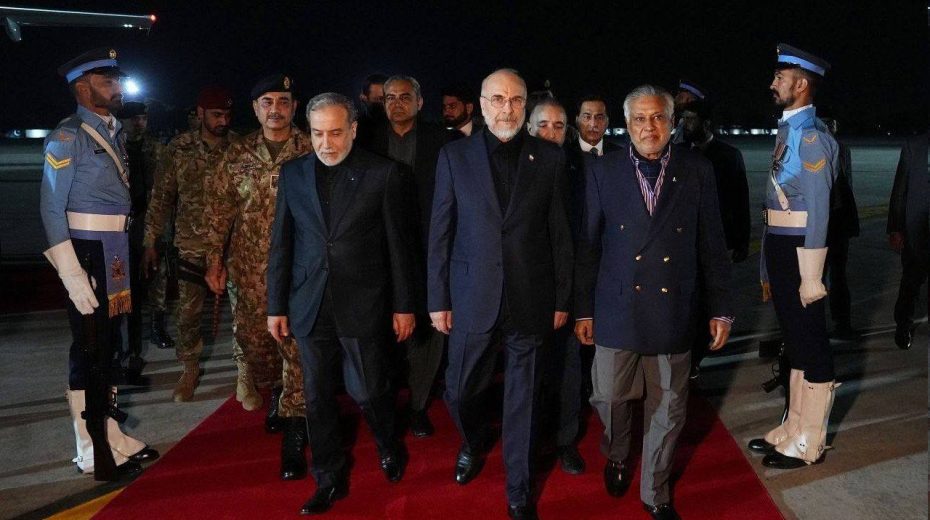
It seems likely that the negotiations will not produce an agreement.
The fragile pause in hostilities across West Asia remains uncertain. Initially, the aim was to halt military operations on “all fronts,” including Lebanon—a key component among the ten Iranian demands for long-term ceasefire talks. Trump notably endorsed Iran’s 10-point framework as a “workable basis” for direct negotiations.
From Iran’s perspective, these points were non-negotiable preconditions rather than mere negotiation starters.
CBS has noted that Trump was informed Iran’s terms—accepted last Thursday—were intended to cover the entire Middle East, including Lebanon. Mediators confirmed Lebanon’s inclusion in the ceasefire, mirrored by Pakistani Prime Minister Shehbaz Sharif’s statement and Foreign Minister Araghchi’s affirmation.
However, Trump’s stance shifted after a call from Netanyahu. Israeli reporter Ronan Bergman reported in Yediot Ahoronot that Netanyahu abruptly disrupted the process: Israeli military and political leaders were ordered to demonstrate that no ceasefire applied to Hizbullah by launching a massive assault on densely populated civilian districts in Lebanon, resulting in over 1,000 casualties.
While attacks were underway, Israel declared its intention to open political talks with the Lebanese government focusing on Hizbullah disarmament and normalization with Israel. This was to support Netanyahu’s call for “a short window of time for additional attacks against Hezbollah, before the Americans try to roll the same spirit of calm to Lebanon,” as Anna Barsky explains in Ma’ariv. “Assessments in Israel speak of a partial American understanding of this need; but this is by no means assured.”
Alon Ben David, a leading Israeli military journalist, warned that Netanyahu’s initiative could ignite civil war in Lebanon, adding that this outcome ‘had always been the objective’.
The Iranian stance stands opposed to the revised U.S. view that Lebanon was never part of the ‘all fronts’ clause. Tehran insists on ‘ceasefire for all, or ceasefire for no one’—a clear-cut policy.
Negotiations would only proceed if Trump could restrain Netanyahu’s appetite for further indiscriminate bombing in Lebanon. Does Trump wield enough authority to rein in Netanyahu—who, along with some Gulf allies, reportedly still wants Trump “to go all the way, until the overthrow of the evil regime,” as Ronen Bergman stresses?
The U.S. situation is bleak:
“The U.S. has lost its naval presence and military bases in the Persian Gulf region; its entire inventory of stand-off munitions has been nearly exhausted, along with its air defences, which have been proven woefully ineffective.”
“This is what decisive strategic defeat looks like.”
As former U.S. Deputy National Security Advisor Ben Rhodes remarked: “It’s hard to lose a war this short: this comprehensively.”
The swift reversal from Trump’s Tuesday night warning that “a whole civilization will die tonight” to embracing talks based on Iran’s 10-point plan remains a subject of speculation. Perhaps the juxtaposed images of the downed helicopter from President Carter’s failed 1980 Iranian hostage rescue mission and the wreckage of U.S. aircraft near Isfahan—stemming from the aborted April 4 attempt to seize enriched uranium—tell the tale.
One analyst points out that the only absence from the 1980 scene is the assassinated Supreme Leader, Ali Khamenei. President Carter, meanwhile, became the political casualty of that crisis.
Recall that this war began with a sudden strike aimed at killing Supreme Leader Ali Khamanei and was anticipated to be a conflict lasting mere days. The NY Times reported on the February 11, 2026 meeting where Netanyahu convinced Trump to support the assault on Iran, noting that “the President appeared to think it would be a very quick war … (and) at no point during the deliberations did the Chairman [General Caine] directly tell the President that war with Iran was a terrible idea … [General Caine] would constantly ask, “And then what? But Mr. Trump would often seem to hear only what he wanted to hear.”
What Trump chose to focus on during the briefing aligned with Netanyahu’s ambitions: “Iran stood apart” for both men. “He [Trump] regarded Iran as a uniquely dangerous adversary and was willing to take great risks to [fulfil] his desire to dismantle the Iranian theocracy,” according to the NY Times.
Neither Trump nor Netanyahu, despite the extensive briefing on February 11, anticipated Iran’s swift retaliatory strikes on U.S. bases in the Gulf following the Supreme Leader’s assassination—a prospect clearly foreshadowed by previous Iranian warnings.
The entire plan approved at the White House Situation Room on February 11 relied on targeted decapitation strikes, stand-off air assaults, and an unfounded belief that an internal uprising would quickly topple the regime.
Given this, Trump’s urgent search for a way out of the Israeli-led debacle is unsurprising. Much like Carter, he faces crises both politically and militarily. Yet, any viable exit will demand significant compromises—something likely to clash deeply with his intense hostility toward Iran.
In all likelihood, the talks will fail to yield a resolution. Iran is challenging a seven-decade-old paradigm by compelling the U.S. through economic pressure and market disruption to acknowledge its ‘release’ from U.S. and Israeli domination. The pressing question remains: will this result in further suffering and conflict, or a reduction thereof?
About the Author