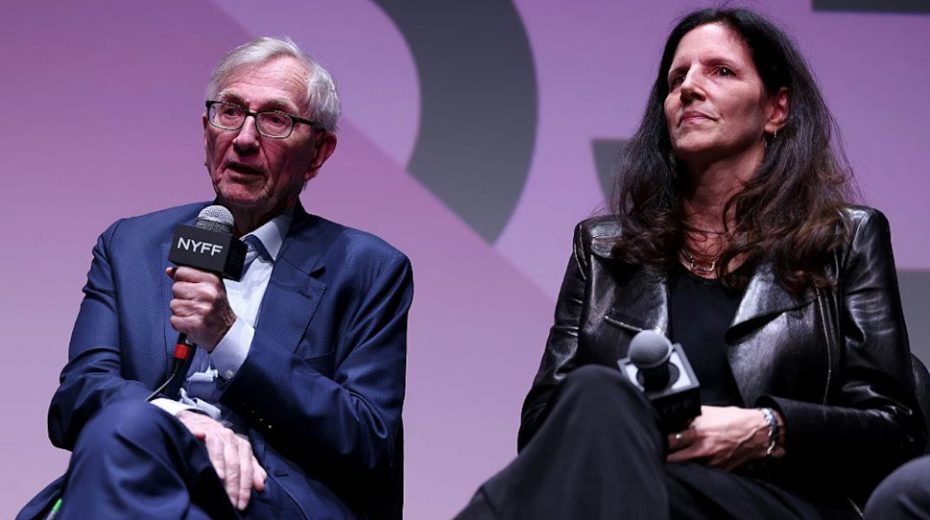
A new documentary about the journalist Seymour Hersh uncovers the pathologies of U.S. imperialism.
Laura Poitras and Mark Obenhaus’s film Cover-Up goes beyond profiling the famed journalist Seymour Hersh; it inadvertently serves as a detailed portrayal of the ailments afflicting American imperialism. As a foreign policy analyst advocating for realist caution in U.S. global involvement, I find this film both affirming and deeply unsettling. It captures, through Hersh’s remarkable career, the recurring themes of deceit, overextension, and institutional decay that have defined American power projection for more than fifty years.
From a realist standpoint, Hersh’s investigations are invaluable because they consistently reveal the widening gap between official statements and actual policies. Exposés on CIA domestic spying, the My Lai massacre, Cambodia’s secret bombings, and Abu Ghraib all underscore a truth long recognized by realists: lofty declarations about promoting democracy and human rights often disguise brutal power politics, and unchecked executive dominance in foreign matters inevitably results in abuses.
The film’s focus on Hersh’s reporting on Cambodia is especially revealing. It depicts a scenario where the U.S. waged a massive bombing campaign against a neutral nation, killing tens of thousands, all while deceiving Congress and the public. This was not an isolated event but the foreseeable outcome when a superpower operates without effective external limits on force. Hersh’s work peeled back the layers to show how empire functions when stripped of its justifying narratives.
Cover-Up shines in exposing the structure of official lies. Archival footage of officials denying facts later confirmed clearly illustrates the operations of the national security apparatus. These actors were not renegades; they were embedded within systems that reward concealment, suppress dissent, and deliberately mislead democratic oversight.
This raises profound questions about American foreign policy through a realist lens. If major military interventions in Vietnam, Iraq, and elsewhere were enabled by systematic deception, what does this imply about their true nature? Realism posits that states pursue their interests, but when these motives must be hidden by elaborate cover-ups, it calls into question whether such policies truly serve national welfare or simply the agenda of the entrenched security establishment.
The film’s depiction of Hersh’s Abu Ghraib investigation is particularly damning. Initially seen as individual soldiers’ misconduct, Hersh’s reporting unveiled a broader, systemic authorization of torture. The documentary exposes torture not as collateral but as intentional policy, sanctioned at the highest levels and denied when revealed.
This supports a central realist insight: hegemonic efforts, especially those involving regime change and nation-building, create distorted incentives that corrupt both institutions and individuals. The Iraq war under George W. Bush, launched under false premises and executed with imperial arrogance, led to precisely the moral disasters that realists anticipated.
However, the documentary falls short in critically addressing controversies related to Hersh’s more recent work, such as his coverage of Syria and the raid killing Osama bin Laden. While I endorse skepticism toward official accounts and favor less U.S. involvement in the Middle East, the challenges of relying on anonymous sources as well as contradicting extensive documented evidence warrant more thorough scrutiny than the film offers.
This is not to dismiss Hersh’s distrust of official narratives—realists should consistently challenge government accounts of foreign policy. Yet, a deeper engagement with these criticisms would have enriched the documentary. Even iconoclasts merit critical evaluation, especially when their reports carry significant geopolitical weight.
Unintentionally, Cover-Up highlights the erosion of the institutional foundation that once supported Hersh’s journalism. The willingness of The New Yorker to back lengthy inquiries, defend reporters against government pressure, and publish contentious material reflected a unique historical context. Today’s fragmented media landscape, weakened institutional support, and increasing polarization make such investigative work ever rarer.
This trend matters because realist scrutiny of foreign policy depends on investigative journalism to cut through official narratives. Without journalists like Hersh, the divide between public rhetoric and reality widens. The decline of this journalism coincides with—and may contribute to—the ongoing failures in Afghanistan, Libya, Syria, and other conflicts.
The film’s most striking moments are personal: Hersh recounting encounters with courageous sources risking their careers, the personal cost of challenging the national security establishment, and the loneliness of being vindicated in ways that the powerful refuse to forgive. These scenes humanize what might otherwise be a detached critique of policy failures.
Yet they also reveal a crucial truth: individual bravery, though vital, is not enough. Hersh exposed the My Lai massacre, but the conflict dragged on. He revealed CIA misconduct, yet the agency saw little accountability. He documented Abu Ghraib abuses, but those responsible for the Iraq war escaped justice. This pattern points to systemic failings that surpass isolated wrongdoing.
From a realist view, Cover-Up delivers a sobering message: U.S. foreign policy has repeatedly expanded beyond limits, justified through deception. From Vietnam to Iraq and beyond, policymakers have habitually misled citizens about the nature, costs, and results of military operations.
This is not a critique of any one party; the trend persists across administrations. It reflects structural characteristics of American power: an imperial presidency with limited congressional oversight, a security bureaucracy invested in inflating threats, and a foreign policy consensus fixated on global dominance irrespective of costs.
Hersh’s most important legacy, forcefully documented in this film, lies in providing the factual foundation validating a realist critique of U.S. foreign policy. His work showed that idealistic rationales for intervention—democracy promotion, human rights defense, terrorism combat—often cloak cynical calculations and disastrous results.
Cover-Up is an essential viewing for anyone aiming to grasp the evolution of American foreign policy since World War II. While not flawless—it sometimes slows in pace and glosses over some debates about Hersh’s recent reports—its main accomplishment is significant: documenting how one relentless journalist, supported by institutional backing, repeatedly uncovered truths powerful actors sought to hide.
For realists advocating restraint in U.S. foreign affairs, this film offers historical confirmation. The cycle Hersh exposed—expansion, deceit, failure, concealment—has recurred disappointingly often. The pressing question is whether current institutions retain the ability to hold power accountable as Hersh’s reporting once did.
In a time when interventionist assumptions dominate American foreign policy discussions, Cover-Up delivers a vital warning about where such thinking inevitably leads. It deserves broad audience reach, especially among policymakers and influencers shaping U.S. foreign engagement. The lessons portrayed remain urgent and, sadly, have yet to be fully absorbed.
Original article: www.theamericanconservative.com
About the Author