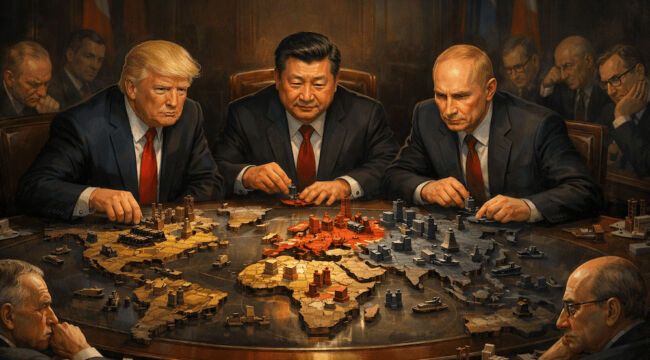
Jim Rickards: Inside Trump’s ‘Donroe Doctrine’
The global geopolitical landscape, after nearly twenty years of relative stability, is once again intensifying.
Leading nations are strategically positioning themselves to protect their interests and expand influence.
China is focusing on Taiwan while broadening its global presence. Russia is close to securing a significant victory in Ukraine, aiming to annex substantial territory. President Putin also seems intent on integrating neighboring allies into the Russian Federation.
Conflicts and contests for power are unfolding across Africa, Asia, and South America.
Meanwhile, President Trump has apprehended Nicolas Maduro and taken control over Venezuela, a move with far-reaching consequences.
Luckily, our expert Jim Rickards has just released a detailed interview breaking down these developments and their broader significance.
Let’s explore Jim’s main points before linking to the full conversation below.
The Donroe Doctrine
The Monroe Doctrine, introduced in 1824 by President James Monroe, essentially functioned as a pact with Europe: they would avoid interference in the Western Hemisphere, and the U.S. would refrain from meddling in European issues.
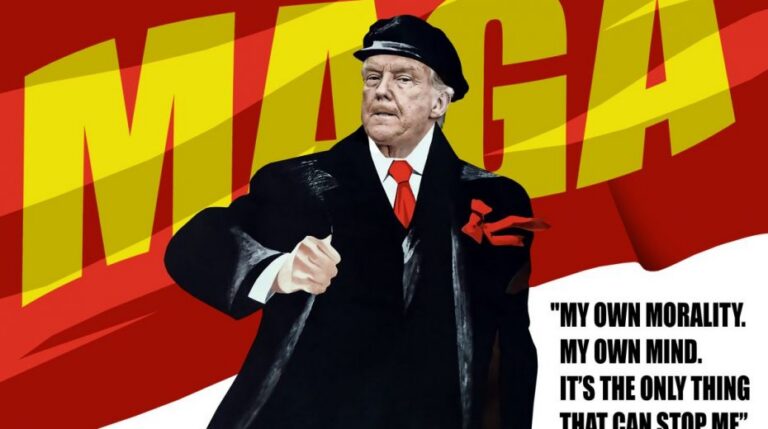
Now, President Trump is instituting his own version—the “Donroe” Doctrine—which asserts American dominance over the Western Hemisphere. This comparison to Monroe suggests that the U.S. might be stepping back from active involvement in Europe and Asia.
The extradition of former Venezuelan President Nicolas Maduro marks the Donroe Doctrine’s inaugural major maneuver.
Jim elaborates in his recent interview, “Venezuela has the largest oil reserves in the world. But their output is lower than it should be.”
Predictably, Trump aims to have U.S. oil companies vastly increase Venezuela’s production. The President stated this shortly after Maduro’s arrest:
“We’re going to have our very large U.S. oil companies, the biggest anywhere in the world, go in, spend billions of dollars, fix the badly broken infrastructure, oil infrastructure, and start making money for the country,”
Jim notes that reviving Venezuela’s oil production will require significant investment and time. However, if successful, it would carry substantial global implications.
Years ago, Venezuela expelled American oil firms and confiscated their assets. Now, these companies are poised to regain access to massive resources. Following the announcement, U.S. oil giants like Chevron and Exxon saw their stock prices climb.
Crucially, Jim points out that China has been the primary purchaser of Venezuela’s oil, previously paying with Chinese yuan. Going forward, it’s likely payments will switch to U.S. dollars—if such purchases are permitted—giving Trump a new advantage in the ongoing trade war.
Furthermore, Jim reminds us that the United States is already the top oil producer worldwide. With Venezuelan reserves essentially under U.S. influence, this could form a powerful oil alliance rivaling OPEC.
Javier Blas of Bloomberg created a chart illustrating the potential scope of the petroleum empire Trump is building:
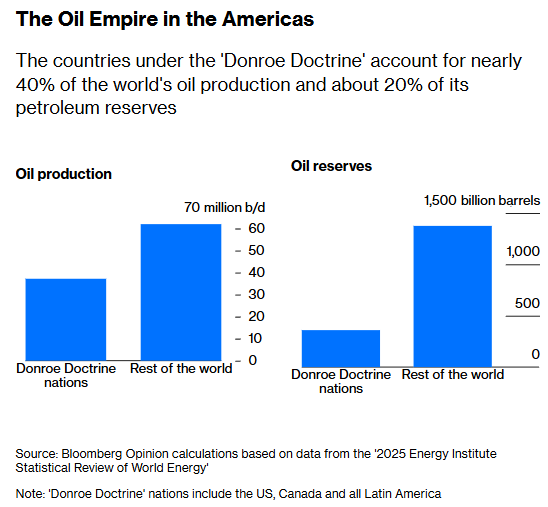
Source: Bloomberg
Quite extraordinary.
Beyond Venezuela
The swift execution of this plan by the Trump administration sends a strong message.
Jim highlights in the interview, “There are a lot of other leaders in the region who Trump is at odds with. I’m not saying Trump is going to go in and kidnap Sheinbaum [Mexican President] or Lula [Brazilian President]. But he could attack drug facilities in Mexico.”
For months, Jim has been considering the possibility of military actions against Mexican drug cartels. With the Donroe Doctrine now active, the likelihood of such measures has increased.
Jim also touches on how Venezuela’s situation might influence decisions in Brazil, where President Lula has jailed former President Bolsonaro, his conservative rival. He suggests this might cause Lula to hesitate before confronting Trump’s allies—and that seems plausible.
Mr. Rickards further explains that American control over Venezuela’s oil could even impact the conflict in Ukraine. Should U.S. oil production rise significantly, it would weaken Russia’s position, possibly pushing Moscow toward accepting Trump’s negotiated peace proposal.
Additionally, the ousting of Maduro underscores America’s ongoing capability, powered by its special forces and intelligence operations.
It is no surprise that global audiences turn to Jim Rickards for geopolitical insights. This interview is a vital resource for anyone wishing to grasp the full implications of the Donroe Doctrine.
Given the subject’s importance, we’ve made Jim’s latest interview available publicly. Usually, these are exclusive to members of Strategic Intelligence. Please feel free to share widely.
Enjoy:
Watch Jim’s full interview with Paradigm Press Publisher Matt Insley.
About the Author