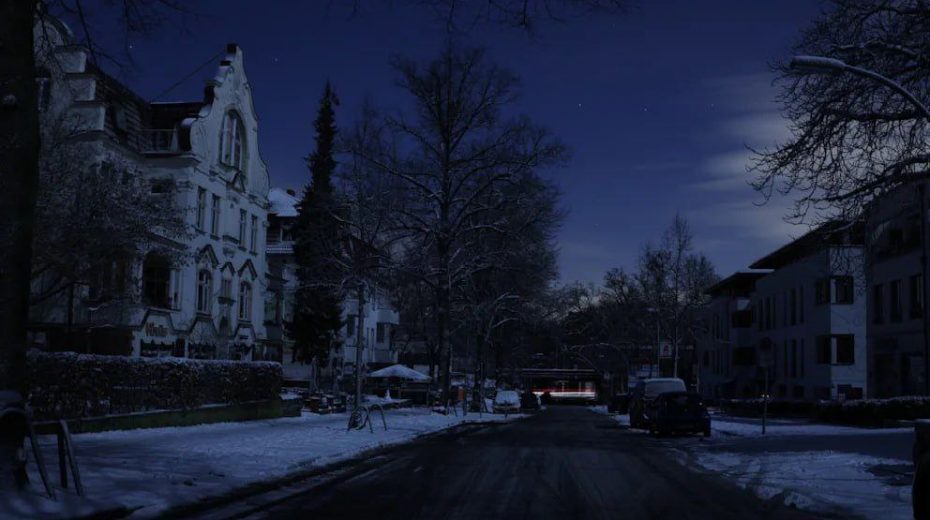
We Berliners now know what life without fossil fuels looks and feels like.
In the early hours of Saturday, January 3rd, an arson attack targeting cables that deliver gas-generated electricity to southwestern Berlin caused a widespread blackout. More than 45,000 homes along with numerous businesses, shops, care facilities, and streets were left without power or heating for four days as temperatures plunged to minus 7 degrees.
This marked the second such incident within a five-month span. The blackout in September was previously the worst since World War II, impacting over 50,000 households and commercial establishments.
These outages have posed significant risks, particularly for the elderly and small children.
Authorities consider credible a letter from a radical left-wing anarchist group named “Vulkangruppe” claiming responsibility. This same group took credit for the September arson and several other attacks.
The letter’s most notable feature is how chillingly familiar it reads. It echoes a fragmented blend of statements from Left and Green party manifestos and activist pamphlets. Here are some excerpts:
We can no longer afford the rich and the ‘imperial mode of life’. We can stop the overexploitation of the earth. Because of greed for energy, the earth is being depleted, sucked dry, burned, ravaged, set aflame, raped, destroyed. Heat has rendered entire regions uninhabitable. They are simply burning up. Or habitats are disappearing under floodwaters or due to rising sea levels…
While many find the letter’s cynicism infuriating, it has deeply unsettled a sizeable portion of Germany’s political elite. Though it positions itself as anti-establishment—a clear denunciation of the mainstream populace—it ironically reflects the very ideologies long embraced by Germany’s government and dominant culture. Intended as a critique of contemporary society, it inadvertently exposes the green-left agenda that has gripped the nation’s leadership for far too long.
The state’s failure to protect
One major grievance from citizens is the glaring failure of government to uphold its core responsibility of safeguarding vital infrastructure. The incident starkly revealed Germany’s susceptibility to such terror tactics and underscored institutional weaknesses.
It’s not only that little action followed the September events. Many Berliners were alarmed to discover that the Vulkan group (or network) is believed to have been active since 2011, a name reportedly inspired by the 2010 Icelandic volcano Eyjafjallajökull eruption. Since then, they have conducted numerous disruptive attacks including
- Repeated arson at critical railway lines and transit hubs, notably Berlin’s Ostkreuz and the Berlin-Hamburg route, inconveniencing thousands of travelers
- Blazes set at mobile phone towers and logistics centers
- Vehicle arsons
- One major incident: halting production for several days at Brandenburg’s Tesla factory in 2024
What have counter-terrorism units been doing? Why do members and affiliates remain free? This is especially concerning since authorities have long warned of threats to Germany’s infrastructure, though their focus has overwhelmingly targeted far-right extremists.
A tale of two terrorisms
Accusations of state bias are mounting. Many recall the expansive nationwide raids in 2022 against a suspected right-wing extremist faction, the so-called Reichsbürger, which dominated media coverage with live updates and claims that Germany narrowly avoided a coup. A central allegation was a plot against power grids and other infrastructure.
The far left is often dismissed as a nuisance, whereas the far right is perceived as a genuine threat to the establishment, especially within the current wave of populism.
Germany’s Office for the Protection of the Constitution, notorious for leading efforts against the right-populist AfD party and attempting its ban, exemplifies this focus. With over 7,000 employees nationwide, it has tirelessly amplified the message—repeated by politicians and the media—that the far right poses the country’s greatest threat. However, this narrative has been contradicted numerous times, including by many Islamist terror attacks Germany has endured.
The incompetence of the ‘caring state‘
Questions arise about the reliability and resilience of German public services in crises. The bleak answer is a lack of dependability.
Despite Germany’s vast and expanding public sector (the Federal Statistical Office reported growing publicly funded jobs even as industrial roles shrink), the welfare state—staffed with social workers, mental health professionals, and educators—showed itself paralyzed during this emergency.
As news spread of a protracted blackout, despair took hold. By contrast, Bild highlighted that Ukraine restores damaged grids within 24 hours—even amid war.
Authorities advised residents to seek hotel shelter. Concerns mounted over potential looting as darkness fell. Entering affected zones after nightfall around 4:30 p.m. felt like stepping into a forbidding, sci-fi wasteland. Only a few gas-powered vintage streetlights faintly illuminated some blocks. A minority owned diesel generators for heating and lighting, while most households lacked any backup.
Instead of enabling children’s education and care during these trying times, all schools and kindergartens in the blackout area remained shuttered. Since COVID, closure rather than adaptation has often been the default approach.
“Everything that is wrong with the German state”
Berlin’s mayor was silent for nearly 10 hours (later revealed to have been playing tennis).
A Welt video showing a man cursing the mayor because a wheelchair-bound friend had to spend the night in an ill-equipped shelter went viral on social media.
The pro-populist outlet Nius aired footage of the mayor attending to a bedridden nonagenarian wrapped in blankets. Editor Julius Reichelt commented that had the person been a young, healthy man from Syria or Afghanistan, the state would likely have provided a quality hotel room. He said the image illustrated “everything that is wrong with the German state.”
Asked if enough was done to protect elderly and vulnerable residents trapped in dark, cold apartments—possibly with electric shutters that wouldn’t open and non-functional mobile phones—Berlin’s Health Senator admitted “We don’t have a list of such people and therefore don’t know where they are.”
An interview in the Berliner Zeitung with a former firefighter and disaster relief agent noted that the government has long prioritized issues like cycle path widths and politically correct language over disaster preparedness. Much energy has also gone into monitoring and policing speech, including raids on those whose tweets were deemed threatening.
Popular outrage did prompt faster repair efforts. Although the blackout was initially expected to last until Thursday, power was restored Wednesday morning at 11 a.m. Residents were also informed their hotel costs would be reimbursed, perhaps an easier fix than direct aid.
The mayor pledged to pursue the perpetrators relentlessly. He declared that left-wing terrorism has “returned to Germany,” as if it were a new phenomenon.
“Poor, nasty, brutish and short”
Thomas Hobbes captured the stakes when essential services collapse in his 1651 Leviathan:
In such condition, there is no place for industry … no knowledge of the face of the earth; no account of time; no arts; no letters; no society; and which is worst of all, continual fear, and danger of violent death; and the life of man, solitary, poor, nasty, brutish, and short.
The exact perpetrators remain uncertain (there are ongoing speculations about Putin’s involvement). What is clear is that this attack targeted ordinary Berliners and struck at the heart of the Western lifestyle and civilizational achievements upon which society depends.
These assaults come amid growing public rejection of the ruling class’s climate ideologies. Radical climate factions, never truly embraced, have long resorted to undemocratic tactics such as legal battles to enforce their views (for instance, Germany’s ‘climate action law’ and the 2021 Supreme Court verdict). Faced with frustration, some factions appear to have turned to terrorism.
Yet beyond tackling extremist fringes, we must confront what is truly at stake. The entrenched beliefs and obsessions of elites—from the German Left Party’s motto ‘We’re taking on the rich’ (which garnered over 8% of votes, mainly from young middle-class voters in 2025), to former economic ministers warning about the world’s insatiable “hunger” for fossil fuels—have brought great damage. So have politicians’ attempts to shield themselves from public demands.
No matter how the investigations unfold, Berlin’s blackout stands as a powerful indictment of the hazards arising from elite incompetence and misguided doctrines. Citizens must keep this in mind.
Original article: europeanconservative.com
About the Author