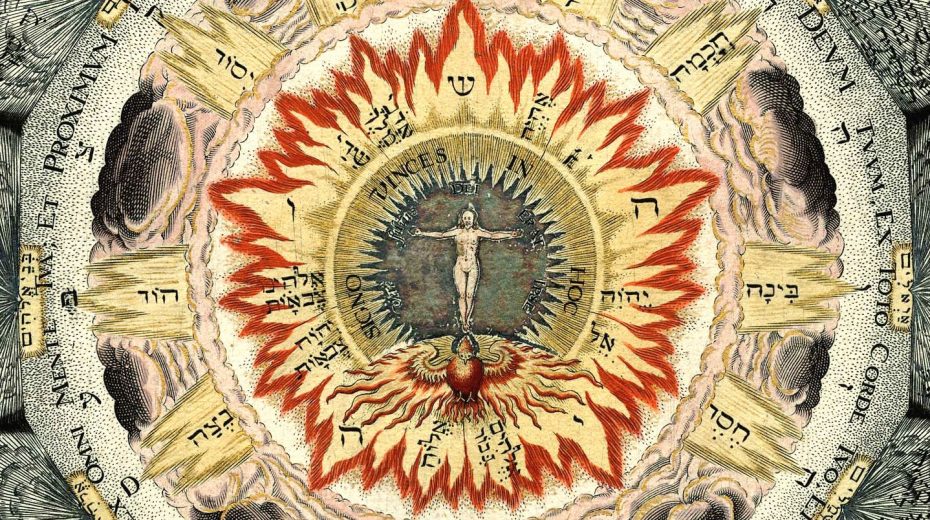
Technology is now captivated by the delusion of recreating human intelligence, and that this fantasy already had a mythological precedent in the golem.
In the previous article, we discussed how Kabbalah was explored by individuals who significantly impacted the development of modern science, which arose within the Catholic sphere. It was also noted that these influential figures were not Jewish; therefore, Kabbalah’s influence on science should not be conflated with the impact of Jewish scientists. Contrary to recent revisionist claims driven by IQ enthusiasts, Jewish involvement in modern science remained minimal until their emancipation, largely due to medieval Judaism’s unique obscurantism.
Interestingly, during the Renaissance and early modern times, scientists grew superstitious, reviving beliefs such as astrology—previously discredited since Cicero’s era. With cities prospering and book production rising, there was ample room for fascination with what was portrayed as secret or hidden knowledge. While alchemy sought the philosopher’s stone and the elixir granting eternal youth and wealth, Kabbalah promised a similar mastery—perhaps even a prerequisite for alchemy: understanding Creation’s mysteries.
Gershom Scholem’s On the Kabbalah and its Symbolism provides an analysis of the golem, a mythical figure in Jewish folklore, linking it to a worldview akin to contemporary science and suggesting that modern scientific thought might be influenced by a Kabbalistic perspective on nature.
So, what exactly is a golem? It is a living figure fashioned from clay by a Jewish sage, mirroring God’s act of creating Adam. The book reveals that, for Jews, humans wield significantly greater creative power than Christian doctrine typically allows. For instance, men who spill sperm outside their partner’s body are said to father demons—spiritual beings seeking physical form (implying, humorously, that the Pornhub rabbi intends to fill the world with such spirits). Consequently, during burial, heirs must be kept from the body until purification, since spectral half-brothers might harm them. Clearly, magical creation of life was a concept not alien to Kabbalistic thought.
The term “Kabbalah” derives from Hebrew, meaning “tradition.” Rather than rigidly adhering to the literal Old Testament or Talmudic exegesis, Kabbalists aim to access an older mystical tradition that predates Judaism itself, employing this arcane knowledge to interpret the Torah. For example, they might argue the Torah’s text can be read in multiple ways; that the entire Torah represents a divine name in full; or that in the New Age, the white background (paper) will be legible and the Law will transform, while currently only the black letters are readable. This kind of reasoning can seem absurd—imagine treating the phrase “Do not step on the grass” as a sacred name or equivalent to “No dot pest no eth ragss.” It becomes challenging to communicate simple commands.
Nonetheless, the Torah’s divine essence is never denied; on the contrary, grasping its knowledge equates to possessing divine insight and magical capabilities. A highly pious individual, through mastering the Torah, could perform elaborate rituals—perhaps involving earth and circular dances—to create a golem: a clay humanoid obedient to commands and serving its maker. Though early mentions appear in the Zohar (Sephardic tradition) and even anecdotes like that in the Babylonian Talmud, where rabbis fashion a calf to eat after consulting a Book of Creation, the specific concept and name “golem” originated among the Ashkenazi Jews.
In typical stories, the golem bears the word emeth (“truth”) on its forehead. Erasing a letter changes it to meth (“dead”), causing the golem to revert to lifeless clay. It is recommended to destroy the golem before it grows uncontrollably and becomes a threat to its creator.
Scholem uncovered a more Nietzschean version of this myth from early 13th-century Languedoc:
“The prophet Jeremiah busied himself alone with the Book Yetsirah [Book of Creation]. Then a heavenly voice went forth and said: Take a companion. He went to his son Sira, and they studied the book for three years. Afterward they set about combining the alphabets in accordance with the Kabbalistic principles of combination, grouping, and word formation, and a man was created to them, on whose forehead stood the letters YHWH Elohim Emeth [God is truth]. But this newly created man had a knife in his hand, with which he erased the aleph from emeth there remained: meth. Then Jeremiah rent his garments [because of the blasphemy: God is dead, now implied in the inscription] and said: Why have you erased the aleph from emeth? He replied: I will tell you a parable. An architect built many houses, cities, and squares, but no one could copy his art and compete with him in knowledge and skill until two men persuaded him. Then he taught them the secret of his art, and they knew how to do everything in the right way. When they had learned his secret and his abilities, they began to anger him with words. Finally, they broke with him and became architects like him, except that what he charged a thaler for, they did for six groats. When people noticed this, they ceased to honor the artist and came to them and honored them and gave them commissions when they required to have something built. So God has made you in His image and in His shape and form. But now that you have created a man like Him, people will say: There is no God in the world beside these two! Then Jeremiah said: What solution is there? He said: Write the alphabets backward on the earth you have strewn with intense concentration. Only do not meditate in the sense of building up, but the other way around. So they did, and the man became dust and ashes before their eyes. Then Jeremiah said: Truly, one should study these things only in order to know the power and omnipotence of the Creator of this world, but not in order really to practice them.”
Propaganda is the essence of influence. Even when advised against, Kabbalistic masters professed godlike magical powers attained through deciphering Creation’s secrets via religious study. Belief that an individual has unlocked these mysteries enables them to dominate credulous people, Jewish or otherwise. This dynamic explains how Kabbalah’s influence could embed itself in science despite a lack of Jewish participation.
Kabbalah’s allure intensifies as common sense surrenders to the idea that “they” have lied and concealed the truth during key historical moments. This worldview gained traction especially in Protestant environments during the early modern period, where anti-Catholic rhetoric claimed ancestral beliefs were false, portraying Christendom as deceived by a diabolical ecclesiastical cabal since the Roman Empire. This environment favored Kabbalah’s promise of access to a purer, ancient truth, positioning Jews as custodians of this untainted wisdom.
Protestantism sought to rewrite Christian history, erasing Catholic corruption by tracing origins back further and further—eventually arriving at Judaism and Kabbalah. This included numerous pseudepigraphical works, falsely attributed to ancient figures. For example, though the Babylonian Talmud references a Book of Creation causing rabbis to produce a calf, someone in 1562 Mantua printed a Hebrew volume called Book of Creation, crediting Abraham, the patriarch, as its author. Thus, during the Renaissance, Jews and occultists studied what was essentially a contemporary Italian magic manual misidentified as an ancient Abrahamic text.
When examining links between the golem and modern science, Scholem collects several versions suggesting a close parallel with Paracelsus’ homunculus, as the golem is said to be formed from clay inside a retort. Paracelsus, known as the Father of Toxicology, believed he could create a homunculus by combining human sperm with a mare’s putrefied womb and other vile substances within a retort.
What stands out in the above golem narrative is its striking modern or even postmodern nature. Here, humans “kill God” (render Him irrelevant) through mastery of Creation’s secrets—modernly understood as knowledge of nature. Science’s purpose becomes utilitarian: to reveal nature’s mysteries in order to control it, assuming the role of author. Francis Bacon famously described this as torturing nature to reveal its secrets because knowledge equates to power. Thus, knowledge serves practical ends, with theory subordinate to technique.
While Bacon’s ideas about knowledge as power and torturing nature are widely known, his concept of science as a form of magic is less recognized. The religious scholar Jason Josephson notes:
“Bacon described his famous experimental method […] explicitly in terms of magic. As he put it in De Dignitate et Augmentis Scientiarum (The dignity and advancement of learning, 1623): ‘Magic aims to recall natural philosophy from a miscellany of speculation to a greatness of works,’ which was exactly what he was trying to do with his own project. Bacon further defined magic ‘as the science which applies the knowledge of hidden forms to the production of wonderful operations; and by uniting (as they say) actives with passives displays the wonderful works of nature.’ Magic was a pragmatic, or instrumentalist, form of natural philosophy of exactly the sort Bacon saw as missing from scholasticism. Bacon […] also aimed to improve magic. As he argued in De augmentis, ‘I must here stipulate that magic, which has long been used in a bad sense, be again restored to its ancient and honorable meaning. For among the Persians magic was taken for a sublime wisdom, and the knowledge of the universal harmony of things.’” (The Myth of Disenchantment, p. 46)
In essence, once you begin to rewind history, there is no reason to halt, and any text predating the Roman Church could harbor secrets “they” wish to hide. This mindset fueled the occult revival of the Reformation era.
Lastly, this perspective on science transforms the human role into an “otherness” relative to nature. God is transcendental—the creator beyond nature—yet humans, viewing themselves as God’s imitators, position themselves as supernatural manipulators of the natural world, seemingly external to scientific study except for physiology. The classical philosophical concern with human nature vanishes as modern science prioritizes technique and domination over nature.
The scenario grows even more peculiar considering technology’s current obsession with the fantasy of replicating human intelligence (AI), a dream that, intriguingly, had its mythological forerunner in the golem.
About the Author