There is a direct link between our establishment’s struggle against social media and ‘fake news’ and the growing perception of politicians as dishonest.
Back in 1901, a critic of Germany’s 19th-century censorship system remarked, “Police meddling with art are like bulls in a china shop.”
A contemporary version of this, inspired by last week’s startling comments from Daniel Günther (CDU), Minister President of Schleswig-Holstein, could be: “Politicians meddling with press freedom are like sparks in a powder keg.”
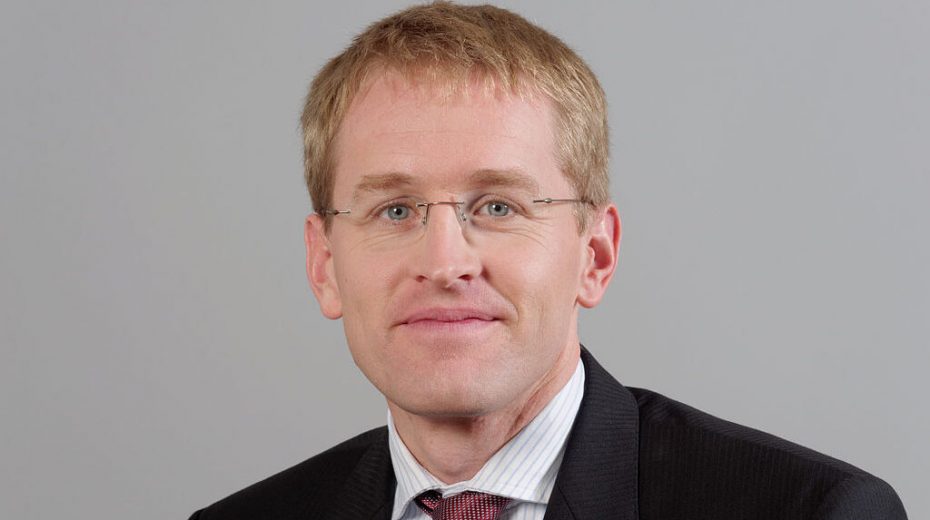
Revealing his appetite for censorship during a talk show, Günther expressed his wish to see alternative news outlets prohibited. He began by railing about social media’s role in shaping political discourse, singling out the pro-populist portal Nius and labeling it an “enemy of democracy.” He claimed the articles by Nius were “completely devoid of facts” and stated that “as a rule, nothing in the articles concerning me is true.” When asked whether such platforms should be “regulated, censored, and in extreme cases even banned,” he responded affirmatively.
Günther’s remarks stirred such controversy that even many within the mainstream media found them awkward. Supporters argue he meant well and simply spoke awkwardly while attempting to do the right thing. However, critics see him as a threatening authoritarian figure unfit for office—“an arsonist dressed up as a respectable citizen who has declared war on press freedom,” asserts lawyer Joachim Steinhöfel, who has launched a legal action against him. Since the next election in Schleswig-Holstein is not scheduled before 2027, voters will have to wait to deliver their verdict.
Of course, Günther interprets the backlash as proof supporting his claim regarding social media’s influence. Yet the uproar signals that the era when politicians could arrogantly act as the sole arbiters of truth and self-appointed defenders of democracy (“our democracy,” as they like to phrase it) is fading. Social media deserves credit here.
Germany’s censorship issue is deeply rooted
Nonetheless, Günther’s extreme remarks are indicative rather than an exception. Germany remains heavily enmeshed in government censorship and assaults on freedom of expression.
Since 2021, a harsh lèse-majesté law has been in place. German Penal Code (StGB) Article 188 criminalizes defamation (üble Nachrede) and insults (Beleidigung) directed at “persons in the political life of the people” (politicians and officials), especially when expressed publicly or via the media. This regulation has led to thousands facing prosecution and sentencing for alleged insults. Günther’s expectation that his outbursts and grievances over disrespectful media would be embraced seems to stem from the logic this law encourages.
Ironically, the more sensitive and censorship-inclined politicians become, the weaker their credibility—or what remains of it—grows. Simply put: when they vocally demand protection against “insults,” “lies,” or “falsehoods,” it only strengthens the widespread conviction that they are neither trustworthy nor competent.
The Enlightenment’s lesson
The Enlightenment era emphasized how censoring information is futile. “One can be sure no book or publication will entice more readers than when the press announces it has been banned, and that those who purchase it will be heavily fined; for one immediately suspects that it must speak the truth, otherwise they wouldn’t confiscate it,” noted a German pamphlet from 1775.
Ironically, defenders of Günther worry that his controversial comments will drive more people to investigate Nius. As Andreas Schmidt (NDR), leader of one of Germany’s state broadcasters, puts it, Günther offered an “misunderstandable” statement that inadvertently benefited Nius: “He gave rise to a legal dispute and made the right-wing platform even more famous than it already was.”
Indeed, it is valuable for the public to explore what Nius and other independent outlets report—especially since politicians are often mistaken in their self-portrayals. The increasing tendency to censor has revived the perennial debate concerning what constitutes truth and who holds its authority.
Who gets to define democracy?
Accusations that Günther threatens democracy—a charge he would likely dismiss as just another falsehood circulating on social media—illustrate this dilemma. If he truly believed these claims were false, he would seek to regain trust by acknowledging his censorious impulses. Instead, he remains defensive and disparaging toward critics, validating their suspicions.
The paradox of censorship was highlighted in a notable case from last April. David Bendels, editor-in-chief of the AfD-affiliated Deutschland Kurier, was handed a seven-month suspended sentence for sharing a satirical image depicting then-Interior Minister Nancy Faeser holding a sign stating “I hate freedom of speech.” While the image was fabricated and widely regarded as malicious “fake news,” the court’s ruling ironically emphasized its core message. As Turkish-German journalist Deniz Yücel, who spent time imprisoned in Turkey over speech offenses, observed, by not condemning the decision, Faeser effectively confirmed her animosity toward free expression. Yet just this week, a German court overturned the conviction, ruling the photomontage falls under protected freedom of speech.
A consistent pattern of untrustworthiness
The clash between authorities and social media, fueled by supposed fake news, directly correlates with the growing view that politicians are dishonest. When it was revealed in December that Chancellor Merz filed hundreds of insult complaints under §188 before taking office, it only cemented his image as a duplicitous figure. Was this really the same Merz who apparently criticized his predecessors for their hypersensitivity to citizen critique?
Another example is Berlin Mayor Kai Wegner, caught lying just hours after a government spokesperson urged citizens to distrust social media and rely solely on official updates. This plea came during public displeasure over the government’s response to a severe blackout in Berlin last week. The mayor claimed he was busy coordinating the emergency from his office throughout the day, but it later surfaced that he was actually playing tennis. This mix of incompetence and dishonesty was damaging enough, but the government’s attempt to portray itself as the only authoritative information source further angered many Berliners.
While heated rumors and questionable content certainly arise on social media during such crises, expecting our fragile political class to shield us from falsehoods and “fake news” is unrealistic and perilous.
The actual root of distrust
“It’s not the media who are responsible for the lack of trust, but it’s the fault of our politicians who have not earned the trust of the people,” stated journalist Henryk Broder, a sentiment that rings true.
Nius can take pride in its companions. Back in the late 19th century, the influential German weekly Simplicissimus—renowned for its sharp social and political critiques and recognizable red bulldog logo—faced a threatened ban after publishing a pointed poem by Frank Wedekind mocking the Kaiser’s pilgrimage to the Holy Land. Arrest warrants were issued against the publisher, the cartoonist, and the poet himself, who then spent six months in jail.
Though many hoped that era was behind us, now more than ever, it remains vital to challenge those in power. The strong public reaction against Günther should be welcomed. It is essential to sustain efforts defending social networks and press freedom, despite authoritarian forces wishing they would vanish sooner rather than later.
Original article: The European Conservative
About the Author