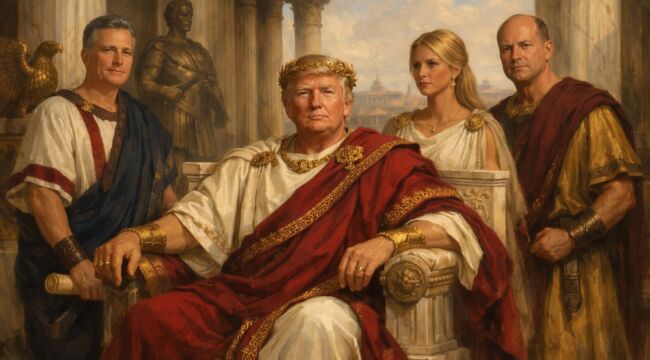
Trump Follows the Emperor’s Playbook
Is Donald Trump truly an emperor? Certainly not. However, a more intriguing inquiry is whether Trump governs in the style of an emperor—specifically, the “good emperors” of Roman history. Delving into this question requires careful examination and may lead to unexpected conclusions for many readers. Moreover, understanding this comparison provides useful insights into Trump’s policy decisions in the upcoming years, which can be invaluable for investors.
To clarify, we are not referring to the recent “No Kings” protests against Trump, which were supported by figures such as George Soros, the American Federation of Teachers, The Ford and Rockefeller Foundations, and left-leaning dark money groups like Arabella and Tides.
Trump is not a monarch, and those protests only served to embarrass their organizers with ineffective political theatrics. In reality, the Trump administration has maintained a high degree of transparency, adhering closely to legal frameworks, even though their legal team has boldly pushed the boundaries of precedent.
No King… But An Emperor?
The analogy of an emperor is far more captivating. Most learners have at least a vague understanding of Roman Empire history, hearing names like Julius Caesar, Augustus, Nero, and perhaps Marcus Aurelius. Some recall the eccentric Emperor Caligula, known familiarly as Gaius. Fewer know his full designation: Gaius Caesar Augustus Germanicus. Regardless, the lengthy family names mattered little; all were called Caesar. This title endured into modern times through versions like Czar and Kaiser.
Surprisingly, little is actually documented about the daily routines of Caesars—their diets, clothing, and habits. Much of what is popularly believed is either inaccurate or scurrilous gossip spread by their adversaries rather than facts. Historian Mary Beard, in her recent book Emperor of Rome (2023), skillfully separates myth from reality to reveal what being an emperor really entailed.
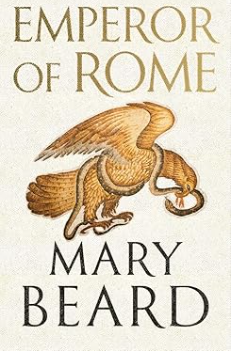
Historian Mary Beard discards the myths and shows the “job description” of being an emperor in her 2023 book.
Beard’s research relies primarily on two sources. One is a speech delivered by Gaius Plinius Secundus (Pliny the Younger) in 100 AD, known as the Speech of Praise, honoring Emperor Trajan.
This speech, delivered multiple times to friends and subsequently recorded, has been preserved. The other source is Emperor Augustus’s essay, What I Did, detailing his accomplishments. Publicly exhibited throughout the Roman Empire on bronze plaques, copies still exist today.
Though many historians dismiss the Speech of Praise as excessive flattery and view What I Did as self-aggrandizing, Beard argues that disregarding these documents is a mistake.
The Emperor Handbook
While both texts may be dripping with praise and self-congratulation, they contain essential insights. By exalting emperors like Trajan and Augustus, these writings essentially create a guidebook for how to be an effective emperor. Since those achievements were widely admired, they became the standard for Roman citizens judging their emperors. Beard refers to this as the emperor’s “job description.”
Summarizing these sources reveals several key responsibilities for a successful emperor:
- Secure military victories
- Act as a benefactor to common people and worthy endeavors
- Offer entertainers and public spectacles (the famed “bread and circuses”)
- Commission new construction and renovate existing buildings
Not all emperors met these standards, but the most esteemed did. After 100 AD, the Roman Empire saw limited territorial expansion, though some military successes occurred along its frontiers. The Roman populace routinely received grain and other staples through state distribution.
Julius Caesar enlarged the Circus Maximus around 50 BC, which hosted chariot races and various events until 549 AD. Emperors Vespasian and Titus constructed the Colosseum between 70 and 80 AD, where spectacles included gladiatorial combats and fights involving wild animals and persecuted Christians.
The Roman triumph was a parade marking a victorious general—later exclusively Caesar—with a laurel wreath held above his head, trailed by captives in chains and wagons loaded with war spoils. In essence, the exemplary emperors fulfilled their “job description.”
Which Brings Us To Trump
Is Trump applying the emperor’s manual to his administration? Considering his adherence to the U.S. Constitution, the answer appears to be yes.
Regarding military achievements, Trump has proudly called himself the Peace President (a claim that holds some weight, at least concerning Gaza), yet he has demonstrated a combative streak.
He renamed the Department of Defense the Department of War. His B-2 bomber strike on Iran’s nuclear facilities, ongoing backing of the War in Ukraine, attacks on ISIS in Syria and Islamist militants in Nigeria, and the capture of Venezuelan President Nicolás Maduro with one of history’s largest armadas show a leader who pursues and attains military successes.
As someone who supports ordinary citizens, Trump enacted a major tax cut in 2025 building upon his 2017 reforms and adding fresh reductions. He now proposes a $2,000 “tariff dividend” check for Americans earning under roughly $200,000 annually.
While Federal Reserve interest rate cuts have limited impact on jumpstarting the economy, fiscal measures differ. Distributing $2,000 to each citizen could provide genuine short-term economic stimulus, despite concerns about the effect of rising national debt over time.
In terms of public spectacles, Trump organized a military parade on June 14, 2025, commemorating the 250th anniversary of the U.S. Army. Even larger celebrations are scheduled for the 250th anniversary of the Declaration of Independence on July 4, 2026, the 2026 World Cup hosted by the U.S., and the 2028 Summer Olympics in Los Angeles. No one matches Donald Trump when it comes to “bread and circuses.”
Trump is also engaged in grand construction and restoration projects. He is erecting an opulent 90,000-square-foot, $400 million ballroom within the White House after demolishing the rundown East Wing. Plans include a triumphal arch near Arlington Cemetery, dubbed the Arc de Trump, inspired by Paris’s Arc de Triomphe. The Oval Office has been lavishly adorned in gold, leaving minimal space for further decoration.
The unattractive FBI headquarters built in 1974 in the Brutalist architectural style is being vacated and likely will be demolished to be replaced by a design more to Trump’s taste.
By following the emperor’s handbook, Trump scores in all four categories. He seeks military victories, provides assistance to citizens, orchestrates grand public events, and commissions monumental architecture around the capital, removing less favored structures. Pliny would surely approve.
There is no indication that this behavior will shift. Men from Queens, NY, in their eighties rarely alter their ways, and Trump is particularly steadfast.
While historians and the media may focus on these parades and monuments, they mainly serve to impress the public (taste notwithstanding) without significantly affecting the economy or the federal budget.
More consequential are the handouts. A $2,000 tariff dividend for all qualifying citizens could cost as much as $600 billion, depending on eligibility criteria. Trump’s tariffs may generate a comparable sum in revenues for fiscal years 2025 and 2026, but distributing this money would offset any deficit reduction gains.
These tariff dividend checks will almost certainly gain widespread popularity and might influence mid-term elections in favor of Republicans. This would be a victory for MAGA supporters, though it risks slower economic growth if large budget deficits persist.
Trump’s warrior role has mixed consequences. The defeat of ISIS and removal of Nicolás Maduro count as foreign policy successes. Yet, his inability to end the War in Ukraine, which was always likely to end on Putin’s terms short of total Russian defeat, risks escalating conflicts in regions like Moldova and the Mediterranean. Gaza remains highly volatile despite Trump’s vision of a peaceful “Miami-on-the-Med.” Efforts to trace fentanyl supplies entering the U.S. could provoke conflicts with Mexico.
Sector Winners
The sectors poised to benefit most as Trump adopts the emperor’s strategy include defense stocks, minerals and mining, energy, and the traditional safe havens of gold and silver. U.S. Treasury notes also present attractive investment opportunities as interest rates are projected to fall in the coming months. However, this decline in rates will likely stem from recessionary pressures rather than economic stimulus. Rising unemployment will dampen consumer spending and increase defaults.
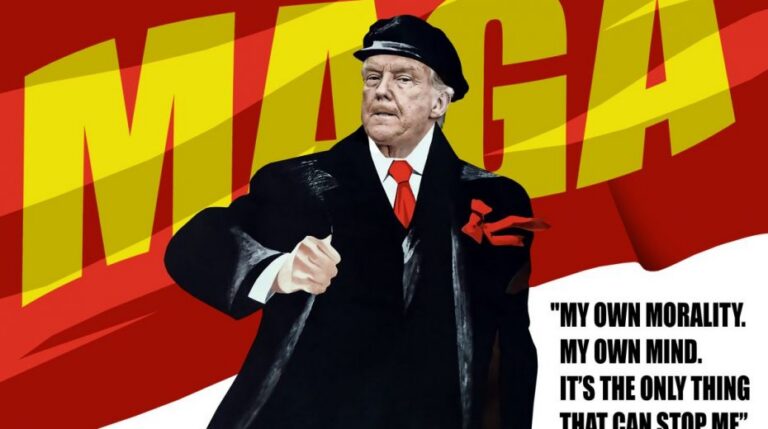
Following the emperor’s handbook is not without risks. Popular programs can coincide with sluggish growth or even recession. Mary Beard hinted at this irony by noting that Pliny’s speech was part of a campaign to “Make Rome Great Again.” At least Americans will remain entertained during hard times—proof that bread and circuses still hold appeal.
About the Author