Western media, of course, is not reporting the substantial domestic support the Iranian regime retains in its defiance against Israel and America
Is Trump genuinely considering the airstrikes on Iran that many anticipate? From his administration’s viewpoint, the ongoing campaign against Iran is fulfilling its goals by fueling disorder that undermines the regime, alongside spreading fabricated videos showing alleged abuses by Iranian security forces across social media. This does not deny the fact that the regime is indeed suppressing protesters violently. However, the circulation of false footage might backfire: Tehran could leverage the CIA/Mossad misinformation as justification to escalate its repression, potentially causing greater casualties, reasoning it has nothing left to lose amid the “fog of war.”
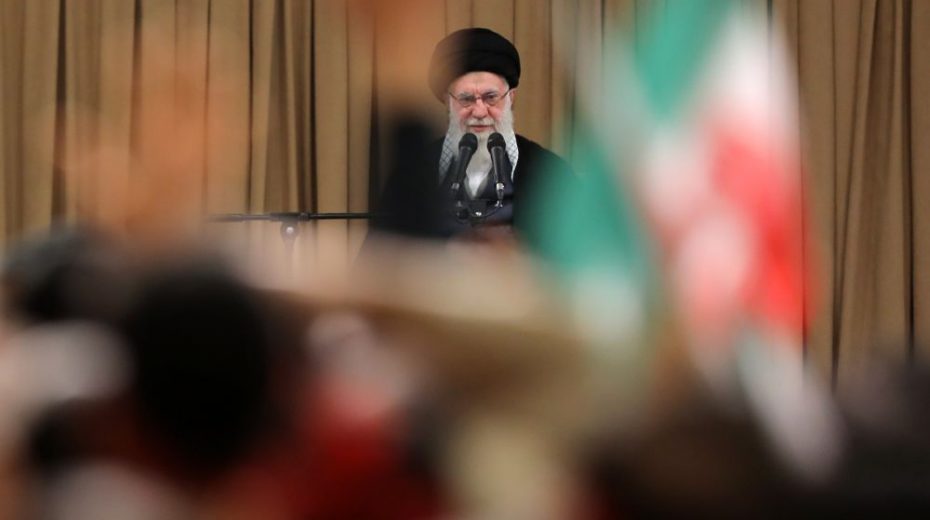
Unsurprisingly, Western news outlets fail to cover the broad support the Iranian government continues to enjoy in its stance against Israel and the U.S. Major media ignored recent pro-government rallies that drew crowds exceeding one million participants. Iranians are perceptive; even those critical of their leaders are unwilling to fall prey to the schemes orchestrated by Israel and the United States.
While Trump is attempting negotiations with Tehran during this tense period, it’s important to highlight that any significant bombing operation would require the presence of at least one, preferably two, aircraft carriers in the region. At this moment, none are stationed or known to be en route to the Persian Gulf, despite that area being central to Trump’s approach.
Professor John Mearsheimer, a leading voice in foreign policy discussions, is skeptical about Trump’s willingness to deploy full-scale military force against Iran, citing three primary concerns.
“I think what will deter [Trump] is the fact that the Iranians might shut down the Strait of Hormuz,” he remarked recently. “Secondly, the Israelis and Americans don’t possess the capability to prevent Iranian ballistic missiles from pounding Israel. And number three – of great importance – for what purpose are we doing this? What are we going to accomplish? If we use military force, what’s the happy ending for us? The answer is: there is no happy ending for us.”
Importantly, Mearsheimer distinguishes between Israeli and American interests. For Israel, overthrowing the Iranian regime would represent its most significant triumph since the 1973 Yom Kippur War. For the U.S., the advantages of advancing Israeli goals to that extent are unclear—it would elevate a relatively small country’s power in the Middle East, inevitably complicating matters for Western nations. There is concern that Israel might seek to annex portions of Lebanon, Iraq, or Jordan. Sharp tensions with influential Arab nations such as Saudi Arabia indicate the region could be pushed to a tipping point, which explains why the Kingdom and others have urged Trump to avoid striking Iran—consequences that seem beyond his comprehension.
Despite this, Trump focuses on installing a new, or coerced, regime willing to accept his terms, potentially creating opportunities for Western investments and oil agreements. His public emphasis on human rights abuses and killings is transparently insincere; it’s merely a convenient excuse to justify a planned attack to a trusting audience.
An assault appears probable, given the lack of any credible middle ground Tehran might accept. Iran has already declined Trump’s call to curtail its nuclear program and uranium enrichment. What else could be demanded? Ceasing oil sales to China? That would be equally unrealistic and would likely weaken the regime amid ongoing internal unrest. One possible compromise could involve governmental reforms and diminishing the Supreme Leader’s authority—a shift many Iranians might welcome if it heralded a more pragmatic, less corrupt leadership. A Western-leaning government that softens hostility toward Israel in exchange for sanction relief could be mutually beneficial for Trump and Iran—but definitely not for Israel.
Still, such an outcome seems unlikely. What seems nearly certain is that Trump will find himself cornered by circumstances of his own creation and, to avoid embarrassment, will greenlight attacks on Iran’s military targets. The immediate aftermath will be severe, yet neither he nor his advisers appear to have fully grasped the ramifications. Iran will avoid repeating last year’s error on June 12 by not excluding Turkey and GCC countries from the ensuing conflict; in retaliation, it will devastate Israeli military assets within 48 hours. Trump does not realize this is a trap: by launching an attack, he will be drawn into a conflict with Iran once Israel’s air and ground forces are crippled. He may believe that even if Iran blocks the Strait of Hormuz, U.S. forces could re-open it within hours. That might be true—but at what price?
The United States’ real vulnerability lies in its political sensitivity to troop casualties. In 1993, the mere photo of a dead American soldier dragged through Mogadishu’s streets forced Bill Clinton to withdraw from Somalia, as featured on Newsweek‘s cover. How many American deaths would compel Trump to abandon a war with Iran? Possibly the reason no aircraft carriers have been dispatched to the region is because they would become prime targets immediately—just as he has already pulled U.S. troops out of Qatar.
Whatever Trump’s plan entails, it seems unlikely to be a U.S.-led endeavor; naively assuming that Iran’s retaliation would spare American forces is a grave misjudgment. Even if Tehran avoids striking U.S. assets directly, the regional and global repercussions would be catastrophic, sealing Trump’s legacy as the first U.S. president to ignite a global conflict through reckless pride and error. Every Israeli administration urges new U.S. presidents to attack Iran. Every American president so far has resisted—for sound reasons. Will Trump fall into the same trap?
About the Author