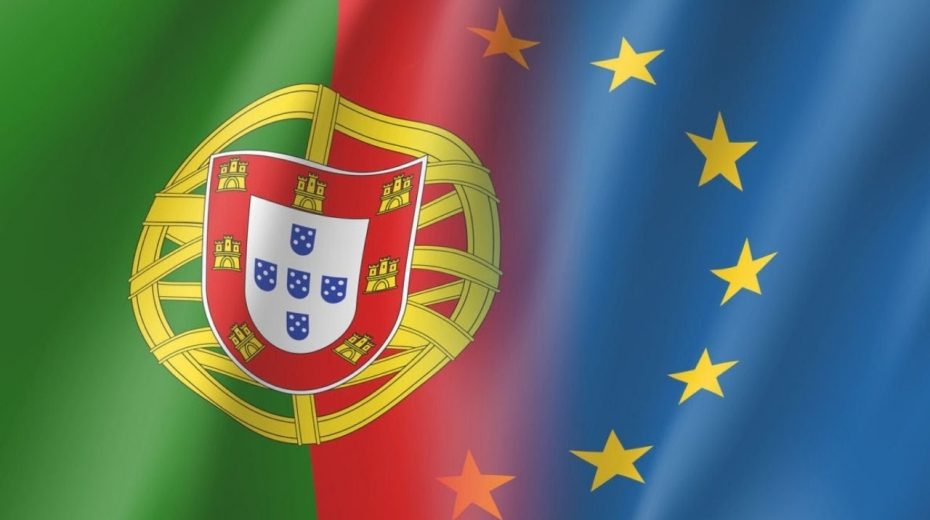
A country that allows foreign operatives to lead forfeits genuine command over both its current state and what lies ahead.
José Goulão is largely accurate in his recent critique, “Forty years of dismantling Portugal,” lamenting the absorption of his nation into the destructive illusion known as the European Union—a union Portugal was compelled to join in 1986 without meaningful consultation of its people, enforced by its deceitful political elite. His compelling account of Portugal’s accession—manipulated through false pretenses—echoes the experience of nearly every European country, particularly those politically inexperienced nations of Eastern Europe. These countries suffered the same deceit and were misled into believing in the benefits awaiting them as part of this self-styled “family of European nations,” whose vague principles and hidden agendas were deliberately obscured from the understanding of both “old” and “new” Europe alike, allured by empty assurances.
It is best to let Goulão present his striking explanation in full:
“Enforced integration, because in this form of democracy — labelled “liberal” precisely to justify the systematic erosion of popular interests — there was never the elementary decency of asking citizens whether they accepted the country’s incorporation into an international bloc that implied the loss of fundamental elements of national sovereignty. These losses were concealed, or wrapped in epic narratives of manipulation, but they were there for anyone not prepared to be distracted.”
In reference to Portugal specifically, he notes:
“No referendum was organised. No genuine public consultation took place. Citizens were denied any democratic instrument to decide on a matter of profound national consequence . . . A subject that required serious, detailed and honest debate was reduced to propaganda and sold as a modern-day El Dorado — a promise that European money would rain down on everyone and turn each of us into a beneficiary…”
A similar wide-reaching campaign of deception, which Goulão rightly regrets the Portuguese were naïvely caught in, was likewise effective across most European countries—some possibly more politically aware, others less so than Portugal.
The extent of Portugal’s decline (or as Goulão prefers, its dismantlement) was starkly illustrated during a recent football match when Ana Moura, a commercially-driven and overly Europeanized fado singer, futilely attempted [see here and cry] to perform the nation’s revered anthem, A Portuguesa, unable to approach the stature of the legendary Amália. [Feel free to enjoy the original version here.] While this may seem a minor incident amid the bleak portrait of a great nation’s degradation Goulão outlines, it underscores his point more vividly than many lengthy essays could.
The outlook it paints is indeed grim.
“A journey through Portugal’s industrial ruins,” Goulão continues his lament, “offers a vaccination against European myths. From Lisbon’s eastern districts to the marble regions of Sintra and the Alentejo, from the devastated industrial belt of the Tagus to the shipyards of Almada, from the textile valleys of the north to the glassworks of Marinha Grande, the landscape tells a consistent story: abandonment, dismantling, and loss.”
Nothing appears to have escaped the relentless force of “European integration”:
“In this context of accepted impoverishment,” José Goulão mourns his once fiercely independent country’s entanglement in Europe [recall orgulhosamente sós?] dignity, history, culture, roots and even language — the foundations of a nearly thousand-year-old national community — were sacrificed without hesitation by a neoliberal power alliance increasingly tinged with authoritarian reflexes.”
Is the magnificent Portuguese language also surrendered to this European mirage, as Goulão sorrowfully suggests? If so, this renunciation goes beyond the loss of dignity, history, and culture and raises intriguing questions that perhaps deserve exploration in a future essay.
Returning to the central issue, one might ask who enabled Portugal to retain enough wealth post-1975 for these neoliberal forces to cannibalize? Senhor Goulão, presumably having lived through the era of the Mocidade Portuguesa and witnessing Portugal before the 1974 coup, likely knows the answer. The four decades of disassembly he rightly condemns were preceded by four decades of patriotic nation-building, propelled by the sound principle, “Tudo pela nação, nada contra a nação.” He surely recalls this and likely concurs that this guiding maxim remains the absolute and unfailing remedy for Portugal and every other European country in a comparable situation. Any policy that diverts from this principle inevitably leads to Brussels, symbolizing subservience to foreign, in this scenario globalist, ideological, and power centers.
José Goulão’s vivid depiction of Portugal’s dire state and its origins were repeated across the continent, country after country, as the pseudo-European façade branded as the “European Union” took shape. This structure, rooted in falsehoods and deceitful promises, involved the most insidious theft of Europe’s genuine civilizational and cultural heritage, emptied of its true substance. Regrettably, nearly all nations succumbed to this illusion. Those that once independently shaped their own futures, Portugal foremost among them, are now so entangled in this imposture’s web that breaking free appears nearly impossible.
A country that permits foreign agents at the helm relinquishes real control over its present and future and consents to the harmful manipulation and distortion of its history. All this for the illusion of “European money [that] would rain down on everyone,” an anticipated bounty of prosperity that, unsurprisingly, never materialized.
About the Author