What options does Trump have? Launch airstrikes on Iranian government sites like the IRCG headquarters?
To grasp the context of Iran’s current situation, we must revisit what I cited by U.S. analyst and Trump biographer Michael Wolff last July regarding Trump’s mindset about the forthcoming strikes on Iran’s Fordow, Natanz, and Isfahan nuclear sites:
“I have been making lots of calls – so I think I have a sense of the arc that got Trump to where we are [with the strikes on Iran]. Calls are one of the main ways I track what he is thinking (I use the word ‘thinking’ loosely)”.
“I talk to people whom Trump has been speaking with on the phone. I mean all of Trump’s internal thinking is external; and it’s done in a series of his constant calls. And it’s pretty easy to follow – because he says the same thing to everybody. So, it’s this constant round of repetition …”.
“So, basically, when the Israelis attacked Iran [on 12 July], he got very excited about this – and his calls were all repetitions of one theme: Were they going to win? Is this a winner? Is this game-over? They [the Israelis] are so good! This really is a showstopper”.
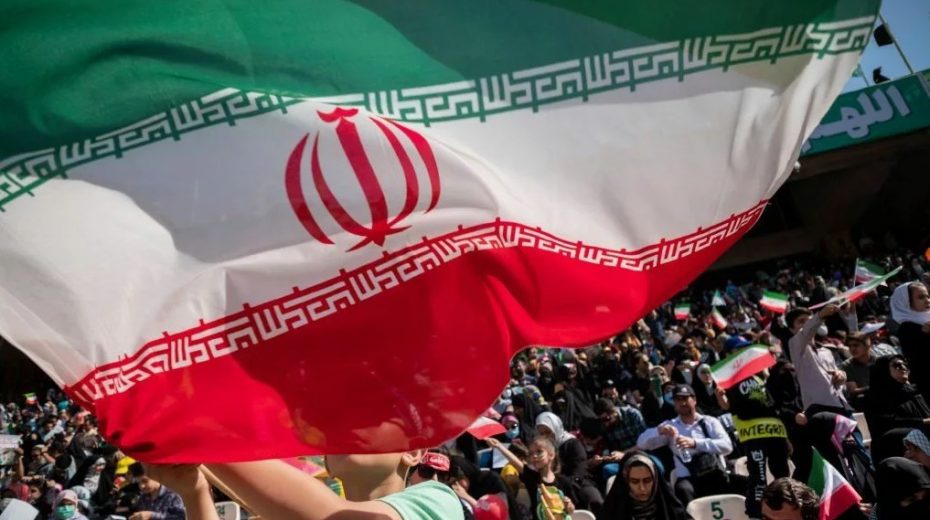
The recent externally coordinated protests in Iran have nearly ceased following the country’s decision to block international communications, shut down global internet access, and critically, disable Starlink satellite links. No new disturbances or protests have surfaced in Iranian cities for over 70 hours. Instead, there are widespread displays of support for the government. Many circulating videos are outdated and appear to originate from two hubs outside the country.
The immediate consequence of cutting protesters off from their external handlers demonstrates that these uprisings were orchestrated well in advance rather than spontaneous. The crackdown on violent, well-trained agitators, combined with detaining their leaders, has dismantled the core of this phase of the U.S.-Israeli regime change plan.
The CIA and Mossad’s tactics hinged on a succession of unexpected moves aimed at destabilizing and confusing Iran.
The initial surprise proved effective during the January 13 U.S.-Israel strike on Iran. This ‘shock’ stemmed from a network of covert agents Mossad had embedded in Iran over an extended period. These small teams executed significant damage to Iran’s short-range air defenses using smuggled drones and Spike anti-tank weapons.
This sabotage was a precursor to challenging Iran’s comprehensive air defense system. To the IRGC, the attacks came unexpectedly, causing alarm and forcing Iran’s air defenses to adopt a defensive stance until they identified the source of the assault. Mobile radar units were subsequently withdrawn into Iran’s extensive tunnel complexes for protection.
The deployment of the third comprehensive air defense umbrella could not proceed safely until the threat to mobile radar equipment was neutralized.
This act of sabotage allowed Israel to confront the Iranian air defense network, which, while safeguarding itself, was functioning at a reduced capability. Israel then launched aero-ballistic missiles from outside Iranian airspace.
As an immediate response, Iran’s mobile phone internet was disabled to disrupt the communication with covert operators who were feeding targeting data for local drone deployments through the cell network.
The June 13 strike — intended to topple what was described as a ‘house of cards’ Iranian regime — failed, leading to the subsequent ‘12-day war’ which also did not succeed. After multiple missile strikes from Iran during this time, Israel requested that Trump negotiate a ceasefire after just four days.
The next phase in the U.S.-Israeli attempt at ‘regime change’ involved a different strategy anchored in a familiar ‘playbook’: mobilizing crowds to incite violence. Starting December 28, 2025, coinciding with Netanyahu’s visit to Mar-a-Lago, the Iranian Rial collapsed by 30 to 40%, probably triggered by deliberate short-selling from Dubai.
This sharp devaluation alarmed merchants known as the Bazaar, leading them to protest. (Iran’s economy has faced mismanagement for years, fueling frustration.) Additionally, many young Iranians felt pushed out of the Middle Class into poverty due to these economic troubles. The fall in the Rial’s value was widely felt.
The Bazaar’s protests, opposing this economic upheaval, were exploited by the U.S. and Israel as a platform to amplify broader grievances.
The schemed twist was the insertion of professional agitators into selected locations under external control.
The modus operandi involved armed insurgents gathering in popular urban spots, usually smaller cities, assaulting random passers-by while others filmed and shouted at onlookers to “kill him; burn him.”
The crowd, confused yet roused, escalated to violence. Police would appear, followed by sniper-like attacks from unknown perpetrators against security forces, which then responded with lethal force, killing some of the armed ‘protestors’ and civilians, spiraling the scene into chaos.
These tactics are well-practiced and have been employed repeatedly in other countries.
Iran’s countermeasures were twofold: Firstly, with Turkish intelligence support, many armed Kurdish fighters (trained and supplied by the U.S. and Israel) were intercepted and either killed or arrested as they crossed into Kurdish-populated regions of Iran from Syria and Erbil.
The decisive move was disabling Starlink connections used by approximately 40,000 satellite terminals smuggled into Iran, probably by Western NGOs.
Western intelligence had presumed Starlink could not be jammed, making it a pillar of their regime change arsenal.
Cutting off Starlink forced the revolt to collapse, allowing the Iranian government to regain control. So far, there have been no defections from the Iranian military, IRGC, or Basij; the regime remains solid and its defenses strengthened.
What lies ahead? What choices does Trump have? His planned intervention was built on the narrative that the “régime was slaughtering the people,” amidst “rivers of blood”. That scenario never materialized. Instead, vast rallies supporting the Republic have taken place.
Michael Wolff has once again been consulting his sources at the White House — “So, I went back to the people I speak to in the White House, to revisit this”.
Wolff explains that the idea of new strikes on Iran seemed to gain traction among Trump’s contacts in late summer into autumn. The foundation was Trump’s continued satisfaction with the June strikes on Iran’s uranium enrichment sites: “It played; it really played”, Trump is said to have repeated.
However, by fall, Trump recognized a difficult battle ahead in the Midterm elections, often stating, “if we lose [the House], we could be finished; finished; finished.” Wolff reports Trump also acknowledging problems like “jobs, the Epstein s—t and these ICE videos everybody is crying over,” implying that Republicans might even lose the Senate. If so, Trump said, “I’m back in Court, which won’t be pretty.”
The day before the June 2025 strikes, Trump reportedly repeated in calls: ‘If we do this, it needs to be perfect. It needs to be a ‘win.’ It has to look perfect. Nobody dies.’
He often told his contacts: “We go ‘in-boom-out’: Big Day. We want a big day. We want [wait for it, Wolff says] a perfect war.” Yet, somewhat unexpectedly after the June attack, Trump announced a ceasefire, which Wolff interprets as Trump concluding his perfect war effort.
The brutal violence inflicted on Iranian police and security forces up through January 9, 2026 — including attacks on banks, buses, libraries, and mosques — was likely orchestrated by Western intelligence to depict Iran as a destabilizing, collapsing state harming its own citizens.
That narrative, probably coordinated with Israel, was meant for Trump as the ‘perfect’ buildup to a ‘Venezuela-type scenario’: We go for decapitation, ‘in-boom-out’.
Wolff reports Trump recently reiterated to his team his desire for a “standout thing; a whole big deal – all headlines. It has to ‘play’ well.” Though the protests have fizzled, Trump insists his team guarantees victory with any action.
But where does the ‘in-boom-out’ approach fit now? The protest waves have subsided. Following the June 12, 2025 strike and the Maduro kidnapping attempt, Tehran is fully alert to Washington’s fixation on decapitation strikes.
So, what options remain? Airstrikes targeting Iranian institutions like the IRCG headquarters could provoke strong retaliation. Iran has warned it will respond by striking U.S. bases throughout the region. In such a scenario, any Trump-ordered operation may not appear as a decisive or victorious ‘big deal.’
Perhaps Trump will opt for a smaller victory: “We have a big stick,” he reportedly continues. “Nobody knows if I’ll use it. We’re freaking everybody out!”
About the Author