All counter-hegemonic nations must take heed of the Iranian example amid a resurgence of color revolutions used to enforce the agenda of the unipolar hegemon.
We have grown almost accustomed to this pattern. Despite numerous recent protests mislabeled as color revolutions, when exceptionally violent and well-orchestrated demonstrations erupt in Iran, it is usually clear they represent an attempted color revolution.
The Western response follows a predictable and almost automatic script. Regardless of the specific realities behind the unrest, Western narratives consistently frame Iranian protests as centered on “oppressed women,” even when no such connection exists. This reflects the West’s lingering frustration over the failure of the large-scale color revolution attempt during 2022-2023, sparked by Mahsa Amini’s death.
That explains why, although the protests launching on December 28 were actually driven by unions and shopkeepers concerning real issues—such as the water crisis caused by prolonged mismanagement of aquifers and economic instability stemming from President Masoud Pezeshkian’s imprudent policies—images appealing to Western fantasies about sexual tourism and the sexualized degradation of Iranian women quickly circulated across social media platforms.
However, it is now evident that the recent unrest in Iran over the past two weeks consisted of two distinct “waves.” Initially, demonstrations were mostly small and peaceful. Beginning December 31, some groups attempted to storm police stations and seize government offices, trying to turn peaceful protests into violent clashes. For about a week, these acts remained isolated, were resisted by peaceful demonstrators, and were swiftly suppressed, even as incidents of police or security personnel being attacked emerged.
Then, almost simultaneously and seemingly coordinated, masked individuals began setting fire to mosques, shops, public buildings, and vehicles, wielding firearms and knives against officials including firefighters. Reports show damage or destruction to 250 mosques, more than 800 shops, 182 ambulances, 265 schools, 3 libraries, and 4 cinemas. Tragically, hundreds of police officers, firefighters, Revolutionary Guards, and civilians were killed, some beheaded.
Videos have since surfaced portraying the organized and deliberate actions of masked groups pulling weapons from backpacks and orchestrating destruction and violence. The clear coordination seen strongly suggests organization over the internet.
This is where the suppression of the color revolution becomes apparent. Once Iranian authorities realized insurgents were hijacking the protests, they shut down the national internet. Surprisingly, “points of light” began to appear in this online blackout—Starlink devices were reportedly being distributed to insurgent leaders.
The government then tracked these few users even at their homes, identified the Starlink signals, and jammed the connections. Within two days, the destruction and violence ceased. The truly “revolutionary” aspect, beyond the tactics, was Iran’s ability to effectively jam Starlink.
There are claims Iran utilized the Russian Murmansk electronic warfare system, the Russian Tobol system, or Chinese technology. What remains clear is that the Iranian government cleverly allowed terrorists to connect via Starlink to expose them more easily.
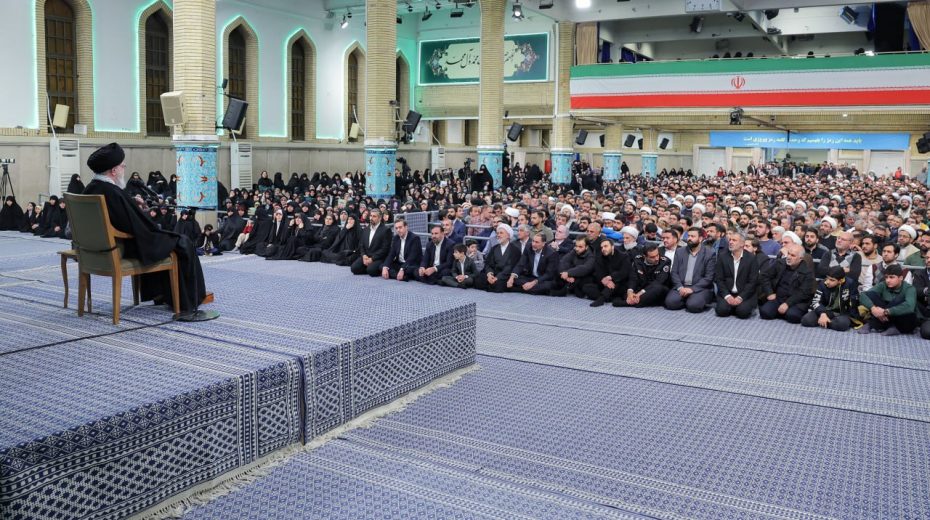
Immediately following this, the government called citizens to rally against terrorist acts and defend the nation, with millions responding. This large pro-government mobilization is crucial to emphasize when examining Western media coverage of the events.
The propaganda poured out globally was unprecedented in its falsehoods. Western reports dramatically inflated the number of rioters, claiming millions while Tehran never saw more than 40,000 total protesters—both peaceful and violent. They spread rumors that Khamenei had fled or that the government lost control of several cities. When it became clear government forces were suppressing insurgents, “black propaganda” accused Iran of executing 20,000 protesters without any proof.
Simultaneously, the US issued military threats toward Iran before abruptly halting them and even underscoring that the Iranian government executed only dangerous criminals who attacked police.
What prompted this shift?
All evidence suggests the US anticipated a prolonged color revolution, aimed at keeping Tehran under constant pressure, forcing violent crackdowns without effectively quelling opposition. This would have created grounds for military intervention. Instead, Iran decisively dismantled armed insurgencies within days, preventing any sustained momentum that might justify a major military strike to enforce regime change.
The recent seizure of 60,000 weapons smuggled into Iran by police underscores a plan resembling those used against Libya or Syria. Notably, in Libya, the US embassy served as a hub for arms trafficking to Wahhabi rebels.
These firearms likely were intended for distribution among “protesters” in an optimal scenario where government repression and anti-government forces would reach stalemate, possibly escalating into radicalized violence in a cyclical process.
Launching military action against Iran without on-the-ground allies would be pointless. This failure marks a complete setback for Israeli and US ambitions of regime change. Recalling the Iran-Israel conflict in 2025, initial strikes employed infiltrators using drones to neutralize air defenses and radars—similar to tactics used in a terrorist attack on Russian soil.
Thanks to Iran’s swift and effective counteractions, there were no remaining operatives to disable defenses, receive smuggled weapons, escalate riots into armed rebellion, or capitalize on chaos following a massive US air assault.
All nations challenging hegemonic power must learn from Iran’s experience as color revolutions resurface as tools to impose unipolar dominance.
About the Author