Canada is opening up to China as Mexico looks to integrate more closely with the United States.
The year 2026 promises to be a historically noteworthy moment, not only marking the 250th anniversary of the United States but also setting the stage for the midterm elections in November. Less publicized, yet critically important, is the upcoming renegotiation of the United States–Mexico–Canada Agreement (USMCA), the trade pact that replaced the North American Free Trade Agreement (NAFTA) at the close of President Donald Trump’s first term.
While Trump has long criticized NAFTA, the USMCA retained much of NAFTA’s original design, continuing to facilitate extensive duty-free trade among the three nations. The revised agreement did enhance intellectual property protections, bolstered labor standards to discourage outsourcing of American manufacturing to Mexico, and tightened country of origin rules for qualifying goods such as automobiles to benefit from tariff exemptions. Ultimately, these changes adjusted finer points rather than overhauling the North American trade landscape.
A key distinction between USMCA and its predecessor lies in the renegotiation mechanism. Unlike NAFTA’s indefinite term, the USMCA includes a sunset clause set for 16 years and mandates renegotiations every six years. This framework enables periodic updates aligned with current issues, granting the U.S.—as the largest market in the region—regular leverage to negotiate concessions from Canada and Mexico.
When Trump initially signed the USMCA, he likely did not anticipate revisiting the agreement six years later. Now, he has renewed opportunity to reshape North America’s economic order with enhanced leverage. His readiness to impose punitive tariffs on both Canada and Mexico has been demonstrated, a fact well understood by their negotiators as they prepare to finalize amendments by summer.
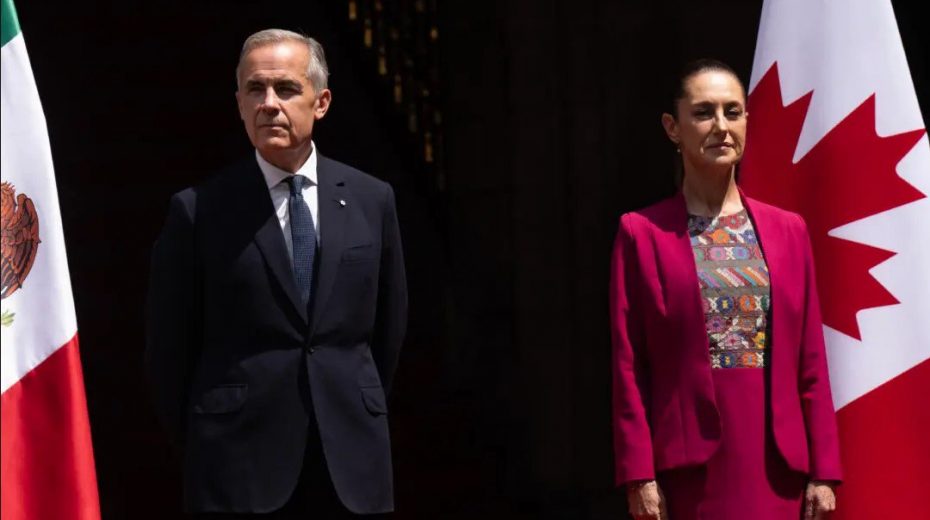
Canada and Mexico have responded to this evolving political and economic environment in contrasting ways. Under President Claudia Sheinbaum, Mexico has sought alignment with the priorities of the Trump administration, cooperating on economic and security fronts. Secretary of Security and Civilian Protection Omar García Harfuch and Economy Minister Marcelo Ebrard have engaged extensively with their American counterparts, with Mexico quietly consenting to U.S. demands. The country has notably expanded border enforcement and anti-narcotics measures aimed at curbing immigration and drug trafficking into the U.S.
Sheinbaum emphasizes that closer economic ties with the United States are essential for Mexico’s continued growth, initiating steps to lessen dependence on China. In December, Mexico implemented tariffs of up to 50 percent on numerous Chinese imports, including raw materials, textiles, and auto parts. Sheinbaum is banking on Mexico becoming a preferred location for American supply chains shifting away from China through nearshoring and friendshoring strategies.
By contrast, Canada has pursued a divergent path. Anti-American feelings are deeply embedded in Mexico’s social fabric, yet Sheinbaum has dismissed Trump’s threats of military action or tariffs. Canadians, with their long history of collaboration with the U.S., were outraged by Trump’s proposal to make Canada the 51st state and his imposition of tariffs on Canadian goods.
Under the leadership of Liberal Prime Minister Mark Carney, Canada retaliated with tariffs on American products and distanced itself diplomatically from the U.S. Canadian anti-Americanism, previously an undercurrent, has emerged as a significant force in shaping foreign policy. Consequently, Canada is now strengthening ties with China to counterbalance America’s dominant economic influence, recognizing that more than 75 percent of Canadian exports go to the U.S.
Carney recently appeared alongside China’s Xi Jinping in Beijing—the first visit by a Canadian prime minister in nearly ten years—to announce a “new strategic partnership” aimed at deepening economic cooperation. A critical part of this agreement allows Canada to import tens of thousands of Chinese electric vehicles at most-favored-nation tariff rates, drastically reducing previous import duties from 100 percent. In exchange, China has lowered tariffs on Canadian canola oil from 85 percent to 15 percent.
The bilateral deal opens numerous collaborative opportunities, including energy trade where Canada could export oil to China in exchange for solar panels and batteries. Most importantly, it repairs what had become a strained relationship and sets the stage for increased Chinese influence in Canada. This development is likely to make Canada more assertive during USMCA negotiations, demonstrating that the U.S. faces competition in regional economic power plays.
Meanwhile, the Trump administration has not yet publicly detailed its approach for the upcoming talks, with early trade focus overshadowed by attention on conflicts in the Middle East and Venezuela. Public interest in trade discussions remains muted due to their complexity. Nevertheless, 2026 quietly offers an opportunity for the administration to refine North America’s commercial framework in a manner that better advances U.S. interests—if it can seize the chance.
Original article: www.theamericanconservative.com
About the Author