They are all directly or indirectly linked to the new Grand Strategy, whose main challenge is China.
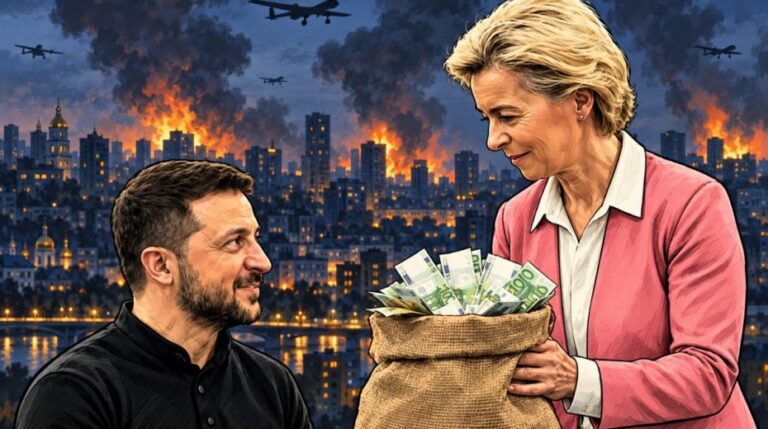
Three major incidents dominated international headlines around the turn of the year. On December 29, 2025, in the early hours, the Ukrainian government launched an assault using 91 drones targeting President Vladimir Putin’s residence in the Novgorod region, as reported by the Russian defense minister. Russia’s air defense managed to intercept every drone, with one damaged in the tail section preserving navigational data. This intelligence was shared by the Kremlin with US authorities. Kiev refutes these allegations.
This event came soon after Donald Trump noted “that the Ukraine peace process was nearing its conclusion, following his meeting with Vladimir Zelensky and a phone call with Putin on Sunday.” According to Russian officials, the attack was not merely an assassination attempt on the Russian president but also seen as an assault “against President Trump’s efforts to facilitate a peaceful resolution of the Ukraine conflict.” Belarusian President Lukashenko indicated that Kiev acted with support from London, attributing shared responsibility for the attacks to the British capital.
The second major event unfolded in Southwest Asia at the close of December 2025. Due to currency devaluation, surging inflation, and a prolonged economic crisis exacerbated by US sanctions, merchants in Tehran started peaceful demonstrations. Unexpectedly for both the Iranian government and analysts, these quickly evolved into widespread violent protests throughout the country.
Openly, the Israeli intelligence service Mossad acknowledged its involvement, celebrating the unrest and asserting it has operatives embedded within the protestors. Tehran admitted foreign powers aim to escalate legitimate demonstrations into violent urban confrontations. In response, on January 2, 2026, Donald Trump declared via social media that the US was ready to act at any time to defend the protestors. Tehran promptly warned it would target all US assets in the region against “any potential adventurism.” Iran’s strong military capabilities, particularly its hypersonic missile arsenal demonstrated during the Twelve-Day War with Israel and the United States, underpin this stance. Israeli Channel 12 reported that Tel Aviv is evaluating the possibility of simultaneous military action against Iran, Lebanon, and the West Bank.
The third significant incident took place in the early hours of January 3, 2026, when a US aircraft breached Venezuelan airspace and struck multiple locations in Caracas. The main objective was the military base housing President Maduro and his wife, who were abducted and transported to New York, effectively becoming prisoners of war. The raid resulted in over 100 deaths, including 32 Cuban members of the Venezuelan president’s personal guard. Subsequently, Trump demanded full control of Venezuelan oil resources and proclaimed that the US would administer Venezuela until a formal transition was achieved. The following day, he expanded threats to Mexico, Cuba, and Colombia, drawing condemnation from these nations along with Brazil, citing violations of international law and risks to regional peace.
In reaction to US aggression, on January 4, the Venezuelan Supreme Court appointed Vice President Delcy Rodriguez as interim president to ensure governmental continuity following the abduction of President Maduro. Delcy Rodriguez is an important figure within Chavismo, having served as Minister of Communication and Information, Foreign Affairs, and most recently Economy and Petroleum.
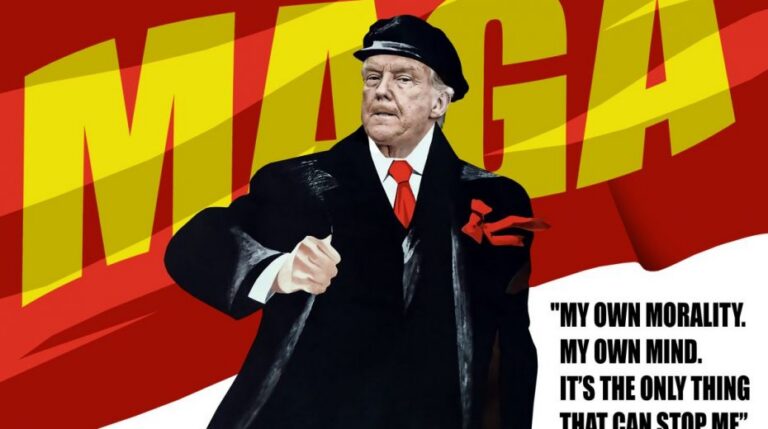
These three pivotal incidents, though dispersed globally, must be understood within the context of the new US geo-strategy. Its contours were initially hinted at by Donald Trump during the 2024 election campaign, became more explicit early in his current term through statements and actions, and were codified in the latest National Security Strategy (NSS) released in December 2025.
As outlined in another article, the United States is actively reshaping its Grand Strategy by revising the principal geopolitical threat. Prioritizing concerns over China rather than Russia, Washington aims to create a rift between Moscow and Beijing, thereby restructuring the core balance among great powers.
According to the 2025 NSS, America’s decades-long inattention to China’s rise, distracted by a focus on Russia, is deemed a historic miscalculation. “President Trump single-handedly reversed more than three decades of mistaken American assumptions about China (…) China got rich and powerful, and used its wealth and power to its considerable advantage. American elites – over four successive administrations of both political parties – were either willing enablers of China’s strategy or in denial.” (NSS 2025, p. 19).
In reality, the Trump administration revives an older approach rooted in Nixon-Kissinger’s Triangular Diplomacy initiated in 1969, leveraging China’s rise to challenge the Soviet Union during the Cold War. Washington pursued rapprochement with Beijing to pressure Moscow and deepen divisions within the communist bloc.
What is often neglected is Kissinger’s own warning to Nixon in 1972 about the need to invert the strategy by building rapport with Moscow to control Beijing: “I think, in a historical period, they [the Chinese] are more formidable than the Russians. And I think in 20 years, your successor, if he is as wise as you, will wind up leaning towards the Russians against the Chinese. For the next 15 years, we have to lean towards the Chinese against the Russians. We have to play this balance of power game totally unemotionally. Right now, we need the Chinese to correct the Russians and to discipline the Russians.”
The 2025 NSS reflects this shift in policy. When focusing on Asia, China emerges as the main geopolitical and geo-economic adversary. “Indo-Pacific is already and will continue to be among the next century’s key economic and geopolitical battlegrounds. To thrive at home, we must successfully compete there – and we are.” (NSS, 2025, p. 19). This strategic focus shapes US intentions on other continents, offering context for recent events in Russia, Iran, and Venezuela.
Militarily, the NSS reinforces the concept of a maritime blockade of China based on island chains, a strategy dating back to the Korean War crafted by John Foster Dulles in the Eisenhower era. This entails establishing two rings of military bases to cut China’s sea access. Taiwan is central to this strategy. “Taiwan provides direct access to the Second Island Chain and splits Northeast and Southeast Asia into two distinct theaters. Given that one-third of global shipping passes through the South China Sea each year, this has major implications for the US economy. Hence, deterring a conflict over Taiwan, ideally by preserving military overmatch, is a priority. We will also maintain our longstanding declaratory policy on Taiwan, meaning that the United States does not support any unilateral change to the status quo in the Taiwan Strait.” (NSS 2025, p. 23).
The NSS further underscores the necessity to fortify military presence in the South China Sea by strengthening the First Island Chain. “We will build a military capable of denying aggression anywhere in the First Island Chain. (…) America’s diplomatic efforts should focus on pressing our First Island Chain allies and partners to allow the US military greater access to their ports and other facilities, to spend more on their own defense, and most importantly to invest in capabilities aimed at deterring aggression.” (NSS 2025, p. 24). It also calls for the militarization of key allies in the region, Japan and South Korea, to counter threats and safeguard the island chains.
Economically, the 2025 NSS acknowledges China’s expanded global influence while stressing the US need to secure vital supply chains and resources. The strategy aims first to restrict China’s access to strategic territories and secondly to develop exclusive, monopolistic economic footholds. In essence, it promotes reshaping China’s global relationships. “(…) the United States must protect and defend our economy and our people from harm, from any country or source. This means ending (among other things): threats against our supply chains that risk US access to critical resources, including minerals and rare earth elements.” (NSS 2025, p. 21).
Regarding Europe, the document follows Kissinger’s 1972 proposal to rebuild ties with Russia to isolate China, implying reintegration of Russia into the global order. This entails ending the war in Ukraine and halting NATO’s expansion, acknowledging Moscow’s battlefield successes, and negotiating peace terms favoring Russian demands. These include Ukrainian neutrality, demilitarization and denazification, recognition of Crimea’s annexation, and either independence or Russian control over Donetsk, Lugansk, Zaporozhye, and Kherson.
It is striking that such a bold proposal, unusual in US foreign policy circles, appears explicitly in the 2025 NSS. “As a result of Russia’s war in Ukraine, European relations with Russia are now deeply attenuated, and many Europeans regard Russia as an existential threat. Managing European relations with Russia will require significant US diplomatic engagement, both to reestablish conditions of strategic stability across the Eurasian landmass, and to mitigate the risk of conflict between Russia and European states. It is a core interest of the United States to negotiate an expeditious cessation of hostilities in Ukraine, in order to stabilize European economies, prevent unintended escalation or expansion of the war, and reestablish strategic stability with Russia (…).” (NSS 2025, p. 25).
From the US viewpoint, the key issue is not merely “making deals with the Russians,” as Brazilian star Garrincha famously said in the 1958 World Cup, but rather negotiating with major European allies. Reintegrating Russia threatens Europe’s geopolitical landscape, especially for the UK, France, and Germany, because: the US risks undermining NATO, weakening European unity; Europe has limited military initiative due to decades of US tutelage; Russia commands battlefield dominance over NATO; and there is no shared threat to ease tensions among Russians, Americans, Chinese, and Europeans.
This backdrop is essential for understanding the drone strike on Putin’s Novgorod residence. Continuing the war in Ukraine, breakdowns in negotiations mediated by Washington, and military escalation benefit British, French, and German interests by ensuring prolonged US involvement in the conflict against Russia. Thus, President Lukashenko’s accusations based on Russian intelligence, implicating London in the assassination attempt, carry weight.
Similarly, US policy in the Americas is shaped by the Chinese challenge. The NSS explicitly states: “After years of neglect, the United States will reassert and enforce the Monroe Doctrine to restore American preeminence in the Western Hemisphere, and to protect our homeland and our access to key geographies throughout the region. We will deny non-Hemispheric competitors [China] the ability to position forces or other threatening capabilities, or to own or control strategically vital assets, in our Hemisphere. This “Trump Corollary” to the Monroe Doctrine is a common-sense and potent restoration of American power and priorities, consistent with American security interests.” (NSS 2025, p. 15).
Broadly, the US global strategy stems from a posture of hemispheric isolation. Establishing dominance over the American continent, notably the Greater Caribbean and its interoceanic connections—which link the Pacific and Atlantic navies—is foundational to expanding influence worldwide, especially toward the Eurasian Rimland described by Spykman. This resembles, at a continental scale, the historic English strategy described by historian Fernand Braudel, where England embraced insularity as its global launchpad following its 1453 defeat in the Hundred Years’ War. Since then, the British Isles’ insularity became the basis for England’s global ambitions.
The vital takeaway in this insular geostrategic framework is its effect on other nations and peoples situated in these critical maritime projection zones. Any independent presence by a country or alliance threatens the insular powers’ ability for global expansion. This explains longstanding British violence against the Irish and Scots and the numerous US interventions and coups in Latin America. Such territories cannot serve as geopolitical footholds for opposing powers. This is a geopolitical, not merely political, ideological, ethnic, or economic issue. In this light, the successes of Fidel Castro during the Cuban Revolution (1953-59) in the Greater Caribbean and Michael Collins in the Irish War of Independence (1919-21) within the British Inland Sea stand as emblematic struggles against similar forms of violence.
Beyond natural resources, this geopolitical logic clarifies US threats toward countries in the region, including Venezuela, Cuba, Colombia, Mexico, and Brazil due to their non-aligned policies, as well as Canada and Greenland (Denmark) because of their strategic locations.
Venezuela, located in the Greater Caribbean, holds the world’s largest oil reserves—303 billion barrels—surpassing Saudi Arabia’s 267 billion. Since expanded sanctions in 2019, China has become Venezuela’s top oil consumer, overtaking the US. In 2023, Chinese buyers accounted for 68% of Venezuelan crude exports, while Americans took 23%.
Moreover, Venezuela has been strengthening ties with Iran, Russia, and China on sensitive matters. For instance, the Washington Post reported that in October 2025, Venezuela requested military assistance from these countries to enhance its defense systems. Caracas sought radar detectors from Beijing; radar jamming technologies and drones capable of 1,000 km flights from Tehran; as well as missiles and support for its Su-30MK2 fighter jets and radar systems from Moscow. A week prior, Russia had formalized its strategic partnership with Venezuela, reaffirming support for its sovereignty and pledge to help counter threats regardless of origin.
These developments reveal Venezuela’s efforts to build robust defensive and deterrent capabilities with backing from US adversaries in other domains. Still, the kidnapping of President Maduro exposed the country’s vulnerability and lag in deterring foreign aggression.
In the Middle East, the 2025 National Security Plan echoes a similar concern: securing Gulf energy resources for the West and denying access to hostile actors. It also highlights the importance of maintaining open navigation routes through the Strait of Hormuz. “America will always have core interests in ensuring that Gulf energy supplies do not fall into the hands of an outright enemy, that the Strait of Hormuz remain open, that the Red Sea remain navigable (…).” (NSS 2025, p. 28).
Tehran’s growing alignment with Beijing and Moscow is equally significant. Beyond having the world’s second-largest gas reserves and fourth-largest oil reserves, Iran joined the Shanghai Cooperation Organisation in 2023, entered BRICS in 2024, signed a strategic partnership with Russia in 2025, and restarted diplomatic relations with Saudi Arabia in 2023 through Chinese mediation. Iran also anchors the resistance axis in Southwest Asia against US and Israeli actions, supporting Hezbollah in Lebanon, Houthis in Yemen, Iraqi Resistance, and Hamas in Palestine. Thus, orchestrating hybrid warfare to topple Iran’s government is a top US priority. Not surprisingly, acclaimed journalist Seymour Hersh recently noted: “The next target [after Venezuela], I have been told, will be Iran, another purveyor to China whose crude oil reserves are the world’s fourth largest.”
Therefore, the drone strikes, hybrid conflicts, and the presidential kidnapping connect directly or indirectly to the new Grand Strategy focused primarily on countering China. What remains largely unappreciated by the public is that throughout US history, presidential attempts at non-confrontation with Russia—as with Woodrow Wilson, Franklin Roosevelt, and John F. Kennedy—have been short-lived. Filmmaker Oliver Stone highlighted this boldly in an interview with journalist Abby Martin. For Trump, perhaps his main challenge is not only China but the repercussions of his policy to reintegrate victorious Russia into the international system.
About the Author