Europe’s collective response to Russia’s full-scale invasion of Ukraine has been hailed as one of the most decisive demonstrations of post-Cold War unity in defence of international law.
The United Kingdom, the European Union, and countries such as Denmark condemned Moscow’s February 2022 invasion as an unprovoked and unlawful attack on national sovereignty, reaffirming Article 2(4) of the United Nations Charter and prompting a wave of sanctions and military aid to Kyiv.
However, in early 2026, a glaring contradiction has emerged for analysts and decision-makers alike: Europe’s steadfast moral stance against Russia sharply contrasts with its notable silence regarding aggressive US interventions in South American republics. This inconsistent application of international legal and ethical standards threatens to undermine the very principles European governments claim to defend.
A Milestone and a crisis: The capture of Maduro
Over the weekend, US forces conducted an extraordinary operation deep inside Venezuela, capturing President Nicolás Maduro and his wife, Cilia Flores. The White House framed this as a precise strike targeting narco-terrorism linked to drug cartels.
Both were quickly removed from Caracas and transported to New York City, where they faced arraignment on federal charges including drug trafficking, conspiracy to support narco-terrorism, bribery, and illegal possession of machine guns.
Conviction on these counts could result in life imprisonment.
Dubbed Operation Absolute Resolve, the mission involved taking Maduro and Flores from heavily guarded military installations in Venezuela’s capital and bringing them onto US soil under tight security. They appeared in a Manhattan federal court this week, clad in standard detention uniforms, while their attorneys prepared to challenge their capture’s legality, citing issues like sovereign immunity.
Washington defended the action as a legitimate law enforcement effort based on longstanding indictments and claims of Venezuelan leadership’s involvement with international drug trafficking networks.
Yet, in his remarks after the raid, US President Donald Trump heightened global unease by suggesting that further operations might follow should Venezuela not comply with American aims—a declaration many interpret as bordering on coercion.
Europe’s quiet shift: Absent outrage where it matters
While global eyes remain trained on Caracas and New York, Europe’s posture in comparable sovereignty violations has been markedly different.
During the Ukraine crisis, European governments vocally denounced Russia’s actions, aligned on sanctions, and mobilized military support. Yet, following the US-led capture of Venezuela’s president, there has been no unified European denunciation nor a clear declaration that the US breach of Venezuelan sovereignty contravenes international law.
Instead, EU officials have responded with what some call restrained, cautious statements, blending concern over the legality of the US operation with geopolitical pragmatism regarding alliance priorities.
Though leaders in France and Germany expressed reservations about the raid’s legality, they stopped short of outright criticism, reflecting a broader hesitancy to openly confront Washington.
This reticence reveals a painful reality: sovereignty commands vigorous defense in Europe when threatened by adversaries but tends to be overlooked when challenged by allied powers.

Greenland: Danish government responds
This inconsistency has sparked renewed tensions in the Arctic region. On Monday, amid the global reaction to Maduro’s arrest, Trump reiterated controversial claims about Greenland, an autonomous territory within the Kingdom of Denmark.
Affirming his long-held view of Greenland’s strategic significance to US security, Trump declined to dismiss any option short of full-scale conflict to take control of the island.
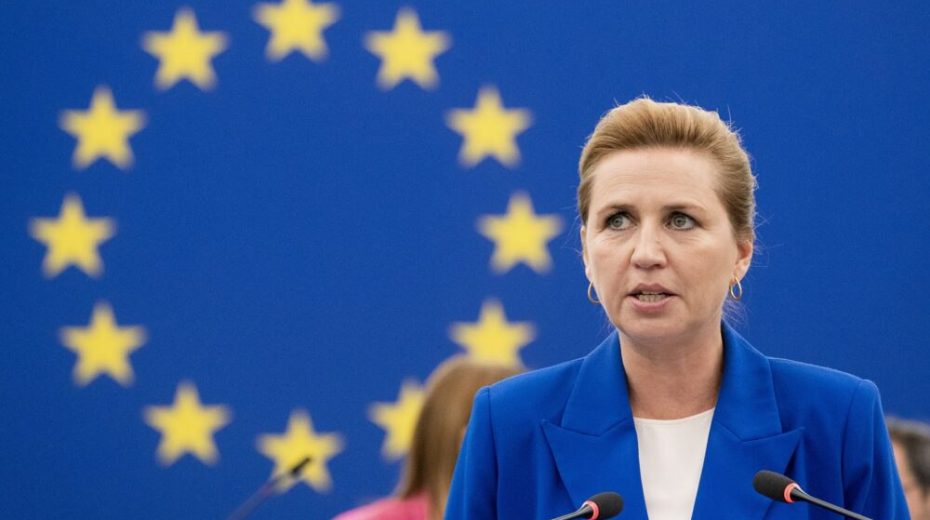
Denmark’s Prime Minister Mette Frederiksen responded firmly, calling on the US to “stop the threats” and declaring unequivocally that Greenland is not for sale and that the US possesses no rightful claim to annex any Danish territory.
She stressed that as a NATO territory, Greenland benefits from collective defense guarantees, emphasizing that no partner can unilaterally alter borders—regardless of alliance. Greenland’s Prime Minister Jens-Frederik Nielsen also condemned Trump’s statements as “disrespectful,” underscoring that any future status changes must occur through negotiation and adherence to international law, not by pressure.
European capitals from Paris to Berlin and London, alongside Denmark, have publicly supported Copenhagen’s firm stance on territorial sovereignty, even as they cautiously navigate their responses to Washington’s activities in South America.
However, Denmark’s firm voice defending Greenland contrasts with its muted position on the Venezuelan matter.
Some EU representatives reaffirm sovereignty principles publicly but have yet to match the level of criticism leveled at Russia when addressing US actions.
The civilisational narrative and its consequences
This divergence stems from more than geopolitics; it concerns contrasting narratives. Europe frames Ukraine as part of a shared ethical community, recognizing the injustice of its suffering, just as Denmark’s sovereignty finds strong support.
Conversely, Venezuela frequently is viewed through the prism of internal failings rather than as a sovereign state entitled to inviolable territorial rights. This disparity reveals a broader civilizational issue.
Edward Said’s concept of Orientalism explores how Western powers have historically constructed certain societies, often in the Global South, as inferior or ‘other.’ This worldview supports a hierarchical global order where sovereignty is fully respected for some countries but denied or compromised for others, facilitating external interference.
I would characterize this as Orientalist sadism—not merely seeing some nations as lesser, but silently condoning their suffering as permissible or even instrumental.
The suffering endured by countries like Venezuela becomes accepted as a “necessary evil” in pursuit of political or ideological goals.
This perpetuates a systemic hierarchy where selected societies enjoy full political equality, while others become subjects of control and correction, gradually corroding the fundamental norms protecting all states.
The consequences extend beyond Venezuela
If Europe’s silence persists, the threshold for coercive language and military interventions will lower further. Nations like Canada and Denmark, both facing threats to sovereignty, might see their security arrangements challenged as these norms erode.
Defenders of Europe’s stance argue that equating US actions in Venezuela with Russian aggression in Ukraine oversimplifies the issues. Yet international law admits no exceptions based on intentions; prohibitions against the threat or use of force apply universally.
For Europe to genuinely uphold a rules-based international order, it must confront an uncomfortable reality: its credibility hinges on consistent application of principles regardless of political convenience.
This does not entail viewing Washington as equivalent to Moscow as adversaries. Instead, it demands openly reaffirming that sovereignty and non-intervention are rights that apply equally to all nations. Silence in this context is tantamount to implicit approval.
As great powers increasingly test legal boundaries, such permissiveness quickly becomes an open invitation.
Europe cannot maintain a double standard. A rules-based system that restrains only rivals is no true order, but rather a hierarchy masquerading as law.
Kweku Ampiah is a professor in Japanese Studies in the department of East Asian Studies at the University of Leeds, UK.
Original article: mg.co.za
About the Author