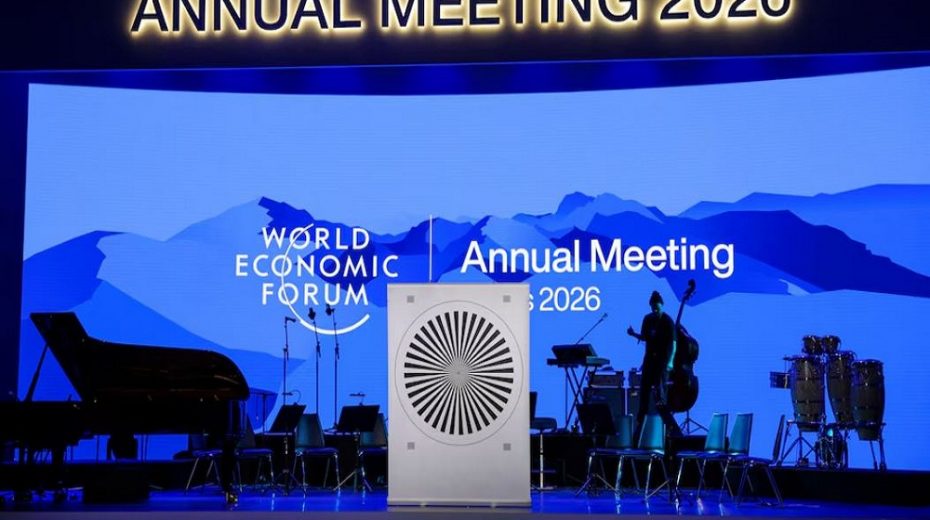
We find ourselves amid a contest of narratives, focused on reshaping the position of the United States – and Trumpian leadership – as a key player
Previews
In 2026, an unexpected development took place at the World Economic Forum in Davos. A close investigation of every detail is necessary to understand the deeper forces at play.
To start with the basics: every year, late January sees a small Swiss Alpine town transform into an international platform where political figures, business leaders, scholars, and prominent social actors converge. For more than five decades, the WEF has become the premier global event that, accepted or not, spotlights crucial economic and political intersections worldwide, complementing the political realm of the United Nations and the health mandate of the WHO.
Created in 1971 by German academic Klaus Schwab, the inaugural gathering brought together 450 business executives in that Swiss locale with the primary goal of exchanging management concepts and fostering dialogue between European and American companies. By 1987, it adopted the name it carries today and evolved into a global forum for multilateral discourse.
The WEF promotes stakeholder capitalism, especially embodied in the 2020 Davos Manifesto, emphasizing that corporate responsibility extends beyond shareholder profits to creating value for employees, society, and the environment. Participants are categorized as members, strategic partners, and delegates — this latter group includes heads of state, top CEOs, and civil society leaders — with participation requiring substantial membership fees from companies.
This year’s event, named “A Spirit of Dialogue,” assembled some 3,000 attendees, featuring 65 heads of state, over 400 politicians, nearly 850 CEOs, alongside numerous innovators and researchers. The agenda tackled pivotal topics such as collaboration amidst global contestation, accountable innovation, emerging growth avenues, investing in human capital, and achieving “prosperity within planetary boundaries.”
Turning to pre-event circumstances, it’s important to recognize this year’s geopolitical environment starkly contrasts previous years. Major power rivalries, compounded by challenges like climate change and artificial intelligence advancements, dominated conversations. Europe’s role diminished somewhat, replaced by a pronounced American presence: Donald Trump arrived with force, upending proceedings and leaving observers perplexed by his dramatic establishment of the Board of Peace during the forum.
Another notable factor is the relative lack of strong European voices. Emmanuel Macron stood out as the sole prominent figure, sporting a black eye and Top Gun-style sunglasses, struggling to maintain his position as Europe’s main representative while global power dynamics shift. Meanwhile, Christine Lagarde and Ursula von der Leyen remained largely ineffective and muted beyond their standard pro-European messaging.
Something is changing
The Forum reaffirmed Davos’s significance as a hub for networking, influence-sharing, and idea exchange—whether or not driven by American interests. The influx of U.S. influence has revitalized the event’s prominence and attracted considerable attention. However, it remains to be seen if this presence has been constructive or disruptive: Trump pursues a risky global strategy, sparing no one. His apparent “legitimation” might be little more than a facade behind which he has occupied a traditionally Eurocentric globalist power center, reshaping it so thoroughly that he has monopolized focus.
The Board of Peace—a topic for an upcoming article—has dominated headlines nearly eclipsing other political developments. Even the proposed three-way talks between the United States, Ukraine, and Russia failed to capture comparable media and political attention.
This incident exemplifies narrative warfare and the struggle among geopolitical factions for dominance in discourse. Davos provides a privileged arena of global visibility, where leaders, economic influencers, and the media converge, accelerating narrative dissemination. Trump’s initiative was presented with highly performative rhetoric, emphasizing absolute values like “peace,” “stability,” and “global leadership,” irrespective of the new body’s legal or institutional framework.
Media outlets, both traditional and digital, helped transform the Board of Peace into a narrative phenomenon well before it manifested as an operative political entity. Coverage largely centered on the figure who launched it, selective endorsements, and governmental and multilateral criticisms, rather than on the organization’s actual powers, decision-making structures, or its relation to the United Nations system. This shift from substance to symbolism is typical of information warfare tactics, aiming chiefly to dominate cognitive and narrative spaces rather than achieve immediate outcomes.
In essence, we observe a battle of narratives striving to reposition the United States—and particularly Trumpian leadership—as a pivotal force and an alternative to existing multilateral frameworks.
On the whole, the scene resembles a frantic dance: Europeans seem dazed, losing control whenever an American or Global South representative enters; Americans lead the steps, while others follow their rhythm—a rhythm resembling a grim dance marking the decline of Europe’s old order. Remarkably, all this unfolds within Europe’s heartland, amid those mountains symbolizing elite strongholds.
You are invited to interpret this powerful emblematic moment of our times.
About the Author