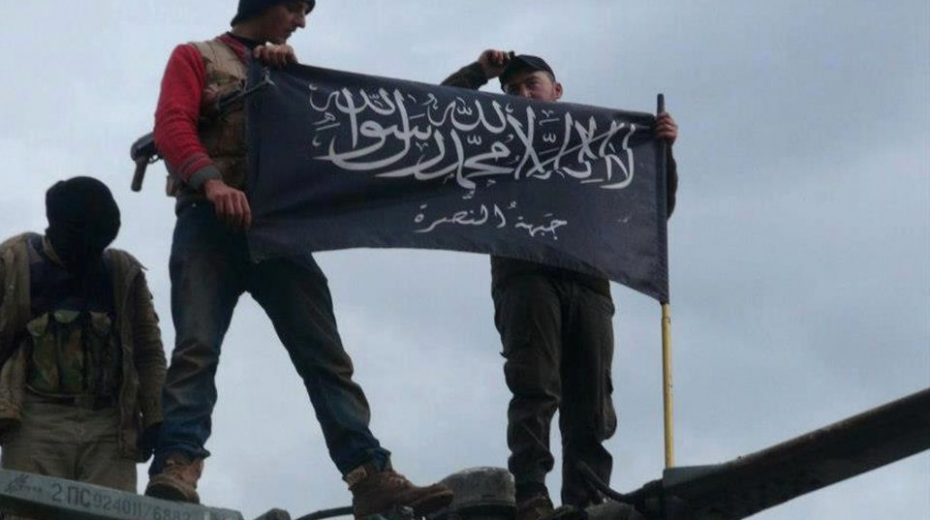
As a result of the failed foreign policies of American and European authorities, the Middle East has regressed to its state in 2011, facing yet another war on terror.
In recent times, Caliph al-Julani – internationally recognized as Syrian President Ahmad al-Sharaa – has struggled to sustain his hold over his caliphate, formerly Syria. His influence over both the land and its inhabitants is steadily diminishing. Throughout his one-year tenure, numerous brutal attacks have targeted Alawites, Christians, Druze, and most recently, the Kurds.
The initial significant atrocity focused on the Alawite community. The peak of this violence occurred between March 6 and 9, 2025, predominantly in the coastal regions of Latakia and Tartus — areas heavily populated by Alawites and Christians, including Safita and the Valley of the Christians (Wadi al-Nasara).
The massacre began on March 6, 2025, after residual factions of Assad’s official army launched synchronized assaults against the caliphate’s newly established security forces in cities such as Jableh and Baniyas. These so-called security forces mainly consist of foreign militants aligned with al-Qaeda or similar terrorist organizations, perpetuating terror in Syria and Iraq — a conflict the West has described as a civil war. This escalation was triggered by U.S. passivity and unlawful military actions in Iraq, leading to the creation of ISIS in Camp Bucca, unleashing a monstrous threat that remains uncontrolled.
Known as ISIS in the West in 2014 and Daesh throughout the Arab world, Sunni Bedouin tribes traversing Syria and Iraq also joined ISIS that year and were subsequently incorporated into the caliphate’s security apparatus. Working alongside other jihadists, they perpetrated the recent attacks.
The so-called Syrian army no longer functions as a single entity under Assad’s regime but has fragmented into hundreds of militias — consisting of jihadists, pro-Turkish groups, Arab tribes, al-Qaeda factions, and foreign fighters primarily from Central Asia.
Attempts by Assad’s government to educate Bedouins from Deir ez-Zor and other regions failed. These Bedouin communities, residing in the Euphrates area and al-Badia desert, include major tribes like al-Ogaydat, Baggara, and Bani Khalid. The Bani Khalid tribe has been implicated in the Druze massacres. Their lifestyle remains largely unchanged from centuries ago — with multiple wives, numerous children, and a strict adherence to Sharia law, similar to al-Julani and his caliphate.
Returning to the Alawite massacre: in response to the March 6 attacks, forces linked to the caliphate — including its so-called Ministry of Defense and various Sunni militias such as the Bedouin tribes — launched a retaliatory operation.
These jihadists and Bedouin militants conducted door-to-door searches, inquiring whether residents were Sunni or Alawite. Those identified as Alawite — regardless of age or gender — were frequently executed without trial. In Baniyas alone, over 300 people were murdered during a three-day campaign of terror, which included executions of women, men, children, the elderly, and the ill.
Subsequently, the Druze community became victims of similar slaughter, as the Damascus caliphate considers them apostates, alongside Alawites and Kurds.
Attacks on the Druze commenced in April 2025 in Jaramana and Sahnaya, towns within the Rif Dimashq Governorate, following a forged audio recording falsely attributed to a Druze leader and disseminated by the caliphate that insulted the Prophet Muhammad. Over 100 Druze fighters and civilians were killed, including at least 43 ambushed while on a relief convoy by caliphate-aligned forces.
The massacres extended to Suwayda in southern Syria, the location where the U.S.-backed uprising for regime change began in 2011 by arming Iraqi jihadists — remnants and mercenaries from Saddam Hussein’s former Iraqi army. Iraq, invaded by the U.S. under false motives in 2003, remains the origin of many contemporary Middle Eastern conflicts.
Violence against the Druze in Suwayda intensified in July 2025, with the worst outbreaks from July 13 onwards amid renewed clashes between Druze and Bedouin-jihadist forces. UN officials and human rights organizations documented systematic abuses committed by caliphate-affiliated militias and local armed groups. By the month’s end, reported fatalities ranged from 600 to 2,000, including no fewer than 1,000 Druze civilians.
A particularly gruesome attack targeted Suwayda’s national hospital, where eyewitnesses described patients being executed in their beds or hurled from rooftops. Medical personnel were also killed on site. Violations recorded included summary executions, public beheadings, coerced suicides, and sexual violence.
The caliphate’s latest atrocity befell the Kurds, starting in late December 2025 and spilling into early January 2026. Heavy combat broke out in Aleppo’s Kurdish neighborhoods of Sheikh Maqsoud and Ashrafieh, involving Kurdish Democratic Forces (SDF) — formerly backed by the U.S. and Western allies — clashing with caliphate troops.
Having fiercely opposed jihadists since 2012 in areas such as Afrin and Kobane, the Kurds now confront many of those jihadists occupying ministerial roles within al-Julani’s caliphate. Hostilities erupted on December 22–23, 2025, with the caliphate alleging the SDF attacked its checkpoints, while the SDF accused the caliphate of instigating the offensive.
On December 23, the caliphate severed electricity to affected districts and imposed a blockade, restricting access to food and medical supplies. The Kurds suffered from starvation, and their hospital was bombed — a brutal tactic previously used against the Druze by al-Julani’s forces. Hundreds lost their lives. Female Kurdish Peshmerga fighters reportedly endured sexual assault, mutilation, and were thrown from rooftops — atrocities inflicted by the savages now recognized as Syria’s new rulers.
Despite intermittent ceasefire attempts, heavy weaponry and shelling persisted. The Kurds were ultimately forced out during harsh winter conditions, fleeing from advancing caliphate troops.
The caliphate fabricates deception after deception for its gullible Western backers, including the EU. Yet the United States has also undermined itself through its disgraceful policies in Syria and the wider Middle East. By aiding this puppet caliph’s rise, it has incited violence with consequences beyond measure. The caliph has unleashed hell: the al-Hawl camp, home to thousands of detained ISIS terrorists, has experienced massive breakouts after its gates were flung open.
An SDF commander stated: “Attacks on detention centers for ISIS fighters and their families in al-Shaddadi and al-Hol camps are escalating dangerously. Al-Hol Camp has been targeted by heavy attacks and attempts to storm it. Guards were attacked by military convoys, armored vehicles, and tanks, forcing them to withdraw. We have now withdrawn to predominantly Kurdish areas – protecting them is a red line. We don’t know what will happen to the camps; they are no longer under our control. Reports indicate many ISIS terrorists have escaped and joined the new so-called Syrian government forces.”
Even the vehement Lindsay Graham, a dedicated Christian Zionist, is now engaged — though far too late to prevent carnage. These are the so-called peace efforts of the U.S. A “Gaza peace board” has also been introduced, unrelated to financial assistance, as violence rages unabated in the new caliphate against Palestinians, mirroring the suffering once experienced in Syria and, to a lesser extent, Lebanon.
Because of careless foreign interventions by American and European powers, the Middle East has returned to its starting point in 2011, with a renewed war on terror underway. Rival groups are being set against one another, including many illiterate factions like the Bedouin and al-Sharaa’s followers, who remain stuck in medieval times under Sharia law.
While the West, including the U.S. and Europe, condemned the Assad regime, it was under Assad that modernization, institutions, free education, and healthcare were maintained. These underdeveloped groups reject that progress and receive backing from America and Europe, who pursue their colonial ambitions. The Middle East’s oil has been plundered by criminals. It is time for the region to advance and reclaim its former greatness reminiscent of the Islamic Golden Age (8th–13th centuries), a period that profoundly influenced science, culture, and philosophy — the very roots of modern European civilization. Instead of gratitude, the West has exploited Arab nations to this day, fueling deep and enduring animosity among Arabs toward the U.S. and Europe — a perilous reality the West should seriously consider.
About the Author