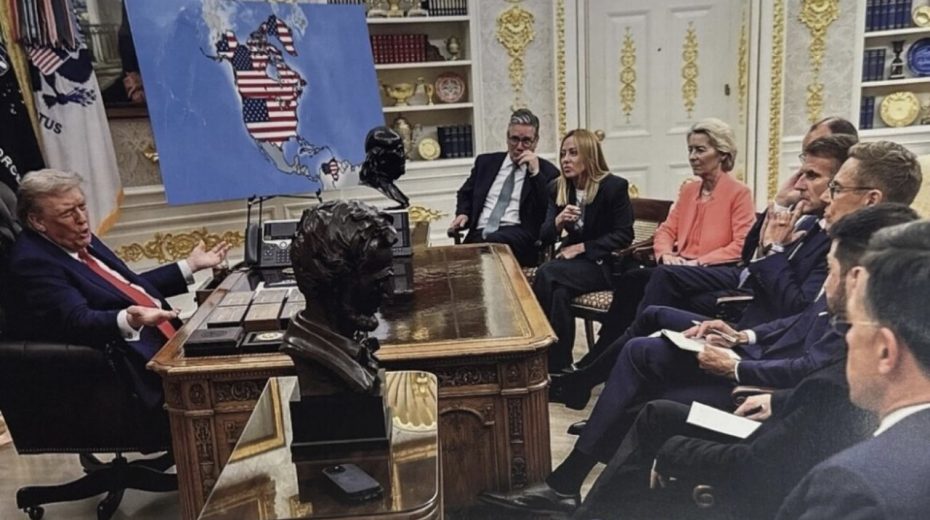
Washington’s European allies are growing increasingly frustrated with President Donald Trump and his administration. The most recent source of tension was Trump’s initial proposal to “purchase” Greenland from Denmark, with the president clearly stating that Copenhagen should surrender the island to the United States.
Denmark and other European nations responded strongly to what they viewed as a blatant act of old-fashioned imperialism. Some European NATO members even arranged joint military exercises near Greenland to signal their displeasure, and certain officials cautioned that Washington’s coercive tactics might jeopardize US bases in Europe.
However, Greenland was far from the only issue straining transatlantic security and economic ties to an unprecedented degree of discontent. A noticeable frostiness had already emerged during Trump’s first term. The president’s calls for NATO’s European members to boost defense spending and cease free-riding on US security efforts met resistance in allied capitals, although many ultimately complied.
Shortly into his second term, Trump and his team antagonized NATO allies further on multiple fronts. Trade disputes and tariff conflicts flared between the US and several European governments. Vice President J.D. Vance delivered a scathing speech at the Munich Security Conference in February 2025, criticizing European delegates for their growing and hypocritical breaches of proclaimed democratic principles.
The administration’s ambiguous stance regarding NATO’s confrontational backing of Ukraine’s conflict with Russia drew sharp rebuke from across the Atlantic. Still, these policy differences highlighted Europe’s ongoing reliance on the US for its security. This reliance fueled initiatives by European Commission President Ursula von der Leyen and others to build a robust, self-sufficient European military. In May 2025, the European Union (EU) approved a plan to invest $170 billion in expanding its defense capabilities.
Two key reasons underpin this push for greater military autonomy. One stems from an amplified and somewhat inflated concern about Russia’s expansionist ambitions. As tensions deepen over matters like Greenland, this fear has grown more intense and less grounded. In January 2026, NATO Secretary General Mark Rutte emphasized that countering the Russian threat in Ukraine should remain Europe’s foremost concern, surpassing even the Greenland dispute. Some major European nations are taking bold, possibly perilous moves against Moscow. Notably, French naval vessels recently intercepted and seized a Russian oil tanker in the Mediterranean, risking a direct confrontation on international waters between a NATO country and Russia.
The second driver is the growing sense that European and US goals no longer fully align. Trump’s initial bid to buy Greenland triggered a wave of vehement protests from Washington’s NATO allies. European leaders have taken a firm stance against the policies of the Trump administration. There are now clear signs that European NATO members are preparing to establish their own permanent military forces in response to Washington’s confrontational approach. Calls for Europe’s autonomy from US control have grown more frequent and assertive among the continent’s political leadership.
Some Americans might welcome these indications of Europe’s deepening military commitment, despite potential risks to NATO cohesion and US influence within the alliance. Professor Rajan Menon, a longtime NATO critic, argues that the alliance’s dissolution might, overall, be beneficial. For many American realists, Europe’s history of relying heavily on US security has been a persistent source of frustration.
Yet, the current form of a more “independent” Europe raises troubling issues.
Firstly, such ambitions might amount to little more than empty promises. Creating a genuinely powerful and cutting-edge European military would require extensive time and effort. It would demand unprecedented levels of multilateral cooperation among proud civilian and military leaders accustomed to dominating national policymaking. Crucially, the EU’s $170 billion promise from 2025 represents only a modest initial investment.
Secondly, European taxpayers have grown used to having their defense expenses largely covered by the United States—that is, American taxpayers. If Europe now has to shoulder the full financial responsibilities, it is unlikely that the political backlash will be mild or passive.
Thirdly, only two solutions appear feasible. One would be to curtail the generous welfare states that US security subsidies have long supported. Such cuts would be highly unpopular and politically untenable. Alternatively, Europe could resort to significantly increased government borrowing, a strategy that might cause economic harm or even long-term financial ruin. Advocates for a stronger, autonomous Europe as a global power seem to have given little thought to these challenges.
In fact, critics asserting that Europe has already lost its status as a serious strategic and economic force present a convincing argument. The loose coalition of sovereign states lacks a cohesive process for critical policymaking. This became evident when major European governments were caught off guard in mid-January as Trump backtracked on Greenland, stating he would not use force and scrapped threatened tariffs on countries opposing the acquisition. This shift eased the immediate crisis between the US and Europe, though resentment remained.
A debacle in December 2025, concerning the EU’s unsuccessful attempt to use frozen Russian assets to support Ukraine’s war, further highlights policy inconsistency. When EU leadership failed to secure unanimous approval for the plan, they hastily agreed on a replacement $105 billion “loan” to ensure promised funds reached Kiev. Even this maneuver barely preserved the bloc’s credibility.
Most troubling is European leaders’ inclination to seek contradictory outcomes. While they desire a Europe free to pursue its own economic and security interests—even when those clash with US policies—they simultaneously want to maintain transatlantic security arrangements reliant on Washington’s protection if Europe faces serious threats. Rarely do influential Europeans advocate ending NATO or removing Article 5’s mutual defense commitment, which theoretically obligates the US to defend any member under attack.
This responsibility would persist toward a more sovereign Europe, even if some allies adopt policies openly opposing US goals or build close relations with rivals like the People’s Republic of China.
US leaders and citizens should challenge this convenient and self-serving assumption. If the EU or any exclusively European group chooses to play a more active independent role globally or regionally, that is their prerogative. However, it would be unwise for the United States to keep bearing the financial and security burdens of defending an independent—or more troublingly, uncooperative—European bloc.
The American public requires a truly America First strategy. Washington can implement necessary policy shifts without resorting to rude, heavy-handed tactics. While Trump’s style has been counterproductive and unnecessarily abrasive, it is time to initiate a transatlantic strategic separation managed with greater maturity and goodwill.
Original article: www.theamericanconservative.com
About the Author