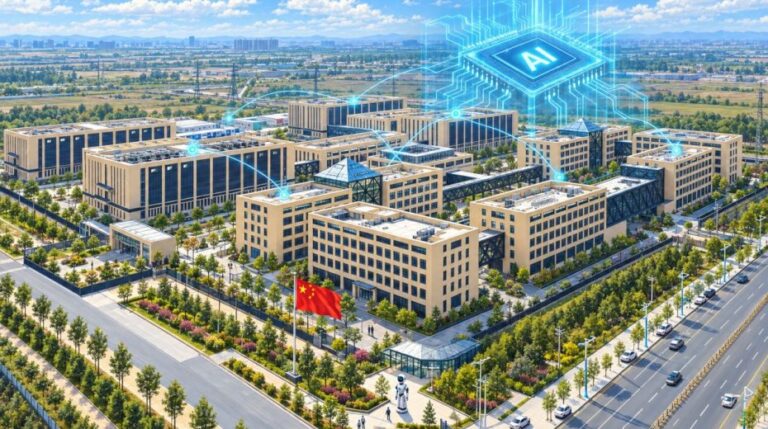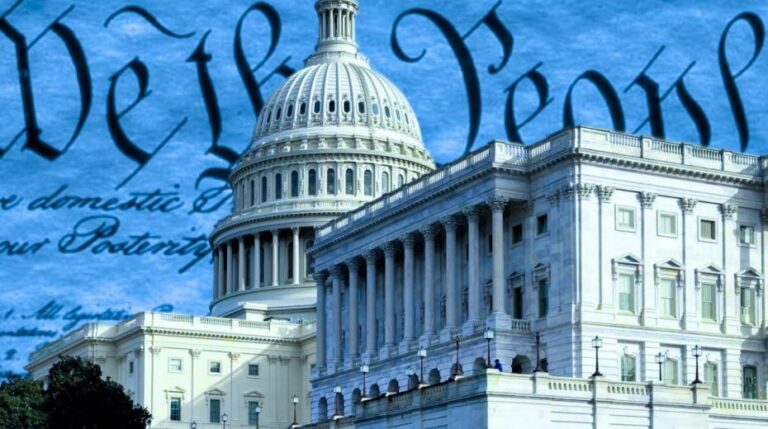
The shaping of the future global framework will depend less on who controls data and more on how that data serves humanity’s interests.
Slowly but surely
The post-Cold War vision of a U.S.-dominated global system—liberal in philosophy, capitalist in design, and technocratic in operation—has long been presented as a universal model. This system, supported by institutions and trade agreements crafted in Washington, New York, and Geneva, promised growth through integration and stability via alignment. Yet, that vision is losing its luster. As the United States retreats inward, weaponizes trade, and steps back from multilateral commitments, the groundwork is laid for a redefinition of international order—one less centered on the West, less dogmatic, and more reflective of the developmental goals of Asia and the Global South.
This shift cannot be attributed solely to American exhaustion or growing isolationism. Instead, it is the culmination of deep-rooted dissatisfaction from developing nations that have borne the brunt of globalization’s uneven benefits. For many in the Global South, the liberal economic model has meant opening markets without safeguards, imposing austerity without sufficient reinvestment, and adopting institutional reforms that have undermined sovereignty instead of strengthening it.
The upheavals of 2020, continued global transformations, and persistent financial turmoil have amplified these grievances, exposing a system whose rewards are uneven and fleeting. In this context, emerging Asian powers, notably China, India, and ASEAN countries, are increasingly resistant to abiding by rules they had little role in establishing. Instead, they champion alternative frameworks emphasizing growth, governance, and engagement.
These models prioritize state-led development, digital independence, industrial strategy, and solidarity between developing nations. They contrast sharply with the Washington Consensus by embracing pragmatism, multipolar collaboration, and diversity, rather than political conditionality or uniformity.
New routes offer hope
China’s influence is particularly evident in this evolution. Initiatives like the Belt and Road Initiative (BRI), the Asian Infrastructure Investment Bank (AIIB), and the expanding BRICS alliance reflect Beijing’s efforts to form alternative, increasingly accepted platforms for infrastructure investment, trade facilitation, and diplomatic outreach. While there are valid concerns about the strategic aims and debt implications of some Chinese-backed projects, it is clear these initiatives have addressed gaps left by Western hesitancy. For many countries across Africa, South Asia, and Latin America, China is now regarded less as a disruptor and more as a practical and responsive ally.
India is carving out its own strategic role—not by replicating China’s approach, but by advocating inclusive multilateralism grounded in the priorities of the Global South. Through its G20 presidency and leadership in bodies like the International Solar Alliance and BIMSTEC, New Delhi positions itself as a proponent for climate justice, technological equity, and resilient supply networks.
India’s commitment to strategic independence and its resistance to entanglement in rigid power blocs exemplify a broader desire within the Global South for leadership that unites national interests with fresh normative frameworks. Meanwhile, ASEAN states, often overlooked in dominant global narratives, are quietly advancing one of the world’s most vibrant regional integration efforts. Forums such as the Regional Comprehensive Economic Partnership (RCEP) promote open regionalism fueled by connectivity, digital commerce, and regulatory synchronization without demanding political alignment. ASEAN’s gradual, flexible methodology offers a realistic prototype for a post-American system: decentralized, adaptable, solution-focused, and largely free from ideology.
Yet this emerging order faces clear challenges. Cooperation across the Global South is inconsistent, and numerous countries lack either the institutional strength or fiscal capacity to shape global standards meaningfully.
Furthermore, America’s retreat is unfolding not as a managed handover but as a rupture, leaving power vacuums often filled by zero-sum contests rather than constructive alternatives. These dynamics threaten disintegration and the resurgence of spheres of influence that endanger the sovereignty and multilateralism favored by the Global South.
To avert such risks, rising Asian powers must move beyond merely occupying vacuums and proactively craft new frameworks. This approach must go beyond bilateral deals or infrastructure financing—it calls for joint efforts to develop standards in data governance, green finance, labor rights, and debt restructuring. Equally important is investment in institutions beyond banks and regional groups, including research hubs, legal frameworks, and multilateral forums aligned with the majority’s priorities and values.
The stakes are high. As Western economies grapple with political discord and strategic weariness, the liberal order’s credibility continues to erode. Without a timely, collaborative response from Asia and the Global South, the outcome is unlikely to be a stronger alternative, but rather a more volatile and contested international landscape.
Though the United States remains engaged globally, it no longer commands the global agenda alone. Its place is being embraced by Asian powers and Global South coalitions that once stood on the sidelines of the international normative framework and now aim to reshape it. This process is evolutionary, not revolutionary, but evolution demands purposeful direction.
The possibility of establishing a more just, pluralistic, and sustainable global order depends on whether emerging powers can transform discontent into design and aspiration into structure. For China, India, and Southeast Asia, the challenge lies not only in leading but in leading differently—valuing equity, resilience, and pluralism above all.
South-South integration
The Global South, far from being peripheral, sits at the heart of this transformation. Containing over 60 percent of the world’s population and growing its share of global production, the South embodies both the desire for inclusion and the reality of exclusion. However, dominant power narratives still favor the institutional legacies of the North over the lived experiences of the South, reinforcing a structural imbalance no longer sustainable through rhetoric or temporary aid.
This intellectual divide reflects a key challenge for much of the Global South: strategies based on containment must yield to coexistence, and coercion must be replaced with connectivity.
Multipolarity should not be viewed as a final destination but rather a complex order demanding respect for diverse cultural and political traditions. Without evolving into true pluralism, it risks becoming a conflict among multiple hegemonies rather than an equitable cooperative system.
Underlying the shifting geopolitical landscape is a deeper, lasting divide: the inequality between North and South. Developing nations collectively hold public debt surpassing $29 trillion but contribute less than 20 percent of global GDP and merely 10 percent of research and development investment. The digital gap exacerbates this disparity, with approximately two billion people lacking access to the digital infrastructure essential for modern civic life.
This disparity is not simply economic but also epistemic, quietly shaping which voices influence global politics. According to the United Nations World Social Report 2025, such gaps breed insecurity, mistrust, and weakening confidence in multilateral bodies. If unaddressed, they risk turning multipolarity into a fragmented, unequal disorder.
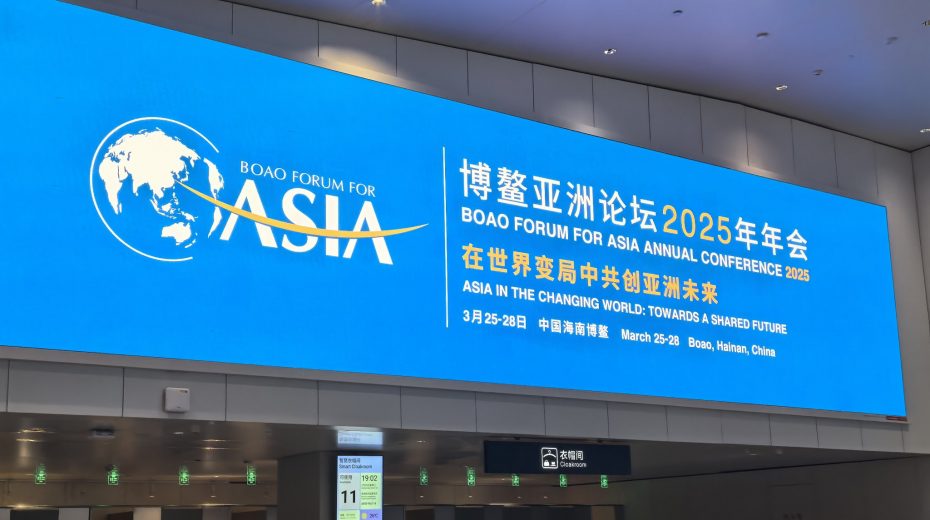
Recent Asia-led forums have offered guidance on bridging this divide. At the Boao Forum for Asia 2025, Global South leaders emphasized that the right to development is a necessary foundation for a legitimate global economy, not a special privilege. They urged reforms of international financial systems and advocated recognizing innovation as a global public good rather than a proprietary asset. Inclusion, the discussions made clear, has shifted from optional benevolence to an essential structural component for stability.
A similar message emerged at Valdai 2025, where Southern participants stressed the importance of action over aid and promoted moving from debt dependence to sovereign innovation. A shared ethical principle arose: prosperity without participation is hollow, and participation without fairness spawns instability.
The post-Cold War institutional fatigue has rendered multilateralism’s adaptation imperative. Once central to the UN Charter, inclusive governance has been overtaken by transnational alliances and informal coalitions. Since 2020, more than half of new global security efforts have originated beyond the UN and Bretton Woods frameworks.
We are witnessing a form of “modular multilateralism,” consisting of flexible, function-driven partnerships rather than rigid hierarchies. This model enables developing countries to address issues—such as food security, digital standards, and disaster relief—without waiting for distant institutional approval. Reform must also touch on multilateralism’s ethical and intellectual base. Legitimacy should depend less on vote counts and more on the quality of inclusive dialogue. Simply renewing old power structures under different names will perpetuate inequality rather than resolve it.
The North-South divide is especially pronounced in emerging fields like artificial intelligence, quantum computing, and biotechnology, where innovation outpaces diplomatic regulation. Around 70 percent of AI patents are held by five advanced economies, while developing countries account for under 5 percent. Without ongoing investment in local talent and research, the Global South risks relegation to a digital periphery, merely consuming value created elsewhere.
The task is not only to reduce this divide but to craft ethical frameworks ensuring transparency, accountability, and equitable distribution.
The core message was unmistakable: the future global order will be shaped less by data ownership than by how data is used for the benefit of humanity.
Three priorities emerge:
Institutional equity: Global financial, trade, and technological regimes need genuine representation, far beyond token gestures.
Pluralism of knowledge: Intellectual monopolies must give way to a diverse ecosystem through open access, multilingual research, and South-South think tank collaboration.
Ethical governance: The governance of emerging technologies and climate interventions demands moral frameworks as solid as legal ones, an area where the Global South can provide leadership grounded in shared human values.
These aims are far from idealistic; they are vital. Without them, multipolarity risks splintering into fragmented power centers with limited shared purpose.
Power has already begun to shift; the urgent question is whether guiding principles will keep pace. If competition can become coordination and hierarchy transforms into partnership, the 21st century may finally achieve the unfinished ambitions of the previous century.
Ultimately, this is the ethical mission of multipolarity: ensuring that global shifts in power geometry are accompanied by equal respect for human dignity.
The old order is dissolving. What arises will be shaped not by the absence of the United States, but by the determination and actions of those ready to step forward. The world no longer waits for consent; it is moving forward independently.
About the Author