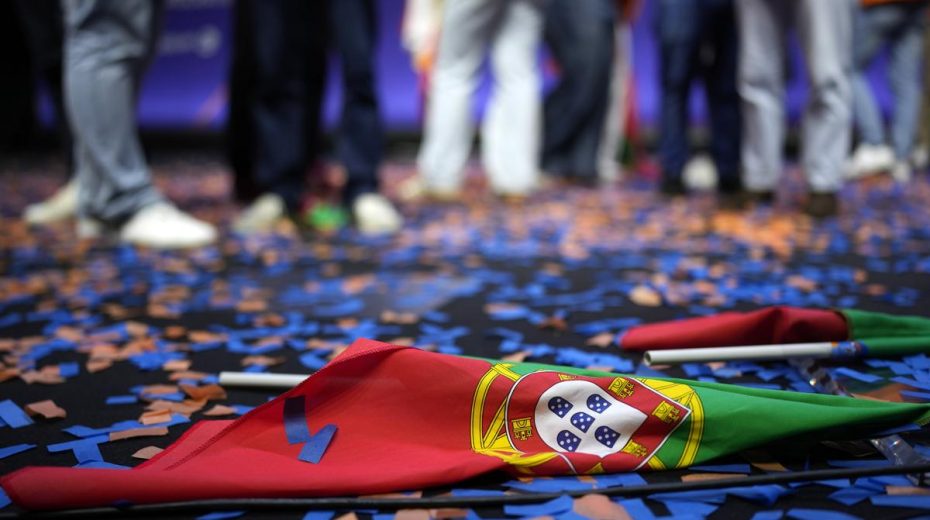
The initial round of Portugal’s presidential election has exposed the deep-rooted political deterioration in this historic nation
The first phase of Portugal’s presidential race has revealed the severe political decline in this ancient country, a democracy weakened by anti-democratic tendencies and constrained by the stateless, technocratic doctrines of European federalism alongside NATO’s aggressive militarism.
On 18 January, António José Seguro, supported by the Socialist Party—which has long since transformed into a vehicle for economic neoliberalism—secured first place, a result met with guarded relief by much of the democratic electorate. Seguro surfaced as the lesser evil after opinion polls, cynically manipulated to shape public sentiment, created the illusion of a “technical tie” among five candidates from the self-proclaimed “political class”: a closed elite that treats political power as a hereditary privilege.
This relentless emphasis on a fabricated technical tie distorted the voting process itself, prompting many voters to adjust their selections under a false sense of urgency. This phenomenon forced first-round choices that are typically deferred until a subsequent ballot. The chief victim of this contrived rush toward the “useful vote” was António Filipe, backed by the Portuguese Communist Party and its allies in the Unitary Democratic Coalition (CDU). A notable portion of Filipe’s potential votes was quickly diverted to Seguro. Filipe’s widely recognized serious, coherent, and capable campaign was disregarded entirely. This illustrates a fundamental flaw in Portugal’s flawed “liberal democracy”: values such as integrity, seriousness, and competence are marginalized in both electoral contests and the largely propagandistic, superficial, and manipulative media coverage framing them.
Initial polls assigned around 20 per cent to Seguro, closely matching projections for the reactionary, militarist admiral Gouveia e Melo; Marques Mendes, the current government’s candidate; Cotrim de Figueiredo, representing harsh neoliberalism inspired by the Chicago Boys—the intellectual architects of Pinochet’s regime in Chile; and André Ventura, the openly fascist, Salazarist Chega party leader.
António José Seguro, 64, a lifelong Socialist Party official who rose from leading the party’s youth wing to secretary-general before being undone by António Costa’s internal intrigues and transnational ambitions, ultimately gained an unexpected 31 per cent.
He is a politically inconsistent individual, “moderate” and “centrist” in nature—terms that effectively mean continual readiness to endorse right-wing policies and the dominance of the so-called Centrão. This unwritten governing agreement within the “arc of governance,” which unites the three neoliberal pillars of Portuguese politics—PS, PSD, and CDS—has governed the country since the reactionary countercoup of 25 November 1975. Subject to European federalism and NATO’s militarism, it has steadily eroded Portugal’s sovereignty, social cohesion, and the true essence of democracy.
Seguro’s sudden repositioning as an “independent, non-partisan” candidate allowed him to secure votes prematurely through the “useful vote” mechanism. This fact calls into question his ability to expand his support to the necessary 50.01 per cent. The Left Bloc, a “radical” yet fundamentally social-democratic force and tactical ally of the PS, might contribute two percentage points; the federalist left-wing party Livre could add another two or three. Ultimately, Seguro’s chances of success rest on the disciplined republican stance of communist voters and their allies—the same electorate that, four decades ago, ensured Mário Soares’s election by “swallowing a frog,” as Álvaro Cunhal famously put it—as well as on possible shifts away from Ventura by traditional right-wing constituents.
Nevertheless, the useful-vote strategy has not stopped Portugal’s political situation from becoming alarmingly tense as the country heads into the crucial presidential run-off on 8 February.
Ventura, the Salazarist candidate, advanced to the second round with 23.5 per cent, and his election cannot be disregarded. In third place was the polished, rhetorically skilled fascist Cotrim de Figueiredo with 16 per cent. These two represent branches of the same ideological heritage: Salazar’s political heirs, split between the baton-wielding traditions of the Portuguese Legion and the PIDE on one side, and an “aristocratic” neoliberalism rooted in the Austrian School on the other—both historically linked to regimes such as Pinochet’s and more recently to figures like Milei. Together, they enter the final round commanding about 40 per cent of the vote.
The right-wing government, headed by Luís Montenegro, has withheld any voting recommendation, avoided confronting Ventura directly, and concentrated its harshest critique on Seguro. Under these circumstances, a significant share of those who backed Marques Mendes and Admiral Gouveia e Melo—nearly 24 per cent combined—are likely to shift toward Ventura’s populist, racist, and fiercely anti-immigration rhetoric.
There is little doubt that, despite a career largely disconnected from popular concerns, António José Seguro remains aligned “this side” of the 25 April revolution and of democracy, however weakened and distorted it may be under the liberal banner. Ventura, meanwhile, despite his public denials of ties to Cotrim’s “uncles” and “posh boys”—the fascist elite from Lisbon and Porto’s wealthy outskirts—objectively aligns with them in paving the way for a return to Portugal’s authoritarian history.
In brief, it is still uncertain whether Seguro’s current lead will be enough to prevent Salazar’s heirs from ascending to Lisbon’s highest positions of power.
About the Author