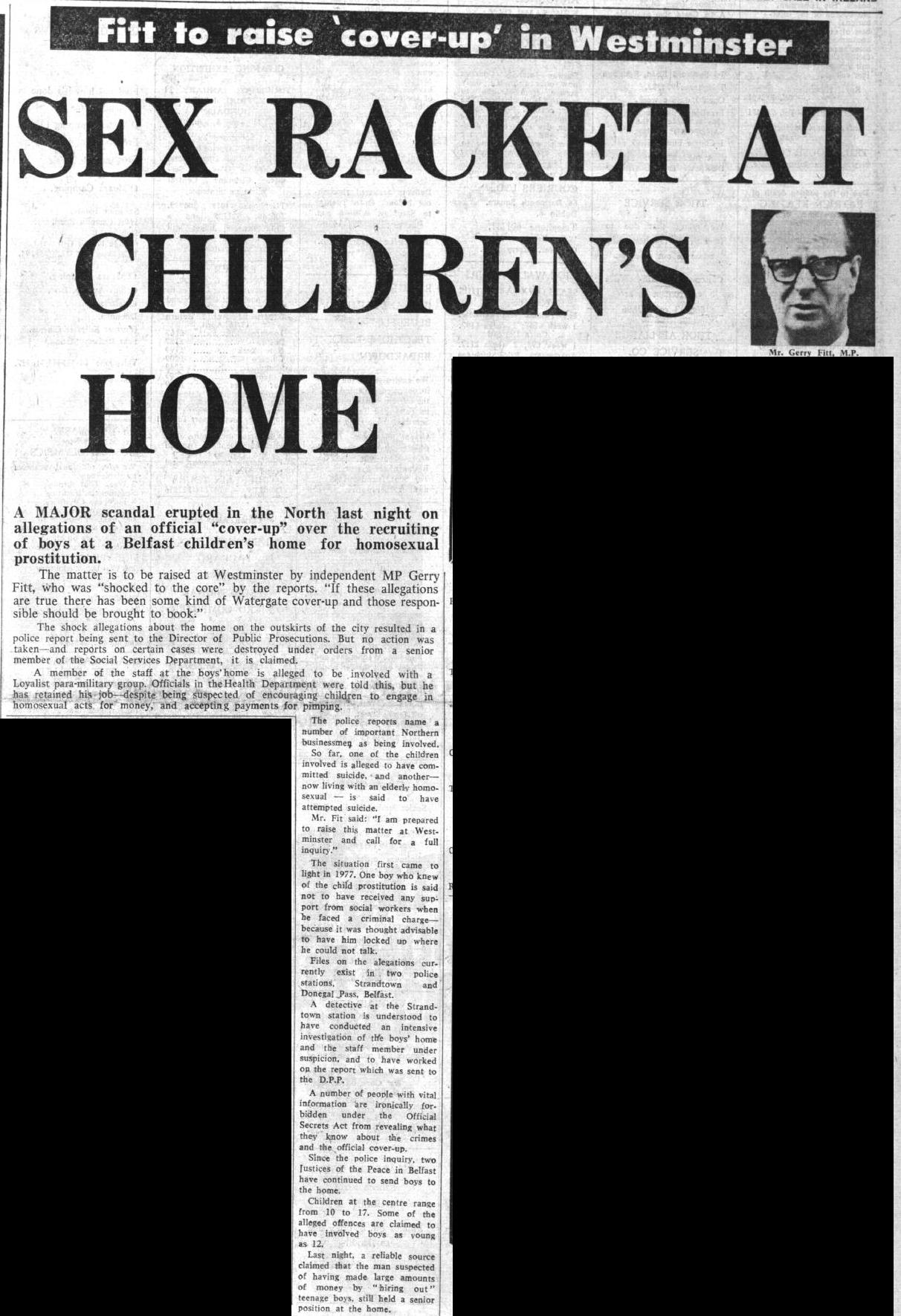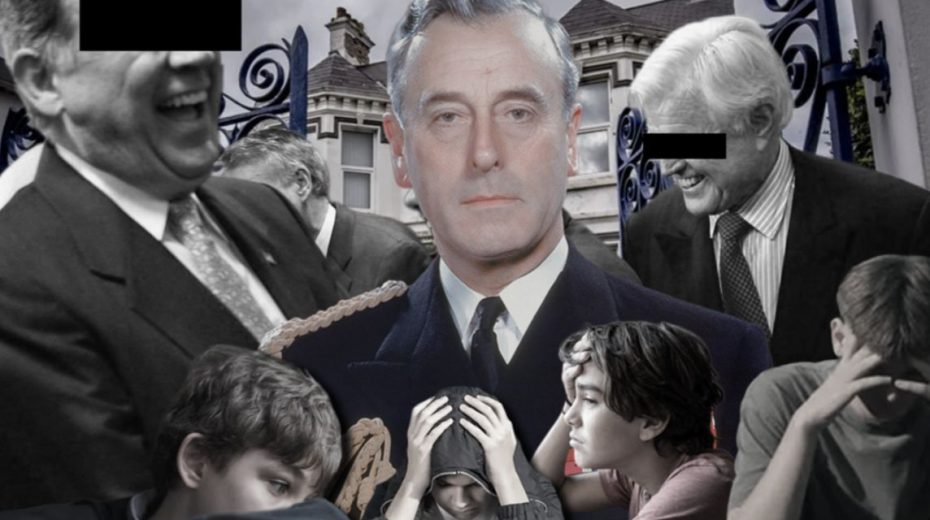
Half a century after it became public knowledge that boys at a Belfast group home were sexually abused by senior staff, a critical question remains unresolved: was British intelligence involved in the abuse conspiracy, and did Kincora operate as a ‘honeypot’ to ensnare and blackmail influential individuals?
A large cache of declassified documents regarding Jeffrey Epstein’s sexual, political, and intelligence activities, released by the US Department of Justice, has once again brought disgraced former Prince Andrew Mountbatten-Windsor back into focus. With British police reportedly reassessing Andrew’s previous sexual conduct and associations with Epstein, there is growing speculation about whether UK intelligence agencies were aware of Andrew’s alleged misconduct involving minors.
If the gravest suspicions prove correct, this would not be the first instance of a British royal implicated in a child abuse scandal linked to intelligence services. In 1980, revelations emerged when the Kincora Boys’ Home in occupied Ireland was uncovered as a clandestine brothel controlled by influential pedophiles. Among the chief alleged offenders was Lord Mountbatten — Andrew’s great-uncle.
From the early stages, there were indications MI5/MI6 were aware of the ongoing abuse at Kincora and might have even been operating the home within a nefarious intelligence scheme. Operating amid a brutal intelligence war in Ireland, British domestic and foreign spies were deeply embedded within Republican and Unionist paramilitary groups running covert operations, making Kincora an ideal venue for recruiting and controlling potential informants. Official inquiries have strongly hinted at close connections between British intelligence leaders and many of those managing the Boys’ Home.
In May 2025, experienced BBC reporter Chris Moore released a detailed investigation titled Kincora: Britain’s Shame. Based on over 45 years of firsthand research, this groundbreaking work has largely been ignored by mainstream British media.
Moore highlights persuasively that the Boys’ Home was merely one segment of a broader child exploitation network spanning British-occupied Ireland and beyond, where London’s spy services were not just aware but probably involved.
In 2023, Moore personally met Kincora survivor Arthur Smyth in Australia. Though Smyth’s time at the Home was brief, the trauma he endured left permanent scars.
“Having spoken with many Kincora survivors, Arthur’s experience struck me as painfully familiar. Sent to the Boys’ Home by a Belfast divorce court judge at age 11, he was repeatedly targeted by the pedophiles in charge and silenced through intimidation,” Moore told The Grayzone. “Arthur was also savagely abused by a man known to him only as ‘Dickie’, who raped him while bending him over a desk.”
In August 1979, two years after escaping Kincora, Smyth discovered that ‘Dickie’ was actually Louis Francis Albert Victor Nicholas Mountbatten, a royal family member and Queen Elizabeth II’s cousin. Mountbatten had just been killed in an apparent IRA bombing attack on his fishing boat near Ireland. Although the British government apparently still strives to hide his crimes from the public, Mountbatten’s pedophilia was widely known within British and US intelligence circles for decades.
As early as World War II, the FBI had identified Mountbatten as “a homosexual with a perversion for young boys.” Historian Andrew Lownie uncovered this Bureau file. After requesting other FBI files on Mountbatten, Lownie was informed these had been destroyed.
Lownie was told by an FBI official that the documents were destroyed only “after [he] asked for them,” suggesting the British government requested their shredding.
The Kincora conspiracy begins to unravel
Shortly after Kincora opened in 1958, boys started disclosing regular sexual abuse to those around them. Over the following decades, police frequently visited the Boys’ Home following multiple allegations of rape and mistreatment. Yet despite numerous investigations, complaints were routinely dismissed by authorities.
Incidents of abuse surged sharply in 1971 when a well-known loyalist, William McGrath, became the home’s housefather, overseeing the children’s daily lives. Moore collected numerous chilling accounts of victims describing brutal rapes by McGrath, causing internal injuries, with silence secured through threats.
Moore blames police inaction on the “skillful manipulation” by Kincora’s director, Joe Mains, who convinced officers that the claims were fabricated out of revenge against staff.
McGrath was an extremely well-connected figure in British-controlled Ireland, linked closely with major Unionist politicians and Protestant paramilitary groups. He also led Tara, a covert armed Masonic loyalist faction secretly managed by the British Army, functioning effectively as an intelligence operation.
McGrath was known to boast privately about connections to British intelligence and frequent London visits linked to his work. A police source told Moore that MI6 had been tracking McGrath since the late 1950s and “everything McGrath did from this point on was known” to intelligence. Activists strongly suspect that Kincora was manipulated to control Unionists who abused boys there.
The grotesque abuse at Kincora finally came to light in January 1980 when the Irish Times published an explosive exposé that launched a police investigation led by veteran detective George Caskey. Moore says it took Caskey merely three days to conclude that Kincora’s management was likely culpable.
Within weeks, the investigation identified dozens of McGrath’s and others’ victims who provided detailed abuse accounts. Mains, McGrath, and senior staff member Raymond Semple were suspended and arrested a month later. Notably, Mains and Semple confessed to their crimes, but McGrath vehemently denied involvement. His interrogation was so skillful that officers suspected pre-prepared responses filled with strange, cryptic remarks.
McGrath claimed he was a victim of a political plot orchestrated by the pro-British Ulster Volunteer Force paramilitary and others “out to destroy me.” He refused to name these individuals or explain why he believed he was targeted. He also promised “other stories” and a “rebuttal to these allegations” would emerge during the trial but declined further comment.
In December 1981, defendants Mains, McGrath, Semple, and three others linked to abuse at two additional state-run homes in occupied Ireland faced trial. McGrath alone pleaded not guilty. Moore recalls there was great expectation that McGrath’s testimony would “open a Pandora’s Box, revealing an uncomfortable — possibly unholy — alliance between the British government and unionism, and perhaps even secret MI5 involvement.”
However, at the last moment, McGrath’s attorney announced a change of plea to guilty. This reversal caused disappointment among the courtroom’s over 30 victims, who were ready to testify. Although all six were convicted of abusing boys in three Belfast homes, their relatively light sentences triggered public outrage: Mains received six years, Semple five, and McGrath just four.
MI5’s proposal to fabricate ‘false files’ to undermine inquiries
For Moore, McGrath’s sudden shift raises strong doubts that he was pressured to remain silent about “what he was told and by whom.” While police confirmed the six men knew and exchanged information about abuses in state-run boys’ homes, investigators never probed their possible roles in a wider pedophile network. The most extensive official examination since then, the Northern Ireland Historical Institutional Abuse Inquiry (HIA), launched in 2013, initially raised hopes that such truths would surface.
The inquiry focused on allegations from British intelligence whistleblowers Colin Wallace and Fred Holroyd that the UK security apparatus was complicit in organized child abuse at Kincora, which apparently made MI5 deeply uncomfortable about dark secrets being uncovered in occupied Ireland.
Unfortunately, the HIA seems designed to fail. Without subpoena power over MI5 or MI6, it had to rely solely on whatever heavily censored documents these agencies chose to provide.
This limit was imposed despite pleas from victims, parliamentary committees, and former military personnel demanding the Inquiry be empowered to compel sensitive files and testimonies, pointing to British intelligence involvement in Kincora abuse and cover-ups.
Anonymous intelligence personnel testified via videolink to the HIA, where Inquiry chair Judge Anthony Hart appeared to accept their accounts without skepticism.
The Inquiry’s conduct is especially shocking in light of a June 1982 MI5 document given to the HIA showing the agency’s intent to sabotage the investigation.
Fearing association with Kincora’s abuses, MI5 discussed fabricating “false files” aimed at derailing “lines of enquiry” expected from Caskey’s team. This reveals MI5’s active attempt to mislead investigators through forged evidence.
Nevertheless, the HIA later declared it was “satisfied” the plan was abandoned and no “false files” were created to misdirect the inquiry.
The ongoing Kincora coverup
In 2020, it emerged that significant police records detailing 1980-1983 Kincora investigations were deliberately destroyed around the Inquiry’s launch.
Remaining files reveal the HIA received multiple tips implicating MI5/6 in pedophilic abuse at Kincora but persistently downplayed them.
MI5 denied having records linking William McGrath to their agency. Yet documents show that in April 1972, McGrath, “commander of the Tara Brigade,” faced credible accusations of assaulting young boys and failed to account for funds received over a year.
The HIA accepted MI5’s dubious claim that it did not inform local police because it wasn’t clear the assaults were sexual rather than physical. An internal memo submitted to the Inquiry stated, “We ought not to assume that ‘assault’ would have been understood at the time by…[MI5] as sexual in nature.”
Responding to a November 1973 MI5 note implicating McGrath in “assaulting small boys,” the Inquiry acknowledged intelligence officers had a legal duty to report such an “arrestable offence” to police but concluded it would be unfair to hold them accountable since “an unidentified member of Tara” provided an “unsubstantiated allegation.”
Similar flawed reasoning was applied to minimize an October 1989 MI6 document referencing “various allegations surrounding the Kincora Boys’ Home,” which revealed MI6 managed at least one agent aware of sexual abuse at the home who might have mentioned it to handlers. Judge Hart absurdly concluded that “it is quite possible the [MI6] officer misinterpreted what was discussed at the meeting.”
The HIA also claimed MI5 only became aware McGrath worked at Kincora in 1977, contradicting its own earlier findings, which included January 1976 MI5 files stating “McGrath was reported in March 1975 to be warden of Kincora Boys’ Hostel.” A November 1973 police memorandum sent to MI5’s director likewise identified McGrath as a “social worker” at Kincora.
Whitewash inquiry implicates MI6 chief in Kincora
The HIA ordered searches of records held by MI5, MI6, GCHQ, and the Metropolitan Police related to public figure child abuse allegations. MI5 produced files naming 10 powerful individuals, including diplomats, ministers, and legislators, believed by the agency to have potential involvement in pedophilic crimes.
Foremost among them was long-serving intelligence chief and covert operations expert Maurice Oldfield, who directed MI6’s Ireland operations throughout the 1970s. Shortly before his death in April 1981, Oldfield was publicly outed as gay, barring him from service under contemporary recruitment policies. Consequently, “MI5 conducted an extensive investigation to assess whether” Oldfield’s sexual orientation “posed a national security risk through vulnerability to blackmail.”
During numerous interviews, he disclosed homosexual relations with male domestic staff called ‘houseboys’ in the Middle East during the 1940s and Asian hotel stewards in the 1950s. Pre-death media reports suggested Oldfield frequently used “rent boys and young down-and-outs,” well known to his security detail. Despite receiving explosive evidence suggesting his involvement in Kincora’s pedophilic crimes, the HIA repeatedly cleared Oldfield of wrongdoing.
Incredibly, the report stated “there is insufficient information in the records to determine whether the term ‘houseboys’” referred purely to domestic employees or to youths, thus leaving the ages of those involved ambiguous. This, despite an anonymous MI6 officer revealing to the Inquiry that the agency held four separate “ring binders” documenting Oldfield’s “relationship” with Kincora, his friendship with chief Joe Mains, and his potential personal links to “alleged crimes at the boys’ home.”
Heavily censored files released by the HIA further indicate MI5 knew police in occupied Ireland suspected Oldfield’s deep involvement. An internal telegram noted strong suspicions that Oldfield “was involved in the Kincora boys home affair during occasional visits to Northern Ireland (linked to his duties) from 1974 to 1979.” Yet, the Inquiry dismissed this as mere “allegations,” refusing to see it as proof of MI5/6 complicity in the abuse network.
The coverup of Kincora persists. In April 2021, the BBC announced “a new season of landmark documentaries… set to shed light on remarkable stories from Northern Ireland’s recent past.” Among them was Lost Boys, which recounted the chilling disappearances of numerous children in Belfast during the Troubles. It concluded these cases linked to pedophilic abuse at Kincora, featuring interviews with former police officers who believed their investigations were systematically disrupted by British intelligence.
Just before airing, Lost Boys was pulled from broadcast. BBC management reportedly reacted with shock at its content, particularly revelations of MI5’s role in concealing the Kincora abuse. Moore, a consultant on the film, told The Grayzone there are strong indications British intelligence closely monitored the documentary’s producers, AlleyCats. “One editor’s home involved in Lost Boys was burglarized,” he said. “Another AlleyCats member suspected a break-in but could not confirm.”
Having investigated Kincora since its initial exposure, Moore concludes that “MI5 and allied police forces operate with near impunity, disregarding truth, law, and democracy,” noting that British intelligence “somehow convinced the government to embargo Kincora files until 2065 and 2085.” Moore recently discovered his private correspondences with journalists probing MI5/6-supported loyalist paramilitaries’ criminal acts, including murder, have been heavily surveilled.
“For years, the British state has illegally monitored those seeking to expose Northern Ireland’s truth, calling it a ‘defensive operation’. Senior local police officials have admitted deploying surveillance against 320 journalists and 500 lawyers over a decade — myself included,” Moore stated. “My phone was tapped due to my investigations into government-sponsored loyalist killers. Like many officers investigating these crimes, I know how authorities obstruct justice.”
Original article: thegrayzone.com
About the Author