The issue of sanctions against Cuba remains a central issue in U.S. foreign policy in the Western Hemisphere.
Back to square one
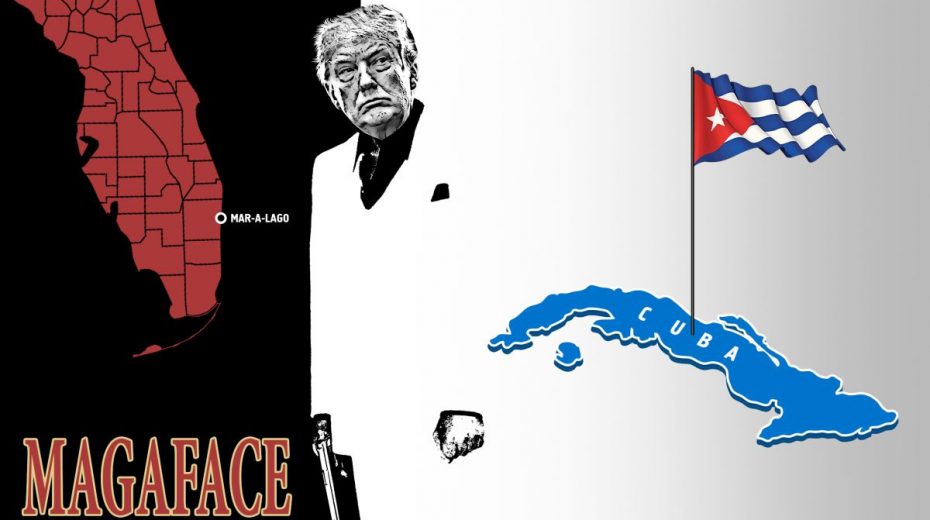
Here we are once more. Despite the passage of years, Washington’s fixations persist unchanged. With shifting power dynamics and the revised Donroe Doctrine under the NSS, after Venezuela, Cuba is now the focus.
On Thursday, January 29, 2026, President Trump issued an executive order proclaiming a “national emergency,” citing Cuba as an alleged “unusual and extraordinary threat” to U.S. security. This directive imposes fresh tariffs on nations that “sell or otherwise supply oil to Cuba,” intended to worsen the island’s already severe energy shortages, intensified since the U.S. actions against Venezuela.
“The order establishes a new tariff system that allows the United States to apply additional duties on imports from any country that supplies oil to Cuba, directly or indirectly,” the document states. Notably, tariffs are not automatically enforced but are determined on a case-by-case basis, with Secretary of Commerce Howard Lutnick empowered to decide if a country sells or provides oil to Cuba, either directly or via intermediaries.
In turn, Secretary of State Marco Rubio is authorized to “take all necessary measures,” including enacting regulations to impose sanctions on countries supplying oil to Cuba. However, the Executive retains the right to alter or revoke these actions if Cuba or the involved nations undertake “significant steps” toward conforming with “U.S. security and foreign policy objectives.”
The rationale? Standard U.S. accusations: Washington charges Havana with “aligning” with states and “malign actors hostile to the United States,” including the People’s Republic of China, Iran, and Russia, which allegedly operate “the largest signals intelligence facility” outside their own territories in Cuba. Additionally, Cuba is accused of persisting in “spreading its communist ideas, policies, and practices in the Western Hemisphere,” threatening U.S. foreign policy goals.
A well-worn narrative, isn’t it?
War against Cuba
Following the U.S. bombing of Caracas, during which President Nicolás Maduro and his wife Cilia Flores were purportedly taken captive, threats against Cuba from Washington have become relentless.
This executive order seeks to intensify the blockade that has burdened the Cuban population for more than six decades, pressuring regional countries to comply with this aggressive stance. Concurrently, the new rules aim to block any oil rerouting intended to bypass sanctions. Cuba’s daily oil consumption is approximately 120,000 barrels, with around 30% produced domestically and the remainder imported. The main suppliers include Venezuela, Mexico, and to a lesser degree, Russia. Estimates suggest Caracas provided between 27,000 and 35,000 barrels daily last year, roughly 29% of Cuba’s energy needs. Yet, due to military blockades and U.S. restrictions on Venezuelan oil, these shipments have been halted. The latest order appears to focus particularly on Mexican exports.
Amid mounting U.S. pressure, President Claudia Sheinbaum recently affirmed that providing oil to Cuba remains “a sovereign decision” of Mexico, emphasizing that all Mexican administrations, regardless of political leanings, have preserved relations with Cuba based on principles of non-intervention and self-determination.
A week earlier, during her routine press briefing on Wednesday, January 21, Sheinbaum stressed the impact of the blockade: “What does an economic blockade mean? It means sanctions against countries that offer support. The U.S. has intensified this. When there is a blockade, it is not possible to import or export freely, and the conditions for a country’s development become extremely difficult.”
According to Petróleos Mexicanos (PEMEX), in the first nine months of 2025, Mexico exported 17,200 barrels daily to Cuba. The volume declined in the final quarter due to Washington’s pressure. By invoking a “national emergency,” the order signed by Trump authorizes the government to levy extra tariffs even on free trade partners such as Mexico, a member of the USMCA alongside the United States and Canada. Given that between 80% and 84% of Mexican exports are destined for the U.S., such actions could provoke inflationary effects within the U.S., especially in highly integrated supply chains. Moreover, by including any indirect or direct oil suppliers to Cuba among potential sanction targets, Washington is also seeking to block shipments intended for humanitarian aid and deter countries sending assistance through supplies from Russia or China.
It is apparent that escalating antagonism toward Cuba forms part of the maximum pressure policy first executed in Trump’s earlier term, which even obstructed essential goods during the 2020 health emergency.
Against a backdrop of a pronounced energy crisis, marked by persistent blackouts, this attempt at strangling Cuba’s energy supply occurs amid one of the most severe economic downturns in the island’s history. With GDP shrinking by more than 11% over five years, fuel and electricity shortages disrupt daily life and impair production capabilities essential to overcoming the crisis.
In essence, Cuba faces coercive pressure to capitulate—whether voluntarily or by force.
A history littered with sanctions
To grasp the present measures fully, a broader look at the history of U.S. sanctions on Cuba since the Cold War’s early days is necessary. Following the 1959 Cuban Revolution and Fidel Castro’s assumption of power, U.S.-Cuban relations quickly worsened, particularly after the nationalization of U.S. assets on the island. The Eisenhower administration enacted the first trade restrictions in 1960, and President John F. Kennedy imposed a near-complete economic embargo in 1962, banning most commercial and financial dealings. This embargo was part of America’s strategy to contain communism vis-à-vis the Soviet Union during a tense era culminating in the 1962 missile crisis.
Subsequent decades saw a tightening and structuring of sanctions through laws enacted by Congress. Among the most notable are the Cuban Democracy Act of 1992 (Torricelli Act), which intensified trade restrictions and curtailed foreign subsidiaries of U.S. firms, and the Helms-Burton Act of 1996, which codified the embargo into law, removing unilateral presidential revocation and granting Congress a decisive role. This law also extended sanctions extraterritorially, allowing legal action against foreign companies benefiting from assets nationalized post-revolution.
After the Cold War’s conclusion and the Soviet Union’s collapse, Cuba lost its key economic partner and plunged into a severe crisis dubbed the “Periodo Especial.” Despite the altered global landscape, the embargo persisted, justified by Washington on the grounds of promoting democracy and human rights on the island. During the 2000s, the George W. Bush administration further tightened restrictions, especially on travel and remittances.
A partial rollback occurred under Barack Obama, who in 2014 initiated normalization of diplomatic ties with Cuba. Embassies reopened, certain travel, remittance, and trade limitations eased, and cooperation expanded in sectors like telecommunications and civil aviation. Still, the embargo remained legally in effect since only Congress can repeal it entirely.
With Trump’s administration starting in 2017, many Obama-era relaxations were reversed. Travel curbs were reinstated, financial transactions further limited, Cuba labeled a state sponsor of terrorism (2021), and Title III of Helms-Burton activated to permit lawsuits against foreign companies involved in nationalized properties. Measures targeting energy supplies, especially Venezuelan oil shipments, and sanction threats against shipping firms and intermediary countries supplemented this framework.
Thus, U.S. sanctions on Cuba encompass more than a bilateral embargo; they form a complex system of financial, banking, insurance, and maritime restrictions, with extraterritorial reach potentially affecting third-party companies and governments. The newly announced tariffs and related measures continue this trend, expanding the executive branch’s economic leverage. The introduction of tariffs marks a notable shift, enabling the U.S. to indirectly pressure trade partners maintaining energy ties with Cuba, even absent direct violation of international law.
Throughout, the international community has frequently voiced opposition to the embargo: the UN General Assembly routinely adopts a resolution urging its end, enjoying overwhelming support worldwide. Nevertheless, the U.S. maintains its stance, viewing sanctions as a legitimate instrument for encouraging political change on the island.
The executive order by Trump and the new tariff provisions form part of an enduring saga of U.S.-Cuba tensions dating back to the Cold War. From the 1962 embargo through the laws enacted in the 1990s, to recent energy and financial sanctions, economic measures have consistently served Washington’s strategic and political aims.
Currently, amid Cuba’s severe economic and energy challenges and renewed geopolitical friction, these tariffs and the threat of sanctions against third countries signify a further hardening of U.S. policy. These developments also prompt concerns regarding their economic impact on the region and potential consequences for Cuba and its trade partners.
The issue of sanctions against Cuba remains a central issue in U.S. foreign policy in the Western Hemisphere, a dossier that has its roots in the heart of the 20th century and which, unfortunately, continues to evolve. But how long can it last, or rather, how long will Donald Trump wait before carrying out his new ‘peace mission’?
About the Author