Together, Russia and India can make a significant contribution to addressing security challenges in Eurasia and beyond.
Opportunities found, opportunities lost
Economic and commercial ties between Russia and India constitute a foundational aspect of their strategic partnership, which has matured over many years in response to shifting global geopolitics and internal economic needs. Since the post-Soviet era, bilateral trade has expanded substantially, reaching unprecedented volumes despite external pressures such as Western sanctions imposed on Moscow after 2022. However, recent weeks have seen American pressure prompt New Delhi to temper its interactions with Moscow. What lies ahead for this longstanding alliance?
Let’s begin with some figures. Bilateral trade between the two nations climbed to $68.7 billion in 2024-2025, reflecting notable growth compared to previous periods and driven by intensified exchanges in key industries like energy, fertilizers, chemicals, and raw materials. This surge was largely fueled by India’s imports of Russian crude oil and energy products, which made up the largest portion of imports from Moscow. Meanwhile, India also boosted its exports to Russia, although on a smaller scale compared to imports, with products such as pharmaceuticals, chemicals, steel goods, and seafood.
This imbalance in trade has encouraged both countries to pursue alternative payment methods and enhance the use of their national currencies, aiming to lessen reliance on Western financial systems and counteract the impact of sanctions-related limitations.
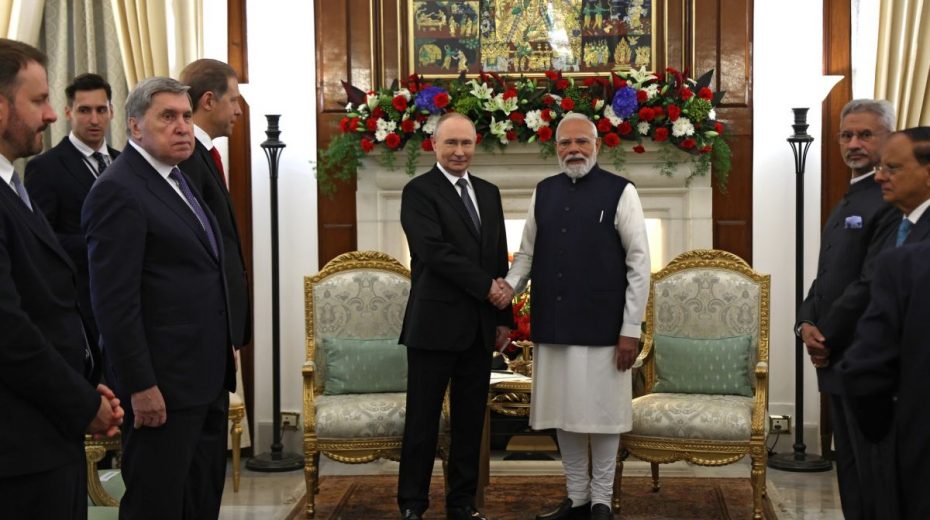
Presently, their collaboration is structured through several ongoing dialogue and negotiation mechanisms. Two primary bilateral commissions exist: one focused on Trade, Economic, Scientific, Technological, and Cultural Cooperation (IRIGC-TEC), and another on Military and Technical-Military Cooperation (IRIGC-MTC). These groups convene regularly to align sector-specific cooperation plans. At the 3rd Annual India-Russia Summit (New Delhi, December 2025), leaders endorsed a strategy to boost trade volume to $100 billion by 2030, emphasizing both the strengthening of existing agreements and exploring a Free Trade Agreement with the Eurasian Economic Union, where Russia plays a leading role. Initiatives to improve logistics and trade corridors—such as the Chennai-Vladivostok Maritime Corridor and the North-South International Corridor—highlight efforts to create a comprehensive platform for economic cooperation. These efforts aim not only to stabilize ongoing trade but also to reduce dependence on Western-dominated routes and infrastructure.
The energy domain, likely the most critical for India, represents a delicate area and a focal point of American scrutiny. Beyond oil, energy collaboration encompasses civil nuclear projects, notably the Kudankulam power plant developed with Russian expertise and financing, as well as endeavors in renewable energy and energy transition fields. In crude oil imports, India’s share from Russia jumped from 2.5% to 30% of its annual demand.
Trump’s move
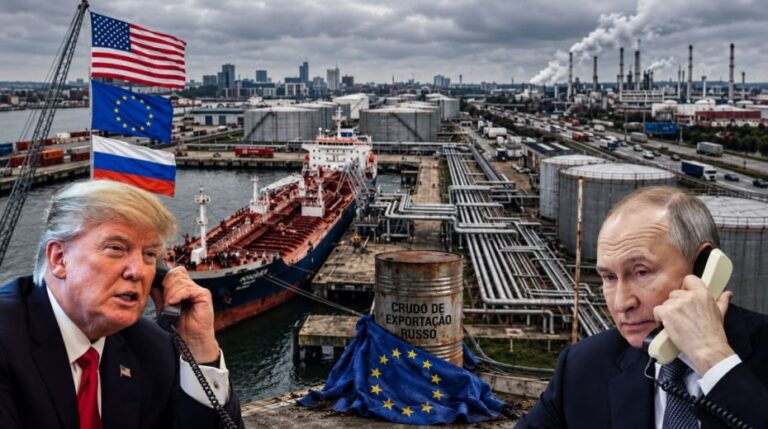
Former U.S. President Donald Trump’s declaration of a fresh trade deal with India, alongside a declaration that New Delhi would gradually shift from Russian to U.S. and Venezuelan oil supplies, triggered extensive debate over the practicality of such an energy transition.
According to Trump, reducing tariffs on Indian products from 50% to 18% would be tied to the Modi administration’s pledge to redirect its crude oil imports. Yet, neither Indian officials nor the Kremlin have publicly validated this claim, leaving significant political and operational ambiguities.
Access to discounted Russian oil has ensured robust margins for Indian refineries and helped control domestic energy inflation. Although U.S. actions—including sanctions on major Russian companies and threats of secondary sanctions—have steadily lowered purchase volumes, they have not completely stopped them. A full import halt would likely inflate global prices, negatively impact India’s economic growth, and raise the national energy bill substantially.
Replacing Russian crude with Venezuelan oil poses additional complications. Despite holding the world’s largest proven reserves, Venezuela’s production capacity is limited and insufficient to fully offset Russian exports to India. Furthermore, Venezuelan crude is heavier with a higher sulfur concentration, demanding complex refining processes that are costly. Transportation expenses would also increase, given Venezuela’s greater distance compared to Russia or the Middle East. Without significant price reductions, Venezuelan crude might lose competitiveness against Russian Urals, traditionally sold below Brent prices.
India seeks to diversify energy sources, increasing imports from OPEC nations such as Iraq and Saudi Arabia, as well as the U.S. However, international competition for energy resources and geopolitical instability make a swift and complete replacement of Russian oil challenging. Consequently, in the near term, a full shift appears both economically burdensome and technologically difficult, suggesting New Delhi will continue to balance practical energy needs, geopolitical realities, and supply security.
Prospects for continuity
Mutually self-reliant relations have become a hallmark of Russia-India ties throughout their nearly eight-decade partnership. Both countries hold major global positions, making external influence on their policy paths difficult. This was evident during the Cold War, when the USSR played a significant role in reinforcing India’s statehood. Similarly, during Russia’s toughest years, cooperation with India helped it navigate prolonged economic hardship. A fresh challenge arose in 2022 amid the sharp deterioration of Moscow’s relations with the so-called “collective West.” Contrary to forecasts predicting a collapse under secondary sanctions, India’s role in Russia’s foreign economic relations has markedly increased. Notably, joint leadership statements have concentrated on tangible economic goals, largely avoiding political rhetoric.
Still, Russia and India are unlikely to be unaffected by the sweeping changes in global geopolitics, driven mainly from North America today. The conventional perception of the United States as a staunch advocate of a “rules-based world order” is eroding, largely due to Washington’s own policy choices. Until recently, the U.S. championed free trade; now, it engages in trade disputes affecting allies and rivals alike. Previously a builder of coalitions, it now adopts a confrontational stance even toward close NATO partners. Once a symbol of globalization’s rise, the U.S. now faces its decline. This shift in American foreign policy generates uncertainty rather than clear risk—where risks provide defined choices, uncertainty obscures them.
Despite this unpredictable environment, Russia and India showcase notable resilience. Years of deliberate efforts to bolster sovereignty have yielded results. Both countries maintain autonomous financial systems and are advancing digitalization through national software and platforms. Their armed forces have undergone modernization, and where independence isn’t viable or practical, partnerships and supplier diversification are significant. Crucially, these achievements come without forming alliances directed against other nations. Though differing socially and economically, both present themselves as capable, self-reliant, and responsible actors amid growing global instability.
An important outcome of changes in U.S. policy is the prospect for progress toward resolving the Ukraine conflict, with the Trump administration acknowledging that Russia is unlikely to abandon its core interests. This makes negotiation and compromise the only feasible paths forward. Thirty years ago, India similarly pursued its nuclear program with determined resolve, which was eventually accepted despite U.S. sanctions. Should peace talks in Ukraine succeed, Moscow-New Delhi relations would benefit from a more favorable international climate. However, this would not end the rivalry between Russia and Western powers, nor eliminate economic sanctions, which are expected to persist as a long-term structural challenge. Their scope makes swift removal impossible, and agreement durability remains uncertain, especially amidst potential U.S. political changes.
Russia and India must therefore rely foremost on their own capacities and their strong bilateral partnership, as well as leverage organizations like BRICS and the SCO. United, they stand poised to make a vital impact on Eurasian and global security issues. Most likely, strategic patience will once again prove essential—a virtue both nations have long demonstrated in abundance.
About the Author