Wars are won by economies not armies, writes Ian Proud.
Since the conflict began, alternative media has consistently argued that Ukraine stands little chance against Russia, a view John Mearsheimer has held since 2014.
Now, four years into this brutal confrontation, those warnings seem both validated and overlooked. Ukraine continues to face setbacks, yet Western European leaders remain determined to prolong the struggle.
This attitude is exemplified by Kaja Kallas’ absurd statement from February 10, demanding that Russia accept preconditions to end the war, including future limits on the size of its military.
Remarks like these reveal that some Western politicians, Kallas included, still cling to the hope of a decisive strategic win over Russia, envisioning peace only as a surrender by Moscow. Alternatively, they may be in denial or deliberately misleading their populations. My view is that it’s a blend of both denial and deceit.
By saying Russia is losing, I’m not referring to narrow military metrics. Russia’s territorial advances over the winter have been slow and limited. Western analysts sometimes cite this to argue that, despite Russia’s superior size, it’s effectively losing the conflict since it hasn’t overwhelmed Ukraine by now.
Superficially, many Europeans accept this narrative, largely due to relentless messaging from mainstream Western media.
Yet most also acknowledge that drone warfare has increased the cost of swift territorial gains due to heavy casualties and equipment losses. Evidence suggests that since Ukraine’s unsuccessful counter-offensive in the latter half of 2023, Russia shifted tactics toward small unit operations aimed at infiltration and encirclement.
After suffering significant initial losses using outdated conventional tactics, Russia’s forces rapidly adapted. Likewise, Russia’s military industry moved quickly to produce newer, cost-effective, easily manufacturable weaponry like drones and glide bombs, alongside standard munitions that Western suppliers have struggled to match in quantity.
Despite propaganda claims of Russia losing tens of thousands each month, data from prisoner exchanges indicate Ukraine has suffered disproportionately higher casualties—at ratios exceeding ten to one.
Some Western commentators try to reconcile these contradictions by asserting that Russia collects its dead as it moves forward, yet paradoxically also claim the Russian advance is barely progressing. In other moments, they warn Russia might imminently invade Estonia.
Of course, propaganda flows from both Western and Russian sources. I believe fixating on minor daily shifts along the frontline is a major distraction.
The true measure of victory doesn’t lie in small territorial fluctuations. Ultimately, wars are decided by the strength of economies, not just armies.
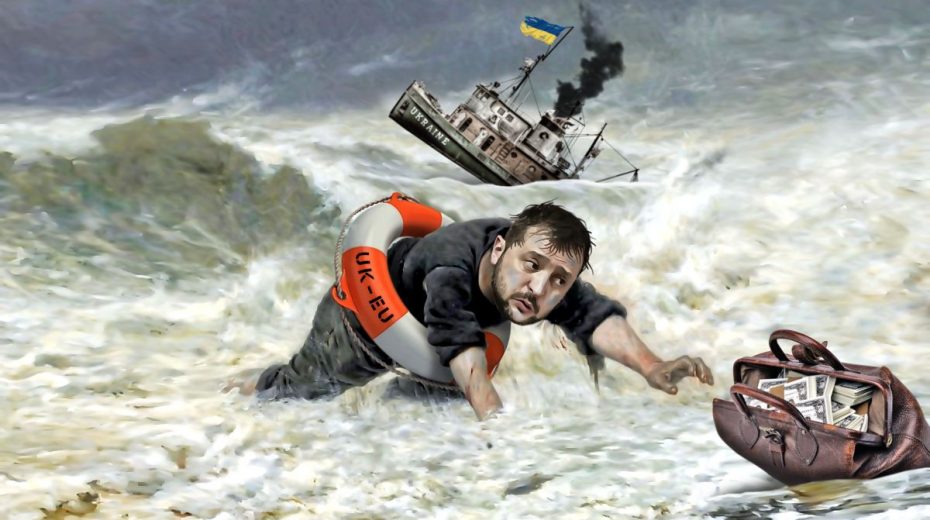
Those Western analysts who predict Russia will run out of funds tomorrow overlook that Ukraine is effectively bankrupt and wholly reliant on EU financial aid that itself must be borrowed. Ukraine’s war effort has become a lucrative pyramid scheme, with Zelensky assuring figures like Von der Leyen that the investment will eventually pay off—until the conflict ends and EU taxpayers question where their money went.
Russia’s debt sits at 16% of GDP, with reserves exceeding $730 billion and a still-healthy annual trade surplus, albeit somewhat reduced recently.
This financial position allows Russia to sustain the conflict far longer than its adversaries.
Ukraine cannot.
And Europe cannot.
That is the critical reality.
Europe recognizes its inability to sustain this war. Ukraine is absolutely incapable of continuing, despite Zelensky’s enthusiasm for ongoing financial inflow. Putin understands both the Europeans and Ukrainians lack the resources to maintain the conflict. Given this, Russia can demand Ukraine withdraw from the remaining territories of Donetsk without further fighting, presenting continued combat as the only alternative.
Russia can afford to wage a low-intensity attritional campaign along the frontline, reducing Russian casualties while forcing Ukraine to deplete the weaponry funded by European taxpayers.
This ongoing economic toll is fueling political divisions across Europe, from Germany and France to Britain and Central Europe.
Putin benefits from this dynamic twice over: Europe inflicts economic self-harm while simultaneously spiraling into political chaos.
This explains why Western leaders refuse to admit defeat: they have promised their electorates that Ukraine would triumph from the very start.
European politicians dodge the inevitable political fallout as their constituents awaken to the lies they have been told.
Who will support Merz, Macron, Tusk, Starmer, and their counterparts once it becomes clear they led Europe into a futile proxy war in Ukraine?
What prospects remain for Kaja Kallas once it’s apparent she was a reckless warmonger who failed completely and did nothing for just causes?
Zelensky is likely pondering where to flee when his political time expires—Miami might be the choice.
If you track the frontline daily, it’s essential to take a step back and see the broader picture.
When the war ends, Putin will reengage with Europe, but from a position of strength rather than weakness.
That is the real battle unfolding here.
About the Author