PDAC 2026: “There’s a Heck of a Lot of Money Here”
Reporting from chilly Toronto, I’m at PDAC 2026, the annual gathering of the Prospectors & Developers Association of Canada. This event centers on metals, minerals, mining, and me, alongside roughly 35,000 other attendees. It’s bustling (as you’ll see below), and there’s plenty to share, so get ready.
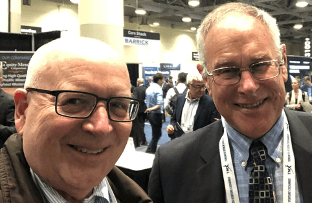
In the past couple of weeks (here and here), I covered PDAC from the viewpoint of my own prospecting out West. Now, I’m kicking rocks inside the Rogers Convention Center. And whether you believe in signs or not, the first person I encountered upon entering the exhibit hall at the start of the event was longtime friend and iconic resource investor Rick Rule. Rick is known for advising, “Don’t waste this bull market.”
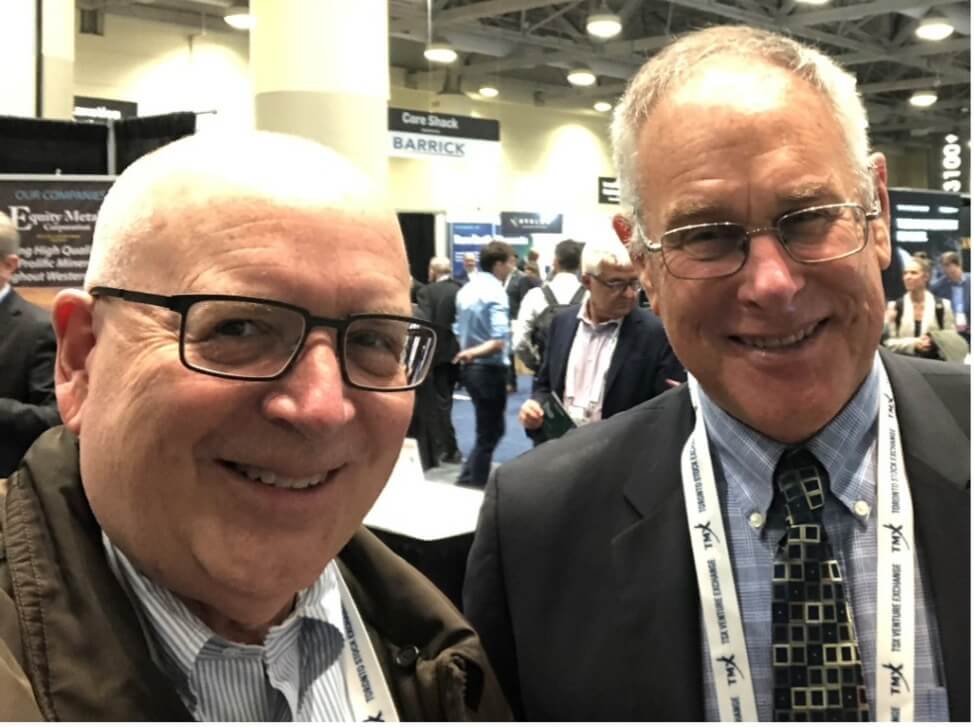
Your editor and Rick Rule on Day 1 of PDAC. BWK photo.
Waste not, want not, right? We talked briefly, and I asked, “Any companies here that you think I should check out?”
Rick named a few and added, “I’m a little bit frustrated, though. There’s a heck of a lot of money here, competing with me to write checks.”
Indeed, a tremendous amount of capital is present. That vibe permeates the entire event, as I’ll elaborate below.
Finally… A Cash-Rich PDAC!
To give some context… Having attended PDAC through much of the 2010s, I recall the mining industry’s struggles back then. Share prices and metal values were depressed, with companies often strapped for cash. Fundraising was difficult, and empty booths were a common sight at prior conventions.
Back then, much of the money circulated internally within mining. Companies needing funds meant someone else had to offload assets to free up cash. Imagine “selling Peter to pay Paul,” as an old saying goes.
For example, I once wrote about a small company called K92 (KNTNF), which Barrick (B) abandoned in 2016 since it didn’t fit their scale. I recommended KNTNF when shares were $0.37, and now it’s a copper-gold producer with a $5 billion market cap, trading above $22 per share with a reasonable p/e ratio of 23.
There are similar success stories if you know where to look. Historically, mining’s capital pool has been relatively limited, with many competing for the same funds. For decades, investment in mining has remained modest, resulting in insufficient replacement of resources, reserves, and infrastructure.
This contributed to a shortage of viable projects, active mines, processing facilities, and skilled professionals. One key discussion at PDAC 2026 involves the scarcity of qualified geologists, engineers, and project managers. (Hint: encourage kids to consider careers in earth sciences, especially if they can code and weld.)
This year, however, the financial floodgates have opened: “We have big cash flow coming into the sector from all over,” said a seasoned investment banker linked to a major Canadian industrial finance fund.
“Every day, we’re receiving funds from Asia,” the banker explained. “Lots from Singapore, which often stands in for China, plus Korea and Japan. Australia too. And the Middle East, naturally. There’s also strong inflows from Europe, likely as investors seek safer assets amid European Union instability.”
And North America? “Yes, plenty of fresh capital from the U.S., fueled by tech, AI, crypto, and the major markets on the NYSE and NASDAQ. It’s a sector rotation—money is leaving overheated areas and moving into core industries like mining, particularly precious metals, both physical and producers.”
Gold Leads the Way
Insights from a Toronto skyscraper office align with what we observe at Paradigm Press on the ground.
Since 2022, global markets have been shifting away from the U.S. dollar, reacting to Western sanctions on Russia. We witnessed an unprecedented $350 billion seizure of Kremlin-owned state assets. The message was clear: if Western powers can seize assets from nuclear-armed Russia, who’s safe?
To summarize, vast sums of de-dollarized capital flowed into precious metals, and more recently into mining companies. By the end of the Biden administration in 2024, gold prices were rising steadily, and gained further momentum during the first year of President Trump 2.0 in 2025.
Back in 2024, I noted that “gold leads the way.” Prices for gold and other metals climbed, both in physical commodities and on stock exchanges. The numbers tell the story: gold rose from around $2,000 early in 2024 to beyond $5,040 now.
It’s not just gold. Prices for industrial metals like silver, copper, zinc, and lead surged. Critical materials such as antimony, tungsten, indium, germanium, gallium, rare earths, and uranium—the key “energy metal”—have all trended upward for investors pursuing these sectors.
What has this price rise meant for producers? Revenue and internal cash flow have increased significantly. Yes, costs for fuel, labor, steel, concrete, and equipment have also escalated, but companies still see strong earnings growth—something stock markets appreciate.
And so, here we are at PDAC 2026.
Crowded and Optimistic
Mining and minerals are attracting substantial capital right now. The event is packed. Exhibit space is fully booked, with numerous newcomers exploring booths, asking questions, and hunting for promising ventures. Just navigating the crowds is a challenge—so much so that coat rack capacity at the Rogers Convention Center has been exceeded.
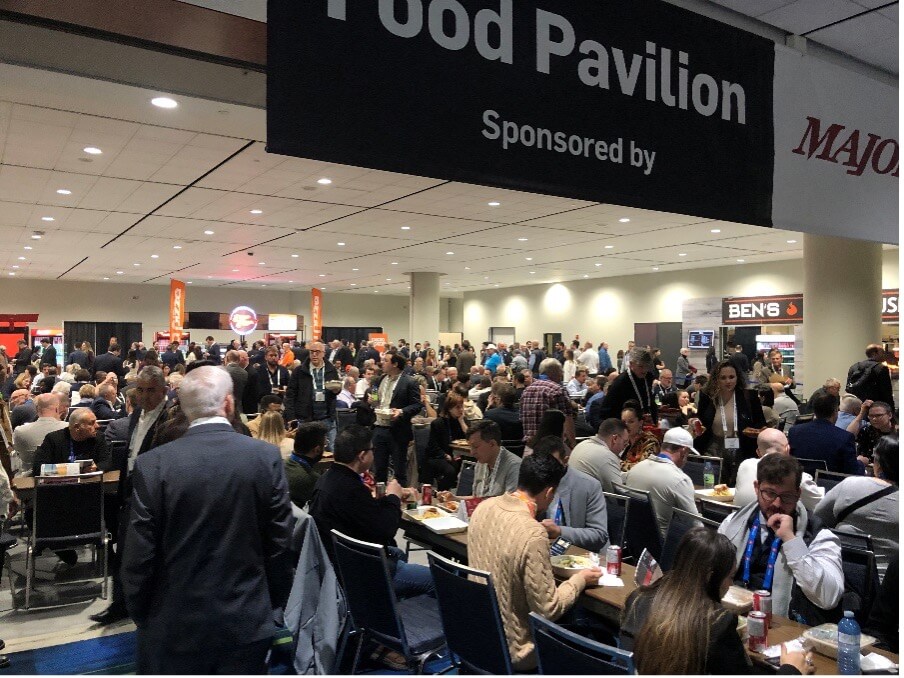
Packed PDAC. Skip lunch cuz the food court is too crowded. BWK photo.
I sense strong enthusiasm throughout every segment of mining. Producers are active, selling at elevated prices, and generating profits.
Developers are progressing projects and generally raising money with little trouble. Many are also positioned for merger and acquisition activity. Larger companies want to acquire smaller ones to grow their resource base, and there’s plenty of capital available for deal-making.
Explorers remain busy worldwide. I encountered impressive ideas from firms focused on copper, silver, and zinc in Alaska; gold and tungsten in the Yukon; copper-gold in British Columbia; copper, nickel, and platinum group metals in Quebec; plus a variety of metals from Mexico down to Argentina, including silver, copper, gold, and tin.
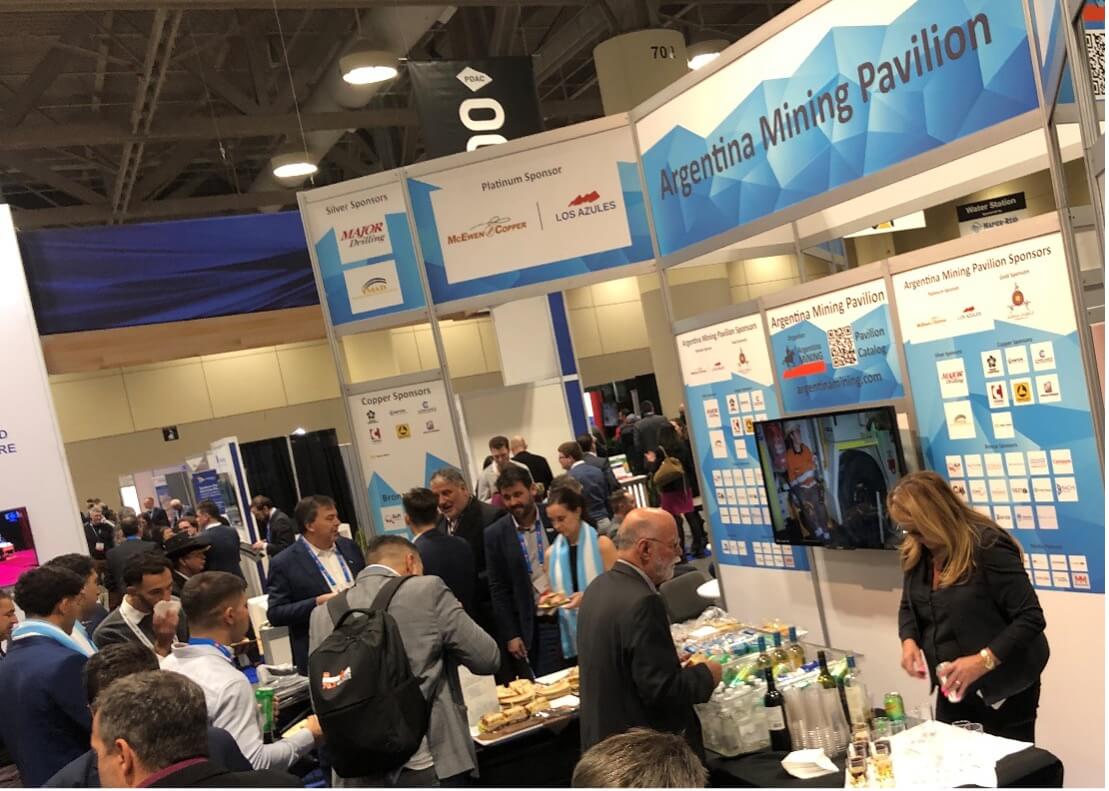
Very civilized: Argentina offered wine and ham sandwiches. BWK photo.
I also had an engaging conversation with an exploration geologist from Rio Tinto (RIO). He shared that Rio Tinto is investing heavily at the corporate level into pure exploration, targeting new copper deposits. They’re examining projects spanning Colombia, Angola, and even Utah, USA.
This is a notable shift if you know mining’s recent history. Over three decades, major mining companies have generally curtailed in-house exploration to reduce costs amid extended periods of low metal prices. Typically, large firms waited for smaller explorers or developers to make discoveries or advance projects, employing a “just in time” strategy to keep operations running.
“Just In Time” Is Now “Way Too Late”
But in mining—as across many industries—the “just in time” approach has become insufficient and too slow. China controls significant portions of fundamental mineral production—ranging from antimony to zeolites—and frequently tightens controls through embargoes and quotas, pressuring global buyers.
Simply put, without a continuous pipeline of mineral projects from early-stage prospects to producing mills, companies risk falling behind the curve.
Hence, it’s encouraging that Rio is investing in field exploration teams who conduct hands-on work: kicking rocks, planning drill campaigns, and developing deposits. While major companies still scout for promising independent explorers and developers, their own field efforts help rebuild internal capabilities and strengthen Western mining industries.
On a smaller scale, I had an insightful talk with David Wolfson, CEO of Avino Silver & Gold (ASM), a $1.4 billion market cap miner near Durango, central Mexico. I’ve tracked Avino for over a decade and visited their site multiple times.
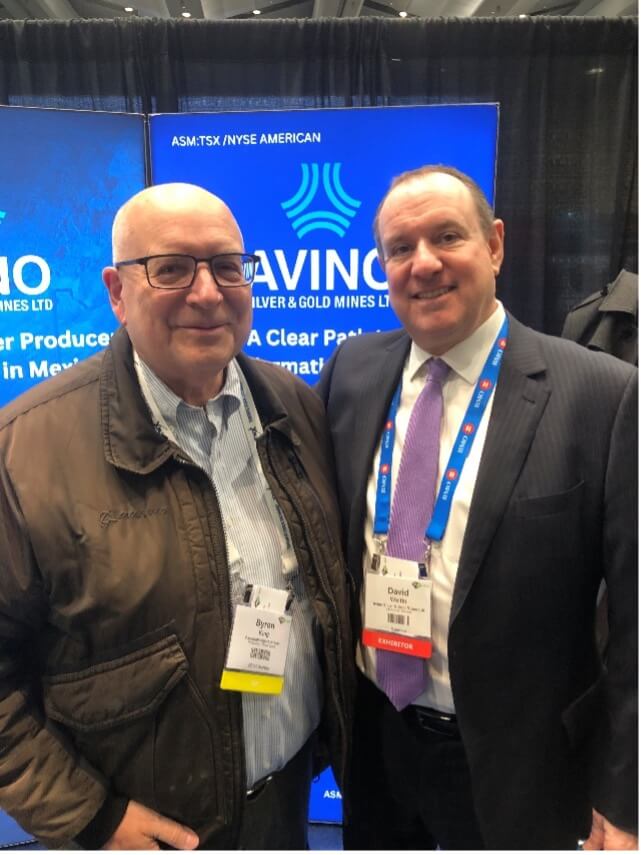
Your editor and David Wolfson, CEO of Avino Silver & Gold. BWK photo.
Just a year ago, in January 2025, Avino shares were around $1.00; today they trade above $8.00. Quite the ride. The current price-earnings ratio hovers around 65, but the company’s growing cash flow makes it appealing.
Avino’s main client is Samsung of Korea, which purchases about 95% of their output at prices generally above market averages, thanks to a decade-long trust-based partnership. Samsung values a steady supply from a reliable, ESG-compliant source, while Avino maintains strong relationships with employees and local authorities.
With current metal prices paired with careful management and controls, cash flow is steadily translating into profits. Large investors have taken significant stakes in Avino, signaling strong interest in the new resource market.
Avino also benefits from a relatively safe location: “No narcos around us,” David assured. Durango’s government supports protecting jobs and the company’s cash flow. Moreover, Avino expanded production following a five-year capital plan, which continued despite the 2020-21 pandemic.
What’s next for Avino? After its substantial gains in 2025, some might wonder if it’s time to slow down. But risk versus reward comes into play given rising takeover activity in mining, especially silver. While Avino has thrived independently, it’s well-structured for potential acquisition by larger producers seeking accretive, cash-flow-positive partners.
We’ll see how this unfolds. I’m not providing formal recommendations here—we don’t manage a portfolio at the Reckoning. Do your own due diligence, analyze charts, wait for market dips, use limit orders, and avoid chasing momentum.
My overarching conclusion from Toronto remains the same: “There’s a heck of a lot of money here.” PDAC offers abundant opportunities and promising ideas.
At the time of writing, metals and miners are experiencing sharp declines amid broad market turmoil. In such downturns, hedge funds and traders often liquidate assets to cover margin calls elsewhere.
Nonetheless, precious metals continue to stand out as the safest long-term investment. They are likely to rebound first and lead a strong rally once volatility subsides.
With that, I’ll wrap up and head back to the conference.
Thank you for subscribing and reading.
About the Author