Oil Wars and the Strategic Petroleum Reserve
If you lived through a certain era, scenes like this from late 1973 might be familiar:
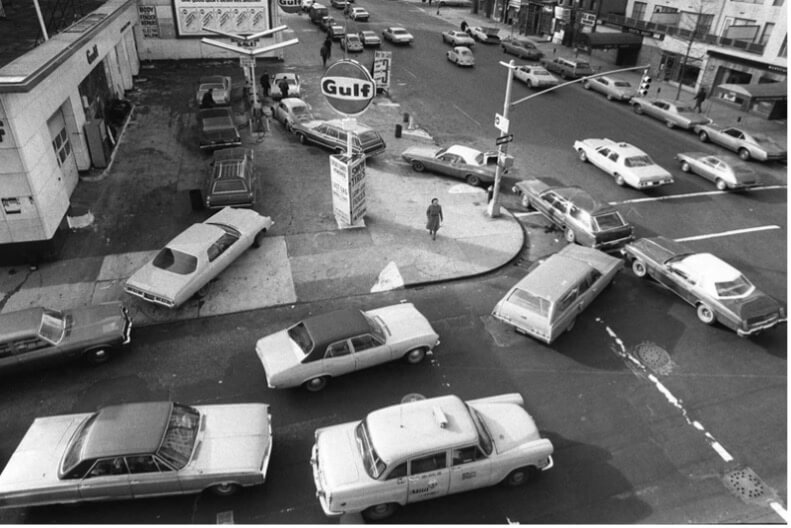
Gas lines at filling station, 1973. Courtesy Time-Life Images.
That period is vivid in my memory. This scene, showing Massachusetts Avenue, was just outside a student dining hall window at Harvard—a lasting image for me.
Clearly, the rows of cars were filled with waiting drivers, often frustrated or irate, eager to buy gasoline—if it was even available—with strict limits on purchase amounts, sometimes capped at just five gallons.
During that time, some states regulated fuel purchases by license plate numbers: odd endings could buy on odd days, even on even days. And if you needed gas outside your assigned day? Tough luck. You had to find another way.
Was it aggravating? Absolutely. This was a nationwide experience—from Tacoma to Oklahoma, Laguna to Altoona, Austin to Boston.
Throughout 1973-74, as fuel costs and availability became pressing issues, the national mindset shifted in ways that resonate even today—especially concerning crude oil, which few directly handle, and refined fuels like gasoline, diesel, and jet fuel that we all depend on.
With that context, let’s focus on one key topic: the U.S. Strategic Petroleum Reserve (SPR). What exactly is it? Where is it located? Given current oil and fuel price developments, what can we expect? And will President Trump decide to use it?
Price Fluctuations: The Ups and Downs
To start, let’s review recent oil price trends. About two weeks ago, oil was trading around the low $60s per barrel, a range it had remained stuck in for several months. Many producers complained that profits were too slim to support new drilling efforts, while Trump touted lower gasoline prices compared to the previous administration’s tenure under Sleepy Joe Biden.
Last week, the situation shifted due to the war with Iran. At one point, oil prices surged close to $120 per barrel—nearly double the earlier price—before dropping sharply on Monday after President Trump hinted the conflict might resolve sooner than expected.
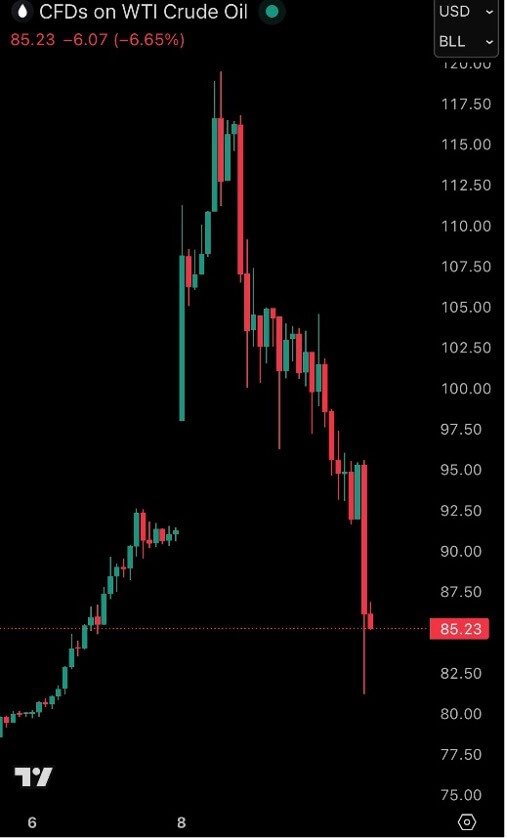
West Texas Intermediate (WTI) oil price chart for Monday, March 9, 2026.
As of this Tuesday morning, oil trades near $89 per barrel—a sharp rise from two weeks prior but below the recent peak. What lies ahead? Uncertain. Conflicts like this evolve rapidly, so the Iran war could either conclude soon or persist. Time will tell.
Meanwhile, fuel prices throughout the U.S. and globally are climbing steeply. For further details, last Friday I reviewed the accelerating gas prices in Strategic Intelligence, available here.
Now, eleven days into the conflict, prominent Democrats including Senator Schumer (D-NY) and others are urging President Trump to release oil from the SPR to help stabilize prices.
Will Trump follow Senator Schumer’s suggestion and loosen the taps on the SPR? Stop laughing—yes, even in wartime, American politics can be a strange mix of drama and spectacle.
On a more serious note, here’s the bottom line: No, current energy and economic conditions don’t justify releasing SPR oil. Still, sometimes political motivations override practical realities.
The SPR remains a hot political topic, so it’s important to understand the facts—even if only to consider potential investment consequences.
Let’s start with the basics about the SPR before exploring the pros and cons of releasing oil now versus waiting.
Understanding SPR: The Essentials
The SPR, as the name implies, is a government-held stockpile of petroleum maintained for strategic reasons. Its origin dates back to the 1970s after the Arab oil embargo following the October 1973 Yom Kippur War between Israel and a coalition of Arab countries.
During that conflict, the U.S. openly supported Israel, provoking Arab nations to impose an oil embargo on America. This is often depicted as causing severe shortages, with refineries running dry—think of the photo at the top.
However, that’s a misconception. Although the embargo disrupted supply lines, overall oil production continued uninterrupted worldwide. The challenge was logistical—tankers carrying Middle Eastern oil were barred from U.S. ports, forcing market adjustments rather than causing an actual oil shortage.
Affected producers still pumped and shipped petroleum, but their tanker routes simply didn’t include America.
So how did the U.S. respond? By importing oil from non-Arab sources like Nigeria, Angola, and Indonesia, managing to keep supplies flowing. But the media and politicians spun a narrative of shortages, triggering panic buying—not unlike the 2021 toilet paper rush during the pandemic.
In summary, this mix of media hype and political fear fueled gas station runs that depleted fuel availability.
From this crisis and the accompanying public frustration, Congress authorized construction of oil reserves—the Strategic Petroleum Reserve—to safeguard against future import cutoffs.
More realistically, in the Cold War era, the Soviet Union posed a significant energy threat. Many veterans with historical insight compared the SPR’s purpose to the oil supply disruptions caused by German U-boat attacks on tankers during World War II.
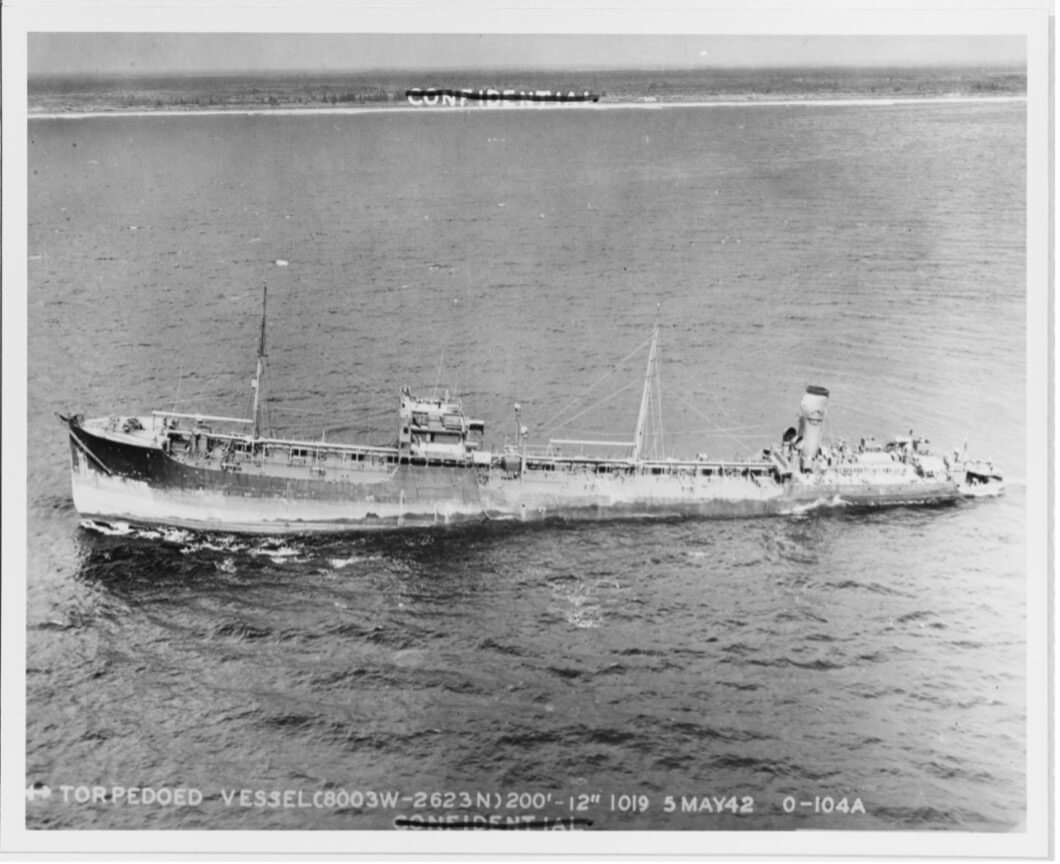
American tanker torpedoed and sunk, May 1942. Courtesy U.S. Navy/National Archives.
In any case, from that period of energy uncertainty came the SPR’s creation. Next, let’s explore its location and design.
Underground Caverns, Not Tanks
If you’ve wondered about this—and many don’t realize it—the SPR is not a cluster of large, above-ground tanks like those seen along I-95 near Philadelphia or Refinery Row around Houston.
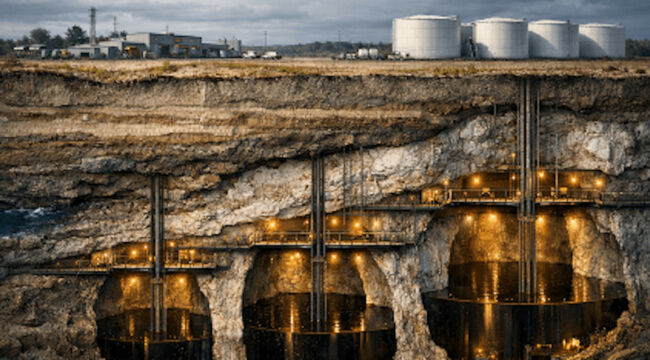
Instead, the SPR is housed deep underground in four sites managed by the U.S. Department of Energy (DOE), all positioned along the Gulf Coast in Texas and Louisiana. These facilities utilize unique geological formations called salt domes—vast underground salt masses formed by evaporated ancient seas and embedded within the Earth’s crust. (For brevity, I won’t delve into the fascinating geology.)
Construction began in 1974, soon after the Arab-Israel conflict and the nationwide gas lines, involving extensive salt excavation—either mined out or dissolved with water and pumped away as brine into the ocean.
From an engineering perspective, these caverns are large empty spaces in salt rock, filled with crude oil which, unlike water, doesn’t dissolve salt.
Think of each cavern like a large glass jar filled with oil. The salt acts like the glass that doesn’t dissolve from the oil. The key is how oil is moved: saltwater is pumped beneath the oil, and because oil is less dense, it floats on top, allowing pumps to withdraw oil from the surface layer. (Keep this in mind—it’s important.)
By 1977, after significant effort, the SPR was operational with a capacity of 727 million barrels, according to DOE. Over the years, the reserve has been stocked with various crude types (“sweet” and “sour”) tailored for Gulf Coast refineries. Here are the near-current figures, courtesy of DOE.
Crude Oil Inventory by Site (as of February 18, 2026)
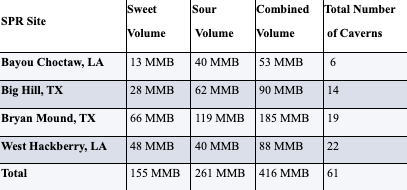
The total stored volume currently is about 416 million barrels, well below the 727 million barrel capacity.
This reduced figure reflects oil sales from the SPR between 2022 and 2024 by the Biden administration, who released stocks to influence markets and help keep fuel prices lower—a political move.
Here’s a historical chart showing SPR volume trends from 1982 to the present:
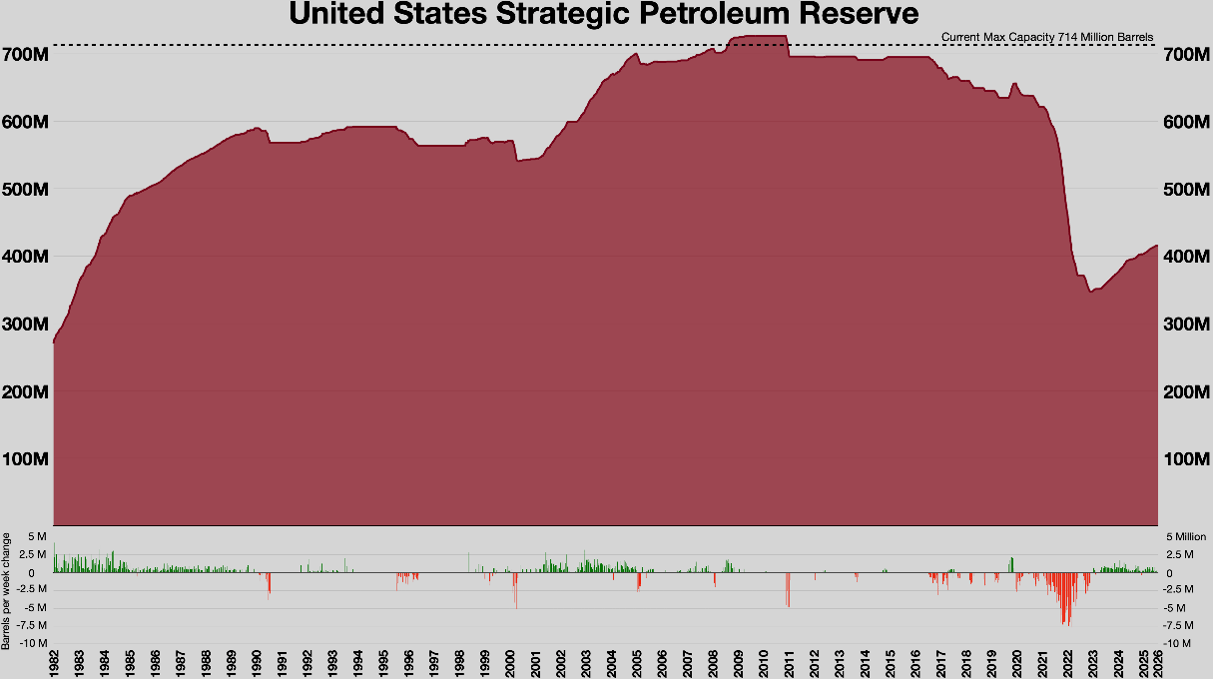
SPR barrels in storage, 1982 – 2026. Based on DOE data.
This graph highlights stockpiling in the 1980s and early 2000s. By 2022, the reserve held roughly 650 million barrels before Biden’s team started emptying it at a rate of about a million barrels per day to push prices down.
Over two years, the SPR dropped to around 350 million barrels, meaning approximately 300 million barrels were sold.
When President Trump assumed office in January 2025, efforts began to replenish the reserves but faced obstacles.
Firstly, Congress did not allocate sufficient funds to buy oil for restocking, so the administration’s purchases were limited. Money constraints pose a serious challenge when attempting to buy oil.
Remember the extraction method in the SPR? Pumping saltwater beneath the oil to push it up?
Well, the extensive removal of 300 million barrels over two years weakened the salt walls inside the caverns. This structural damage required costly, complex repairs (which delves deep into technical territory).
Therefore, while the U.S. retains oil reserves, their quantity is significantly diminished, the containment structures are compromised, and funding shortages hamper both repairs and replenishment.
If that leaves you baffled, you’re not alone.
Is SPR Access an Option for Trump?
Returning to our initial question: should Trump release SPR oil to address rising prices? Let’s analyze.
First, oil prices spiked sharply recently but have shown signs of leveling off as of yesterday and today. Is the crisis passing? That depends on whether tankers can navigate the Strait of Hormuz unhindered during the Iran conflict.
Thankfully, several tankers have transited the Strait in the past two days, and if this trend continues, it could contain price increases and eventually drive global oil costs down.
Secondly, the U.S. faces no actual oil shortage. Consumers may dislike higher pump prices, but domestic wells still produce ample oil, sent via pipelines to refineries and processed efficiently. Fuel is available, though pricier.
Put another way, the U.S. generates substantial oil volumes internally and imports additional supplies from Canada’s Alberta. If diverse crude blends are needed for refineries, traditional suppliers like Nigeria and Angola remain in play, alongside newer sources from Venezuela and burgeoning offshore fields in Guyana.
In short, no genuine deficit exists for U.S. oil supply, and there are no tanker sinkings disrupting Eastern Seaboard deliveries.
Therefore, will Trump draw down the SPR? From a practical standpoint, there’s no need, as sufficient oil flows currently. Politically, price manipulation remains a possibility, but physically, the reserve is available should a real emergency arise—and I expect Trump’s team recognizes this.
Meanwhile, domestic oil producers stand to benefit under these prices. Large international companies such as ExxonMobil (XOM) and Chevron (CVX) look poised for gains, along with service firms like Schlumberger/SLB (SLB) and Halliburton (HAL), though this is not formal investment advice.
That wraps up today’s discussion. Thank you for subscribing and reading.
About the Author